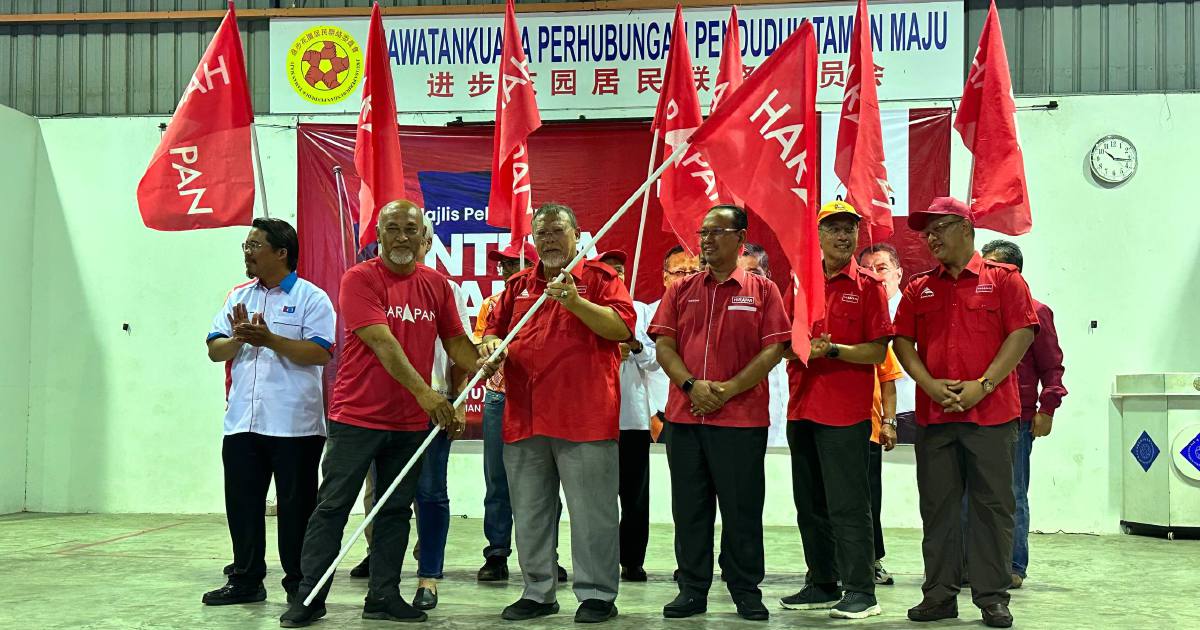
Johor Amanah has set its sights on capturing a minimum of six state seats in the northern zone during the upcoming July 11 state election, fielding candidates across a total of ten constituencies in the region. The party's optimistic projection reflects its strategic positioning as a meaningful force in Johor politics, where competition among established and emerging coalitions remains intense ahead of the ballot.
The confidence expressed by Johor Amanah's leadership suggests the party believes it has strengthened its grassroots organisation and voter appeal since the last electoral contest. By targeting a specific numerical outcome across defined geographical zones, the party is demonstrating a shift towards data-driven campaign strategy rather than broad-based appeals. This approach indicates that Johor Amanah has likely conducted internal polling and constituency-level assessments to identify the ten seats where it judges its prospects strongest.
The northern zone of Johor has historically been politically significant, encompassing constituencies that draw votes from both urban and semi-rural demographics. For a party like Amanah—which has built its support base on issues of good governance, transparency, and social justice—the northern zone presents opportunities to appeal to voters concerned with development pace and resource allocation. The region's mix of established towns and developing areas means different campaign messages will resonate across the ten targeted constituencies.
Amanah's decision to contest exactly ten seats in the northern zone suggests careful coalition coordination with potential allies. In Malaysia's complex political landscape, where seat allocations between coalition partners require delicate negotiation, committing to specific constituencies indicates pre-election agreements have likely been formalised. Whether Amanah contests independently or as part of a broader pact will shape the viability of its six-seat target, as voter perception of coalition strength or credibility directly influences seat outcomes.
Historically, Johor's electoral patterns have favoured established parties with deep organisational reach and longstanding community connections. Amanah's emergence as a serious contender in the state reflects broader shifts in Malaysian politics since 2018, when urban voters and younger demographics became more receptive to alternative political voices. The party's performance in the northern zone will offer important indicators of whether these shifts have become entrenched or were temporary phenomena.
The timing of Amanah's announcement carries strategic weight. By publicly articulating a six-seat target months before the election, the party signals confidence to supporters while creating accountability benchmarks. This transparency approach aligns with Amanah's core positioning as a reformist alternative to traditional politics. However, it also means that falling short of six seats will be viewed through the lens of this explicit commitment, potentially influencing narrative perceptions post-election.
For Malaysian voters across Southeast Asia's most developed state, the emergence of multiple viable political choices—beyond the dominant established blocs—represents a maturation of electoral competition. Johor's elections carry significance beyond the state's borders because they frequently preview national political trends. If Amanah succeeds in capturing six or more seats in the northern zone, it would suggest the party has successfully positioned itself as a credible governing option, a development that could reshape political calculations at federal level.
The party's capacity to deliver on its pledge depends on several interconnected factors: quality of local candidates, effectiveness of ground operations, media coverage, economic sentiment among voters, and the broader political narrative shaping campaign discourse. The northern zone's voter heterogeneity—encompassing different age groups, economic interests, and educational backgrounds—means Amanah cannot employ a one-size-fits-all messaging strategy across its ten constituencies. Sophisticated campaign management targeting specific voter segments within each area will likely determine the party's actual performance.
Resource allocation will prove critical to realising Amanah's objectives. The party must ensure that campaign funding, volunteer deployment, and candidate support are distributed effectively across all ten constituencies rather than concentrated in perceived strongholds. Imbalanced resource distribution could result in securing seats where victory was assured while losing winnable contests elsewhere. The grassroots mobilisation capacity that Amanah has cultivated since its 2015 establishment will face a genuine test in the July 11 elections.
Beyond the numerical target, Johor Amanah's campaign in the northern zone will communicate broader messages about what the party believes should constitute political priorities in contemporary Malaysia. Whether focusing on affordability, governance, infrastructure, or social services, the party's positioning will influence not only its own electoral fortunes but also the overall tone of campaign discourse. Voters will be exposed to alternative policy frameworks and leadership approaches, enriching the quality of democratic choice available.
The July 11 state election represents a significant moment for evaluating whether Johor's political landscape has genuinely diversified or whether the contest remains fundamentally bipolar. Amanah's performance—whether it achieves, exceeds, or falls short of its six-seat target—will provide concrete evidence of the party's trajectory and Malaysian voters' appetite for political alternatives. The results will also clarify whether the northern zone's electorate views Amanah as a genuine pathway to different governance or merely a secondary option within existing political architectures.
%22%2F%3E%3C%2Fpattern%3E%3C%2Fdefs%3E%3Crect%20width%3D%22100%25%22%20height%3D%22100%25%22%20fill%3D%22url(%23ph3ozefg)%22%2F%3E%3Crect%20width%3D%22100%25%22%20height%3D%22100%25%22%20fill%3D%22url(%23ph3ozefp)%22%2F%3E%3Ctext%20x%3D%2250%25%22%20y%3D%2250%25%22%20text-anchor%3D%22middle%22%20dominant-baseline%3D%22central%22%20fill%3D%22rgba(255%2C255%2C255%2C0.95)%22%20font-family%3D%22Georgia%2C%20'Times%20New%20Roman'%2C%20serif%22%20font-weight%3D%22700%22%20font-size%3D%22320%22%20letter-spacing%3D%22-0.02em%22%3EIran%3C%2Ftext%3E%3C%2Fsvg%3E)
%22%2F%3E%3C%2Fpattern%3E%3C%2Fdefs%3E%3Crect%20width%3D%22100%25%22%20height%3D%22100%25%22%20fill%3D%22url(%23ph4hqahg)%22%2F%3E%3Crect%20width%3D%22100%25%22%20height%3D%22100%25%22%20fill%3D%22url(%23ph4hqahp)%22%2F%3E%3Ctext%20x%3D%2250%25%22%20y%3D%2250%25%22%20text-anchor%3D%22middle%22%20dominant-baseline%3D%22central%22%20fill%3D%22rgba(255%2C255%2C255%2C0.95)%22%20font-family%3D%22Georgia%2C%20'Times%20New%20Roman'%2C%20serif%22%20font-weight%3D%22700%22%20font-size%3D%22272%22%20letter-spacing%3D%22-0.02em%22%3ETrump%3C%2Ftext%3E%3C%2Fsvg%3E)
%22%2F%3E%3C%2Fpattern%3E%3C%2Fdefs%3E%3Crect%20width%3D%22100%25%22%20height%3D%22100%25%22%20fill%3D%22url(%23ph2adawg)%22%2F%3E%3Crect%20width%3D%22100%25%22%20height%3D%22100%25%22%20fill%3D%22url(%23ph2adawp)%22%2F%3E%3Ctext%20x%3D%2250%25%22%20y%3D%2250%25%22%20text-anchor%3D%22middle%22%20dominant-baseline%3D%22central%22%20fill%3D%22rgba(255%2C255%2C255%2C0.95)%22%20font-family%3D%22Georgia%2C%20'Times%20New%20Roman'%2C%20serif%22%20font-weight%3D%22700%22%20font-size%3D%22320%22%20letter-spacing%3D%22-0.02em%22%3EIran%3C%2Ftext%3E%3C%2Fsvg%3E)