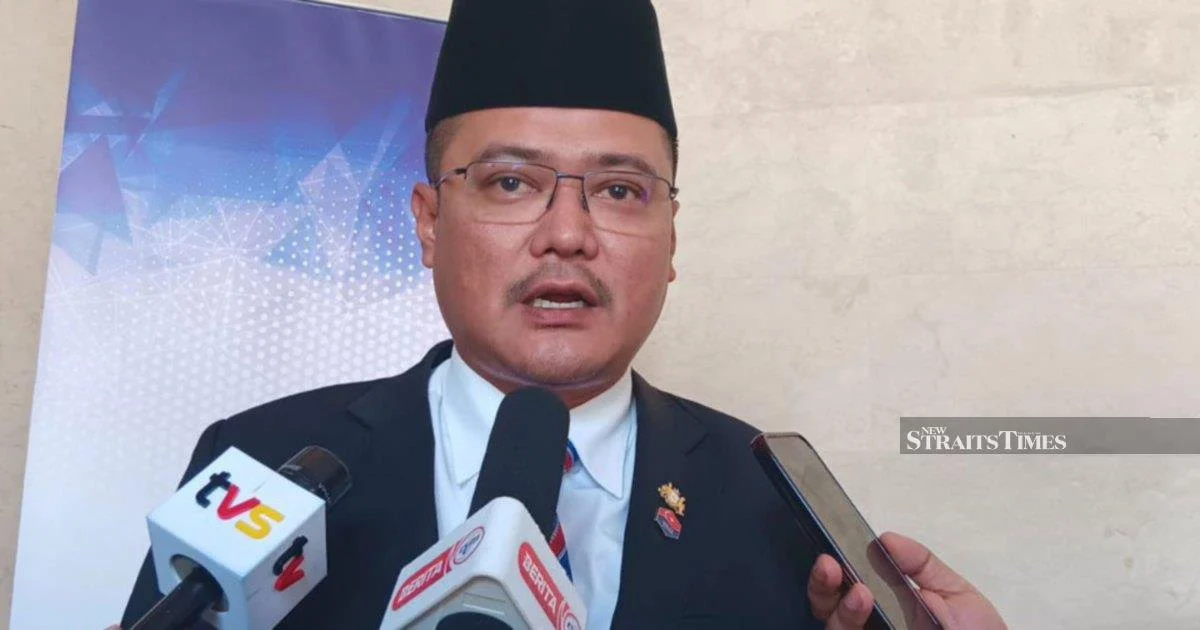
Johor's Barisan Nasional machinery has mounted a fierce counterattack against former state legislative assembly speaker Datuk Dr Mohd Puad Zarkashi, categorically rejecting his recent allegations as fundamentally without foundation and potentially damaging to institutional stability. The party leadership, speaking from Johor Baru, characterised the accusations as grave and reckless assertions that, if allowed to persist unchallenged, could undermine the delicate political equilibrium that has long defined the state's governance framework.
The dispute centres on allegations made by Datuk Dr Mohd Puad, a figure who previously held significant authority within the Johor legislative assembly, regarding purported connections between palace officials and major political decisions affecting the state. Such claims strike at the heart of constitutional arrangements and raise questions about the separation of palace protocol from executive governmental action—a distinction that remains crucial to Malaysia's Westminster-derived system of governance. For Johor BN, these insinuations represent not merely political disagreement but an assault on institutional credibility that demands decisive refutation.
The timing of this public dispute reflects deeper fractures within political circles in Johor, where factionalism has periodically surfaced despite the state's reputation as a BN stronghold. Datuk Dr Mohd Puad's previous role as speaker positioned him as a custodian of parliamentary procedure and legislative propriety, lending his statements a certain weight within political discourse. His subsequent loss of that position appears to have emboldened him to make allegations that he might have previously restrained, triggering this immediate and forceful response from the broader party structure.
Young Umno, represented by its leadership, has amplified the party's response by asserting that scores of party members and supporters have filed police reports concerning the matter. The deployment of this particular tactic—mobilising multiple police complaints—demonstrates an attempt to transform what might otherwise remain a he-said-she-said political disagreement into a broader narrative of public concern and formal institutional attention. By channelling grievances through law enforcement mechanisms, Umno Youth appears to be signalling that the party considers these allegations sufficiently serious to warrant criminal investigation, even as it simultaneously denies their veracity.
The allegation that hundreds have lodged police reports serves multiple strategic purposes within Malaysia's political theatre. It demonstrates grassroots mobilisation and suggests widespread party sentiment against the former speaker's claims. Simultaneously, it places the burden of investigation and potential prosecution onto law enforcement agencies, thereby allowing political figures to maintain distance from the actual mechanics of contestation while still appearing to pursue accountability. This technique has become increasingly common in Malaysian politics, where the boundary between legitimate civic participation and organised political theatre frequently blurs.
Johor's particular status within Malaysian politics adds significance to this dispute. The state has long been considered an exemplary BN territory, and any suggestion of institutional irregularity or improper influence over decision-making threatens the carefully maintained narrative of administrative stability and transparent governance that the ruling coalition cultivates. Should allegations of palace interference in routine political matters gain traction, they could potentially encourage similar claims in other states or contribute to broader perceptions of systemic dysfunction within BN-administered territories.
The characterisation of Datuk Dr Mohd Puad's allegations as irresponsible suggests that BN leadership believes he has crossed professional and political boundaries in public commentary. Former office-holders in Malaysia typically maintain certain decorum regarding palace matters, recognising that direct accusations can be perceived as disrespectful to institutionalised authority structures. That Datuk Dr Mohd Puad chose to make public allegations rather than pursue private channels indicates either a deliberate strategy to maximise publicity or genuine frustration with previous avenues of redress.
The institutional implications of this dispute merit consideration. If palace-level officials are indeed influencing routine political decisions beyond their traditional advisory and ceremonial roles, the matter touches on constitutional governance itself. Conversely, if allegations are fabricated or exaggerated for political advantage, the incident illustrates how easily claims regarding palace involvement can be weaponised within competitive political environments. Malaysian politics has witnessed several instances where allegations of improper palace influence have surfaced only to evaporate under scrutiny, contributing to public cynicism about political discourse.
For Malaysian observers beyond Johor, this controversy serves as a reminder that institutional tensions remain present even within states considered BN strongholds. The rapidity with which party machinery mobilised to counter the allegations, coupled with the decision to escalate matters to police involvement, suggests that leadership perceives a genuine threat to narrative control and public perception. Whether this represents proportionate response to genuine irresponsibility or excessive reaction to legitimate criticism depends largely on the substantive merits of the underlying allegations—details that remain contested and unclear from public statements thus far.

