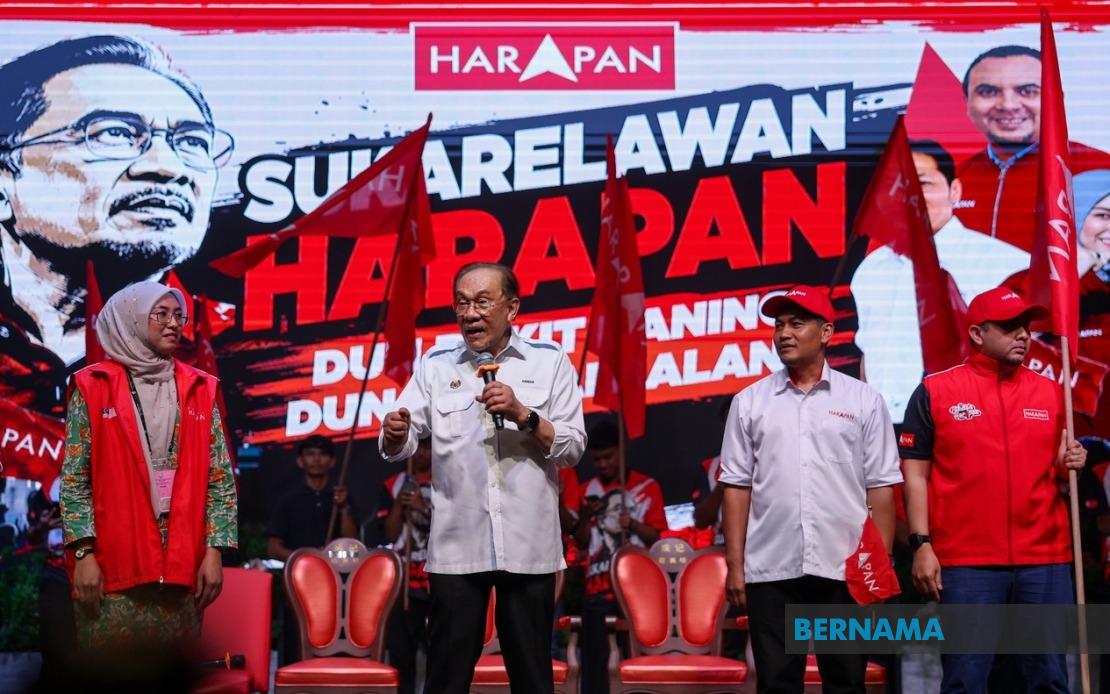
Prime Minister Datuk Seri Anwar Ibrahim has made a direct appeal to Johor's younger electorate to turn their backs on divisive race-based politics, framing the upcoming state election as a pivotal moment for the country's future direction. Speaking at a campaign event in Muar on July 5, Anwar stressed that young voters hold the power to fundamentally reshape Malaysia's political landscape by choosing leaders based on their track records in addressing practical, everyday concerns rather than succumbing to rhetoric designed to inflame communal fears.
Anwar, who also chairs the Pakatan Harapan coalition, presented a stark contrast between the substantive governance issues that should dominate electoral choices and the inflammatory narratives that he argued continue to poison Malaysian politics. He specifically highlighted education, employment prospects, and state development as the issues that should preoccupy voters' minds when casting their ballots. The Prime Minister's remarks suggest growing concern within the ruling coalition about the continued salience of race-based political messaging, particularly among opposition groups, even as PH seeks to consolidate support among younger, more cosmopolitan voters.
In pointed language, Anwar criticised what he characterised as deliberate attempts to manufacture communal discord. He referenced efforts to stoke fear of the Chinese, cultivate resentment towards Indians, and provoke conflict between different ethnic communities, questioning the logic of such divisive tactics. His framing introduced a class dimension to the critique, suggesting that ordinary citizens locked in communal disputes distract from the enrichment of elites at the top. This rhetorical move attempts to redirect voter attention from identity politics towards questions of accountability and systemic corruption, positioning PH as the agent of genuine reform.
Addressing specifically the younger generation of Malay, Chinese, and Indian voters, Anwar issued a call for active agency rather than passive acceptance of inherited political patterns. He encouraged young people to reject what he termed the "rotten political system" and to stand up for their collective future. The emphasis on youth agency reflects a deliberate PH strategy to mobilise demographic groups less influenced by traditional community structures and more concerned with meritocratic governance and economic opportunity. The Prime Minister's framing suggests PH believes its best electoral prospects lie with appealing to voters motivated by pragmatic concerns about jobs and development rather than communal identity.
Anwar expressed particular satisfaction at the large youth turnout at the Bukit Naning volunteer programme launch, interpreting this as evidence of a generational shift towards political engagement centred on change and reform. He positioned this energy as historic, claiming that his more than a decade of campaigning had not previously witnessed such enthusiasm. This assessment carries significance for PH's broader electoral strategy, suggesting that the coalition believes it can mobilise younger voters around its reform agenda in ways that previous campaigns may have struggled to achieve. The explicit framing of youth participation as making history serves to strengthen generational identity around the PH project.
The immediate electoral context involves the Johor state election scheduled for July 11, with 172 candidates contesting 56 state seats and early voting set for July 7. Johor, as Malaysia's second-largest state by population and a traditional stronghold of Barisan Nasional, represents strategically important terrain for PH. The scale of the contest and its timing within PH's broader effort to consolidate federal power make the state election a significant test of the coalition's ability to win and retain support from diverse voter groups, particularly younger ones.
In additional remarks at the "Temu Anwar Johor Ke Depan" programme, the Prime Minister expanded his critique of what he termed "outdated narratives peddled by the old guard." Anwar characterised race-based political messaging as poison that actively corrodes national unity, framing such rhetoric as fundamentally at odds with Malaysia's status as an independent nation characterised by multi-ethnic coexistence. By invoking concepts of Malaysian independence and national strength, he sought to position race-based politics not merely as divisive but as fundamentally un-Malaysian, a rhetorical move designed to delegitimise such approaches beyond the immediate electoral contest.
Anwar's emphasis on the peaceful coexistence of different ethnic communities and his invocation of religious language ("Allah SWT") when describing Malaysia's achievement suggests an attempt to appeal across religious and ethnic divides while grounding his vision in values that resonate across Malaysia's diverse population. His expression of optimism about youth sentiment similarly serves multiple purposes: it reinforces the narrative of generational change, provides an inspirational frame for campaign messaging, and subtly suggests that opposition to race-based politics enjoys organic support among younger voters rather than representing an imposed agenda.
The final dimension of Anwar's messaging emphasised the responsibility incumbent on younger voters to move beyond bystander status and actively shape Malaysia's future. This framing transforms voting into a moral and civic act, positioning electoral participation as an assertion of agency and commitment to building an "inclusive future." For PH, this messaging strategy attempts to redefine what the Johor election represents: not merely a competition between political parties but a generational choice about the country's fundamental direction and the values that will guide its development in coming decades.
Anwar's sustained focus on deflecting race-based politics and emphasising practical governance concerns reflects PH's assessment that its competitive advantage lies in mobilising voters around reform, anti-corruption messaging, and pragmatic development agendas rather than engaging in the communal competition that traditionally favoured Barisan Nasional and other established parties. By positioning youth as the embodiment of an emerging political consciousness oriented toward such issues, PH seeks to claim the future while portraying opposition forces as defenders of discredited approaches. The strategy represents a significant bet that Malaysian voters, particularly younger ones, have moved beyond the ethnic considerations that long dominated the country's electoral politics.

