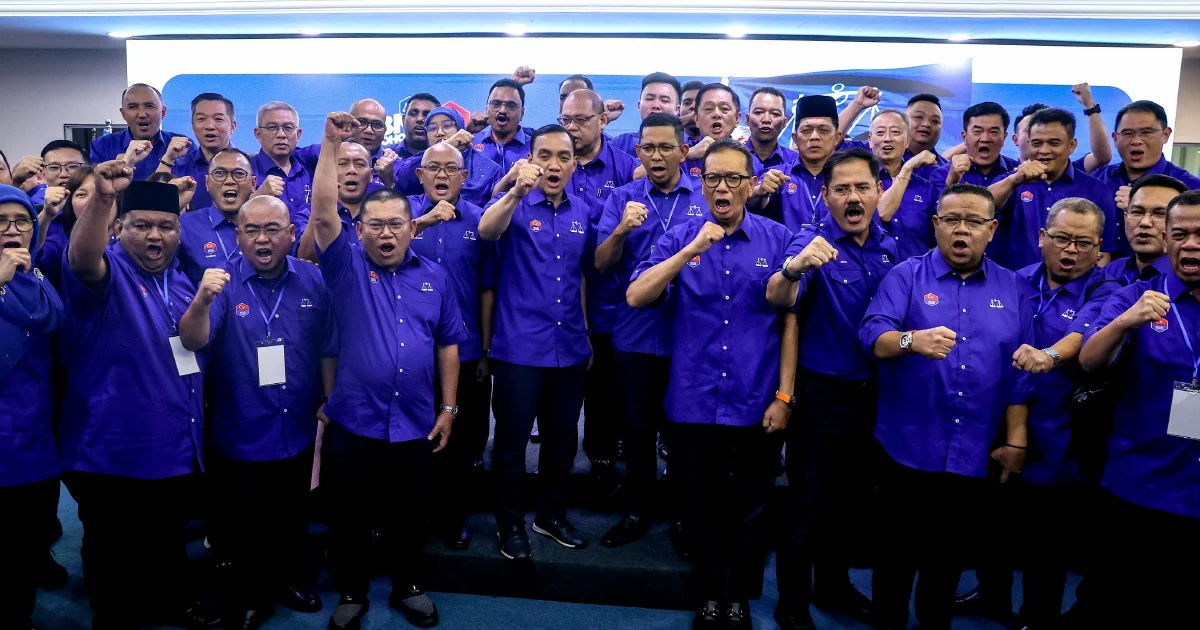
Speculation about a potential three-way political alignment in Johor has largely evaporated following Barisan Nasional's announcement of its candidate roster for the state election. The omission of representatives from Parti Wawasan Negara from the BN ticket marks a significant development in the coalition's strategy heading into the polls, effectively foreclosing what had been the subject of considerable political rumour throughout the pre-election period.
Political observers and analysts had spent considerable time dissecting the possibility that BN might attempt to forge a cooperative arrangement with Pas and Wawasan, a relatively newer entrant into Malaysia's political landscape. Such an alliance would have represented an unconventional configuration, given BN's traditional dominance and the distinct ideological positions held by each potential partner. The fact that no Wawasan members appear on the BN slate suggests the coalition has opted instead to proceed with a more conventional approach to securing seats in the state assembly.
The decision carries implications for Wawasan's political trajectory as it attempts to establish itself as a meaningful force in Malaysian electoral politics. The party, which has been working to broaden its appeal beyond its initial support base, now faces uncertainty regarding its participation strategy in the Johor contest. Whether Wawasan will contest independently, align with an alternative coalition, or adopt a more limited presence in select constituencies remains unclear as the state gears toward polling day.
For Barisan Nasional, the move demonstrates a confidence in its ability to retain dominance in Johor through its established component parties and machinery. The coalition has historically maintained strong organisational advantages in the state, with parties such as UMNO commanding substantial grassroots networks and voter loyalty across multiple demographic segments. By confining its nomination process to established BN members, the coalition signals that it believes its traditional electoral strength remains sufficient to meet its objectives without incorporating external parties.
The Pas dimension to the earlier cooperation speculation also merits consideration. The Islamic party, which has experienced significant fluctuations in electoral fortunes across different Malaysian states and federal elections, may harbour its own calculations regarding the Johor contest. A formal coalition arrangement with BN could have offered Pas exposure and legitimacy in a state where it has historically maintained a presence but not always demonstrated commanding electoral strength. The absence of visible coordination arrangements suggests either that preliminary discussions yielded no substantive agreement, or that the political arithmetic did not favour such an alliance from Pas's perspective.
Johor's political significance within the Malaysian federation cannot be understated. As the nation's second-largest state by population and a crucial economic contributor, the state's electoral outcomes frequently carry implications that ripple throughout national politics. The composition of the state government influences resource allocation, infrastructural priorities, and the broader trajectory of federal-state relations. Any potential shifting of the political balance in Johor therefore commands attention not merely as a local matter but as an element within the broader national political calculus.
The timing of BN's candidate announcement arrives at a juncture when Malaysian politics continues to evolve following the 2022 federal elections and subsequent realignments at both national and state levels. The political landscape has become notably more fragmented, with smaller parties attempting to carve out niches and established coalitions reassessing their configurations. In this environment, BN's decision to proceed without incorporating Wawasan suggests a deliberate choice to consolidate around its core constituency rather than pursue what might have been perceived as a dilution of its brand through expansion of the coalition framework.
Wawasan's exclusion also reflects the complexities inherent in coalition-building within Malaysia's multiparty democracy. Bringing additional parties into an existing arrangement requires not only agreement on electoral mechanics but also on governance principles, resource distribution, and decision-making processes. The complications arising from these considerations may have ultimately dissuaded BN from pursuing what could have appeared an attractive prospect at an earlier stage of deliberation. Coalition formation in Malaysian politics frequently encounters such practical impediments that cause initially promising configurations to dissolve.
Looking forward, the clarity provided by BN's candidate list allows other political actors to calibrate their own strategies with greater precision. Opposition coalitions now possess concrete information about the field they will confront, enabling them to deploy resources and candidates more effectively. Similarly, independent candidates and parties can better assess the political landscape and make informed decisions about contesting specific seats or state-level alliances. This transparency, while perhaps disappointing to those who had invested hope in the earlier cooperation scenario, provides beneficial structure to the electoral competition.