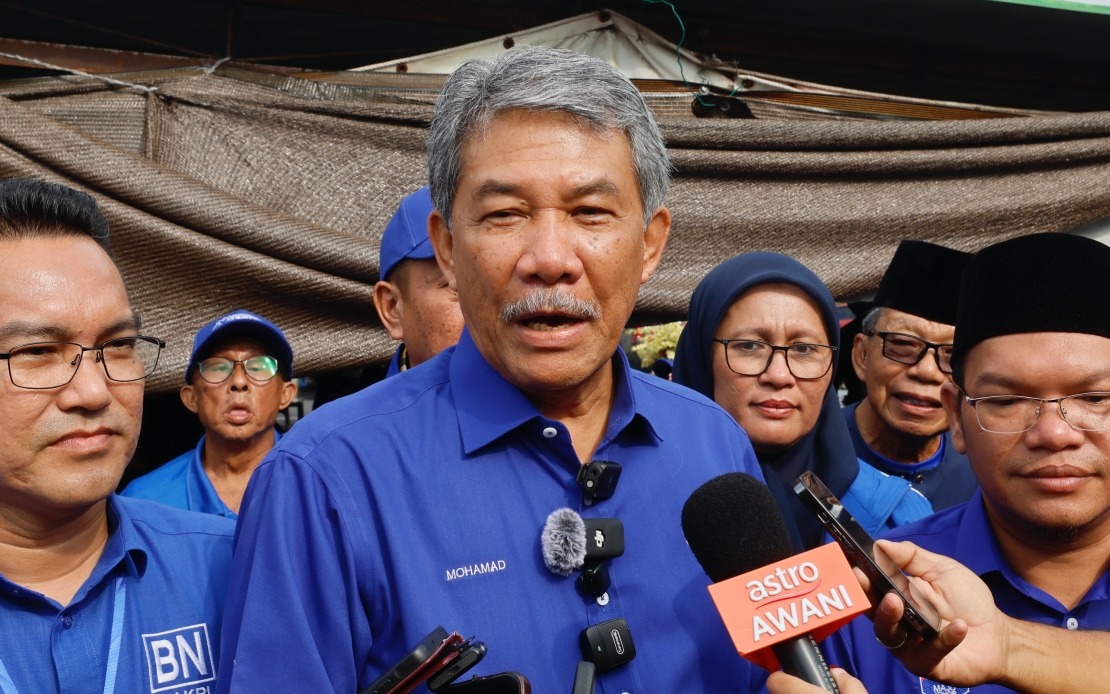
Datuk Seri Mohamad Hasan, the UMNO deputy president and Foreign Minister, has called for a measured and professional approach to campaigning in Johor's state election, warning political contestants against letting personal animosity undermine the stability of Malaysia's Federal governance structure. Speaking at a voter engagement session in the Tiram state constituency, Mohamad stressed that whilst all participating parties have the right to articulate their policy platforms and present their vision to the electorate, the campaign must not jeopardise the collaborative arrangements that currently sustain the Unity Government at the national level.
The distinction Mohamad drew between robust policy debate and destructive personal attacks reflects growing concerns among Coalition leaders about the tone of state-level politics threatening Federal unity. His remarks acknowledge that inter-party competition is a natural and healthy aspect of democracy, but signal that the Johor contest must operate within certain boundaries to ensure that disagreements at the state level do not cascade into wider governmental dysfunction. This nuanced position attempts to balance democratic pluralism with pragmatic governance, a balancing act that becomes increasingly delicate as Malaysia navigates multiple simultaneous elections and shifting coalition dynamics.
In characterising the appropriate campaign tone, Mohamad employed a colloquial formulation that captures a distinctly Malaysian political culture: policy disagreement is acceptable, but personal antagonism crosses a line. He illustrated this principle by noting that parties may confidently present their own programmes without attacking the legitimacy of rivals, and that social banter between political personalities, whilst inevitable in any electoral contest, must not descend into ad hominem assaults that inflame broader divisions. This framework essentially asks campaigners to separate the contest for power from personal vindictiveness, a distinction that becomes harder to maintain as campaigns intensify and partisan emotions rise.
Mohamad's intervention also directly addressed one of the more contentious narratives surrounding the Johor election: suggestions that the timing and nature of the contest are somehow connected to efforts to secure the release or pardon of Datuk Seri Najib Tun Razak, the former Prime Minister currently serving a jail sentence. By labelling such allegations as unfounded, Mohamad sought to preempt criticism that might frame the election as serving narrow factional interests rather than representing a genuine expression of democratic choice. His response reflects UMNO's continued sensitivity around legal proceedings involving its former leader and the party's broader reputation within the Coalition.
On the constitutional and legal dimension of the Najib question, Mohamad articulated a clear constitutional teaching that distinguishes between state and Federal authority. A state government, he noted, lacks the institutional capacity to influence Federal-level matters such as criminal pardons, which remain the prerogative of the Yang di-Pertuan Agong under constitutional provisions governing the monarchy's discretionary powers. By emphasising this jurisdictional boundary, Mohamad aimed to deflate speculation that state-level political outcomes could translate into Federal interventions affecting Najib's legal status. This argument, whilst constitutionally sound, also implicitly acknowledges that such connections are sufficiently plausible in Malaysian political discourse to require explicit rebuttal.
The timing of Mohamad's remarks carries particular significance given that the Johor state election represents a major electoral test for the Unity Government coalition, which has managed Malaysia's Federal affairs since 2022 under an arrangement that defies traditional coalition alignments. The Johor contest thus functions as a barometer of whether this politically fragile arrangement can withstand the pressures of competitive state politics without fracturing at the national level. A heavily acrimonious campaign could exacerbate tensions between UMNO, PKR, DAP, and other Coalition components, each of which has competing interests in Johor's political future.
From a Malaysian voter perspective, Mohamad's appeal for mature campaigning touches on broader public concerns about political instability and governance effectiveness. As Malaysian citizens have witnessed multiple changes of government and constitutional crises over the past decade, campaign conduct that prioritises stability and inter-party comity may resonate with voters fatigued by political turmoil. Conversely, some voters may perceive calls for restraint as attempts by established parties to insulate themselves from vigorous criticism, a tension inherent in any appeal for civility during competitive contests.
The logistical dimensions of the Johor election underscore the scale of this electoral exercise. With 172 candidates vying for 56 seats in the State Legislative Assembly, and polling scheduled for 11 July following early voting on 10 July, the contest represents a significant mobilisation of electoral machinery and political resources. The number of candidates suggests robust participation by multiple parties, indicating that the election will likely feature genuine competition rather than predetermined outcomes, which adds weight to Mohamad's concern that heated campaigning could generate lasting divisions within the governing coalition.
Southeast Asian readers observing Malaysian politics may note that Mohamad's position reflects broader regional challenges: how do countries with multi-party systems and frequent elections maintain governmental coherence and policy continuity when coalition partners compete intensely at sub-national levels? The Johor election offers a case study in this tension, illustrating both the resilience of democratic competition and the fragility of fragmented governing coalitions. Malaysia's experience in managing this balance provides lessons for other Southeast Asian democracies navigating similar coalition arrangements.
The appeal for prudent campaigning also reflects UMNO's strategic positioning within Malaysian politics. As the dominant partner in the Coalition but facing electoral vulnerabilities in various states, UMNO has an interest in campaign environments where institutional incumbency and policy delivery matter more than personal antagonism or factional appeals. By framing the campaign in terms of mature governance rather than personal competition, UMNO attempts to leverage its administrative experience and institutional resources, whilst implicitly discouraging campaigns that might mobilise anti-establishment sentiment or focus on leadership personalities.
For Malaysian political observers, Mohamad's intervention signals that Federal leaders remain actively engaged in shaping the parameters of state-level contests, even as formal campaign autonomy rests with state-level contestants. This dynamic reflects the interconnected nature of Malaysian federalism, where ostensibly separate state and Federal elections function within a unified political ecosystem where national concerns inevitably influence local contests. The emphasis on preserving Federal stability thus operates as a form of soft constraint on how aggressively state-level parties may campaign, a distinctly Malaysian approach to managing electoral democracy within complex constitutional structures.

