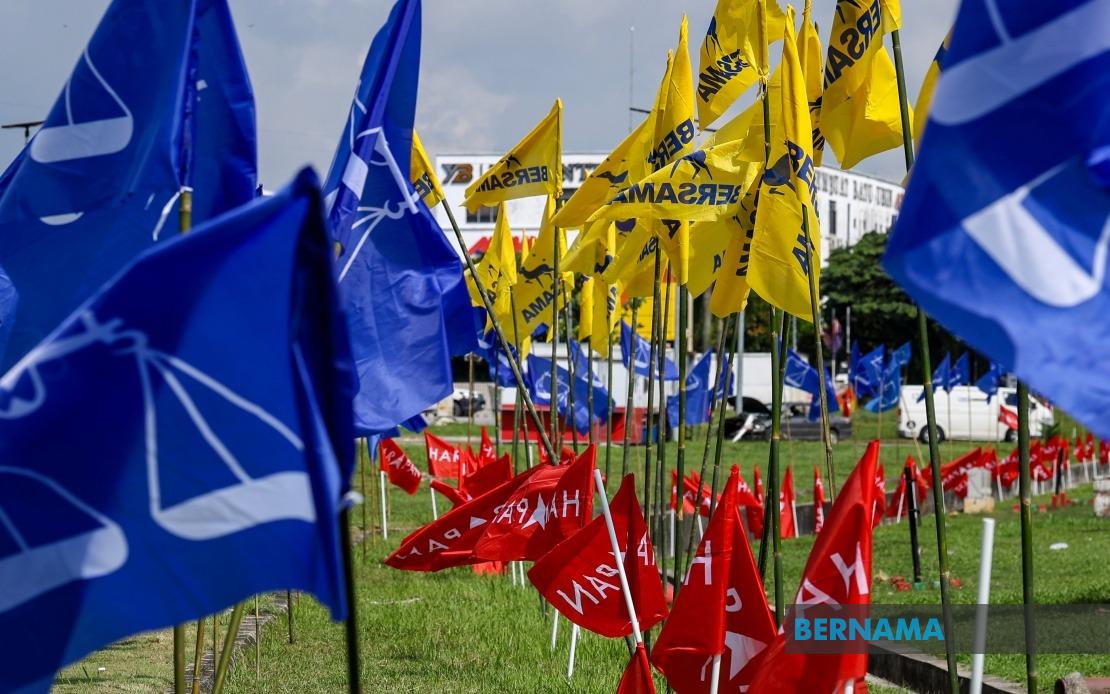
The opening phase of Johor's 16th state election campaign has unfolded with subdued intensity, as political contenders eschew traditional mass gatherings in favour of localized, direct engagement strategies. Instead of hosting sprawling public rallies in the opening week, all competing parties have opted for methodical, constituency-based approaches that prioritize one-on-one voter contact and intimate community interactions. This measured campaign rhythm reflects a broader shift in Malaysian electoral strategy, where digital-age precision has begun replacing the high-decibel spectacle that once dominated state and federal campaigns.
Political analyst Prof Datuk Dr Sivamurugan Pandian from Universiti Sains Malaysia has characterized the first week's activities as foundational work, emphasizing that the targeted approach serves multiple strategic purposes beyond simple voter persuasion. House-to-house canvassing, small group discussions, and localized community programmes allow candidates to develop nuanced understanding of constituent concerns while simultaneously testing and strengthening party organizational structures at the grassroots. This methodical groundwork, Sivamurugan explains, equips parties with better resource allocation and messaging refinement as they move into the campaign's more volatile second phase, when senior party figures are expected to enter the fray with intensified rallies and coordinated digital assaults targeting persuadable voters.
The strategic calculus underlying this shift reflects contemporary electoral realities that modern political scientists increasingly recognize. Dr Azmi Hassan, a geostrategist at the Nusantara Academy for Strategic Research, describes the evolution toward data-driven campaigns leveraging hybrid strategies that blend traditional face-to-face persuasion with sophisticated social media deployment. The old model of large public gatherings in open spaces has given way to precision targeting, where campaign teams systematically identify and categorize voters as supporters, neutrals, or opposition—what electoral professionals term white, grey, and black voters—and tailor messaging accordingly. This granular approach demands deeper institutional knowledge and technological capability, advantages that larger, better-resourced parties possess disproportionately.
Thematic messaging from contesting parties has thus far coalesced around three primary narratives: demonstrations of past accomplishment, commitments regarding future development, and reassurances concerning political stability and governance capacity. According to Mujibu Abd Muis, a researcher at the Ilham Centre and political science lecturer at Universiti Teknologi MARA, these dominant campaign themes have not yet crystallized into sufficiently powerful narratives to reshape the broader electoral landscape decisively. The critical variable determining narrative effectiveness, Mujibu argues, resides in whether campaign messaging successfully translates into concrete connections with voters' lived experiences—particularly their anxieties regarding cost of living pressures, employment security, local infrastructure development, and public service delivery standards. Without such tangible linkage between campaign rhetoric and daily material concerns, even well-crafted political messaging struggles to penetrate voter consciousness effectively.
Geographic concentration of campaign activity in the election's opening week reveals strategic calculations about which battlegrounds matter most. Party machinery has concentrated resources disproportionately in northern Johor, particularly across Muar, Tangkak, Segamat, portions of Batu Pahat, and Kluang constituencies. This geographic prioritization is neither random nor superficial; it reflects sophisticated party assessment regarding which state assembly seats present competitive contests likely to determine overall election outcomes. Northern Johor contains multiple marginal constituencies expected to be hotly contested, prompting parties to deploy senior national leadership there—not merely as crowd attractions but as signals of strategic significance. This resource optimization suggests parties recognize that many seats remain genuinely uncertain and require concentrated attention.
The broader electoral contest in Johor increasingly structures itself as a two-coalition confrontation between Barisan Nasional and Pakatan Harapan, according to analysis by Dr Mazlan Ali, an associate professor at Universiti Teknologi Malaysia's Faculty of Social Sciences and Humanities. This bifurcated competition has created distinct geographic strongholds and contested zones that shape how each coalition deploys its campaign machinery. Pakatan Harapan possesses stronger structural advantages in southern and western Johor constituencies, whereas Barisan Nasional maintains traditional dominance across eastern coastal districts, particularly Mersing and Kota Tinggi. The campaign machinery mobilization visible during this opening week directly reflects each coalition's calculus regarding where victory is achievable and where defensive operations become necessary. Consequently, campaign resource allocation—whether visible through senior leader appearances, grassroots volunteer deployment, or digital messaging intensity—functions as a window into which areas each coalition genuinely contests.
Despite divergent party interests and strategies, political analysts across ideological spectrums identify a common imperative transcending traditional partisan divisions: driving voter turnout remains perhaps the election's most consequential variable. While campaign sophistication, messaging discipline, and organizational effectiveness certainly matter, the ultimate outcome hinges substantially on which electorate segments actually mobilize to cast ballots on polling day. Voter turnout patterns can dramatically amplify or diminish individual party advantages, potentially overriding other campaign efforts. The 56 state assembly seats receiving 172 total candidates represent constituencies where engagement strategies and turnout mobilization will ultimately determine whether Barisan Nasional consolidates power or whether Pakatan Harapan effects significant change across Malaysia's southernmost state.
Looking toward the campaign's second phase, analysts expect substantially elevated intensity as both coalitions bring senior leadership into constituencies, orchestrate coordinated rallies targeting base mobilization and persuasion, and intensify digital media campaigns designed to reach undecided voters. The first week's cautious, localized approach represents merely preliminary positioning; the real campaign machinery will reveal itself when national figures enter the field and sustained pressure campaigns commence across all districts simultaneously. The moderate momentum characterizing the campaign's opening reflects deliberate strategic choice rather than genuine lack of party commitment or voter interest. Party machinery has not yet fully mobilized its extensive resources, and the coming days will witness substantially different campaign dynamics as the election approaches its July 11 polling date. Early voting commences July 7, creating a crucial final window for parties to reach persuadable voters who remain genuinely undecided as the campaign intensifies considerably.

