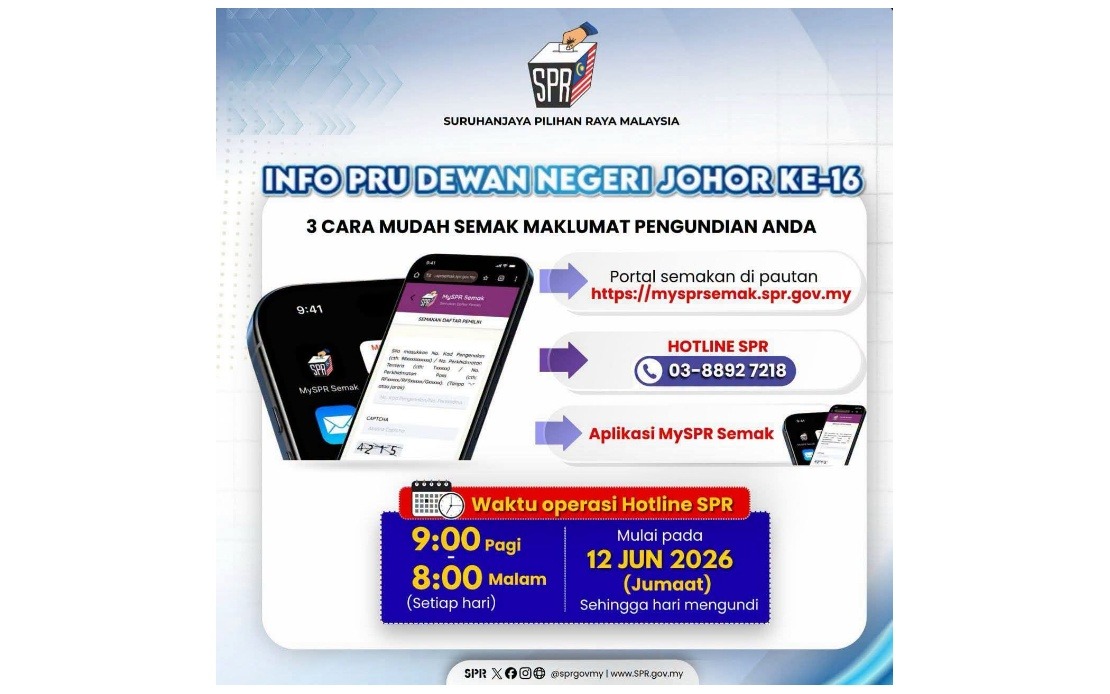
With the Johor state election set for Saturday, July 11, the Election Commission is making a final push to ensure registered voters know exactly where and how they will participate in the democratic process. The reminder comes as the country's largest state gears up for a significant political contest that will shape its governance for the coming term. Voters have been instructed to use the MySPR Semak portal or mobile application to confirm their designated polling centres and voting streams, a move designed to prevent confusion and streamline the voting experience across the state.
The MySPR Semak system, which allows Malaysians to verify their electoral registration details online, has become an essential tool for voter preparation in recent elections. By accessing either the web portal or dedicated mobile application, registered voters can identify their specific voting location and assigned ballot stream, thereby reducing bottlenecks at polling stations on the day itself. This proactive approach reflects efforts by electoral authorities to modernise the voting process and accommodate the growing use of digital platforms among Malaysian citizens.
The election involves a substantial portion of Malaysia's electorate, with 2.7 million eligible ordinary voters expected to participate. This figure underscores Johor's importance within the national political landscape—the state's economic significance and large population base make its election outcomes particularly consequential for both state-level governance and broader national political alignments. The turnout and results in Johor often serve as an indicator of shifting voter sentiments across the country.
Advance polling took place last Tuesday, accommodating security personnel and their families who would be unable to vote on the main polling day. A total of 19,471 early voters participated, comprising 7,960 military personnel and their spouses alongside 11,511 police officers, including members of the General Operations Force and their spouses. This early voting mechanism ensures that those serving the country's security apparatus can fulfil their civic duties without compromising their operational commitments, a practice that has become standard in Malaysian electoral procedures.
The contest encompasses a diverse and competitive political landscape, with 172 candidates vying for the 56 state assembly seats. The two major coalitions—Pakatan Harapan and Barisan Nasional—each fielded the maximum of 56 candidates, reflecting their determination to contest every single constituency. This represents the traditional two-bloc competition that has characterised Malaysian politics in recent years, though the race now features considerably more complexity with the entry of other significant players.
Perikatan Nasional, the coalition that has gained considerable political traction in certain regions, fielded 33 candidates, positioning itself as a substantial alternative to the two dominant blocs. Meanwhile, emerging and smaller parties are also seeking to make their mark: Parti Bersama Malaysia (Bersama) presented 15 candidates, MUDA put forward four contenders, while Parti Orang Asli Malaysia and Parti Sosialis Malaysia also have representatives in the race. Additionally, six independent candidates are standing, offering voters options outside the formal party structure.
This configuration reflects the increasingly fragmented nature of Malaysian electoral competition. Rather than a simple two-horse race, voters now face genuinely complex choices with multiple credible alternatives available. This diversification of the political marketplace could influence campaign strategies, as candidates must distinguish themselves not only from their traditional opponents but from newer entrants offering different political visions and priorities. For Johor voters, the expanded choice means greater opportunity to support candidates whose platforms align with their specific concerns, whether those relate to economic development, social services, or other pressing issues.
The timing of the Johor election carries significance beyond the state itself. Electoral outcomes frequently generate momentum that influences national political calculations, and Johor's result could provide important signals about voter preferences heading into any potential federal elections. The state's diverse demographic composition—encompassing urban centres, manufacturing zones, and agricultural areas—makes it a microcosm of Malaysian society, rendering its electoral verdict particularly meaningful for understanding broader political currents.
Voter preparation remains crucial to ensuring a smooth and credible election process. By utilising the MySPR Semak system to verify their details in advance, voters contribute to reducing administrative burdens on election day and help ensure that polling stations operate efficiently. This preparatory step, which the Election Commission has actively promoted, serves the interests of voters and electoral administrators alike. For those unfamiliar with the online system, assistance is typically available through various government channels and polling station staff who can provide guidance.
The Election Commission's repeated reminders to voters about verification procedures underscore the importance it places on informed participation. A well-prepared electorate that understands voting procedures, knows their polling locations, and arrives equipped with necessary documentation facilitates smoother operations and reduces the potential for disputes or complications. This emphasis on voter education and preparation reflects international best practices in electoral administration and contributes to public confidence in the integrity of the process.
As Johor heads towards Saturday's election, the state stands at a significant political juncture. The combination of voter preparation initiatives, diverse candidate selection, and the involvement of multiple political coalitions suggests that this election will capture genuine contestation over the state's future direction. Whether the established order prevails, whether alternative coalitions gain ground, or whether new political forces disrupt traditional patterns remain questions that will be answered when the votes are counted. Until then, the Election Commission's message to voters remains clear: verify your details, know your polling centre, and prepare to exercise your democratic right.

