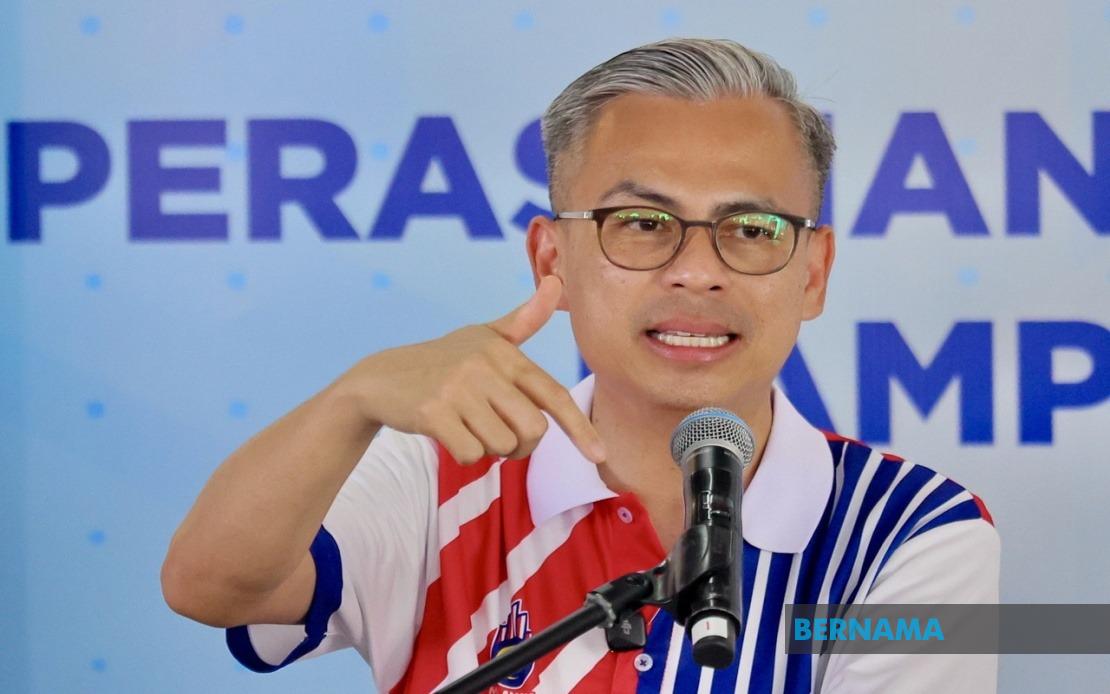
Communications Minister Datuk Fahmi Fadzil has publicly condemned the individuals behind a fraudulent WhatsApp account masquerading as Saiful Nizam Samat, the Pakatan Harapan candidate contesting the Endau state seat in the Johor election. In a blistering comment posted on the candidate's official Facebook page, Fahmi characterised the deception as an irresponsible and desperate tactic, suggesting that those orchestrating such schemes will resort to virtually any method to secure victory in the state polls.
Saiful Nizam moved quickly to distance himself from the impersonation, issuing a formal denial and clarification through his official campaign channels. The PH candidate stressed that the WhatsApp account in question bore no legitimacy whatsoever and had no affiliation with either himself personally or his campaign machinery, formally known as Team SS. He emphasised the seriousness of the situation by publicly releasing screenshots of the fraudulent conversations, which revealed the fake account claiming to be "Saiful Samad, the future Endau assemblyman" and utilising his genuine profile photograph to bolster its credibility.
The emergence of this impersonation highlights a troubling trend during Malaysian electoral campaigns, where digital platforms become vectors for misinformation and identity theft. Saiful Nizam's cautionary advisory to constituents underscores the vulnerability of voters to manipulation through seemingly official channels. Members of the public who received messages from the fake account were urged to exercise heightened scepticism when encountering unsolicited campaign communications and to refrain from divulging personal details to unverified sources.
For those seeking clarity on campaign communications, Saiful Nizam directed voters to verify information exclusively through Team SS's officially recognised communication platforms. This distinction between authentic and fraudulent channels becomes increasingly critical as digital tools dominate modern political engagement. The candidate's approach reflects growing awareness among political parties that election campaigns demand robust mechanisms to authenticate direct voter contact and prevent organised deception.
The Endau seat has emerged as a particularly contested battleground, attracting candidates from across the political spectrum. The four-way competition encompasses representatives from Barisan Nasional, Pakatan Harapan, Perikatan Nasional, and Parti Orang Asli Malaysia, transforming the constituency into a microcosm of Malaysia's fractured political landscape. Such fragmented contests create opportunities for unconventional tactics, as candidates scramble to differentiate themselves and establish direct connections with voters through multiple channels simultaneously.
The incident raises broader concerns about election integrity in the digital age. While the Elections Commission has established guidelines governing campaign conduct, the speed and ease with which bad actors can create convincing impersonations presents an asymmetrical challenge to enforcement mechanisms. Saiful Nizam's public exposure of the scheme represents one effective counteroffensive, yet suggests that political candidates must now invest considerable resources in digital credential management and voter education to combat such threats.
Fahmi's ministerial intervention signals that the federal government views such impersonation tactics as serious enough to warrant high-level condemnation. His characterisation of those behind the fake account as willing to pursue any avenue to electoral success suggests frustration within the ruling coalition about the deteriorating standards of campaign conduct. Such statements also serve to inoculate voters against falling for similar schemes by authority figures explicitly labelling them as dishonourable practices.
The timing of this incident during the Johor campaign cycle suggests that digital manipulation may become an increasingly prevalent feature of Malaysian electoral politics. Voters across the nation should take note of the mechanisms being deployed and exercise appropriate caution when engaging with any unsolicited political communications. The responsibility for verification lies not solely with electoral authorities but also with an increasingly savvy and digitally literate electorate.
Beyond the immediate Endau contest, this episode underscores the need for comprehensive digital literacy programmes and stronger protocols to verify campaign authenticity. Political parties must establish easily recognisable verification systems, while authorities should work toward deterring such fraudulent activities through meaningful consequences. As Malaysia's electoral landscape continues to evolve, establishing and maintaining trust between candidates and voters through verified communication channels will become essential to preserving the credibility of democratic processes.

