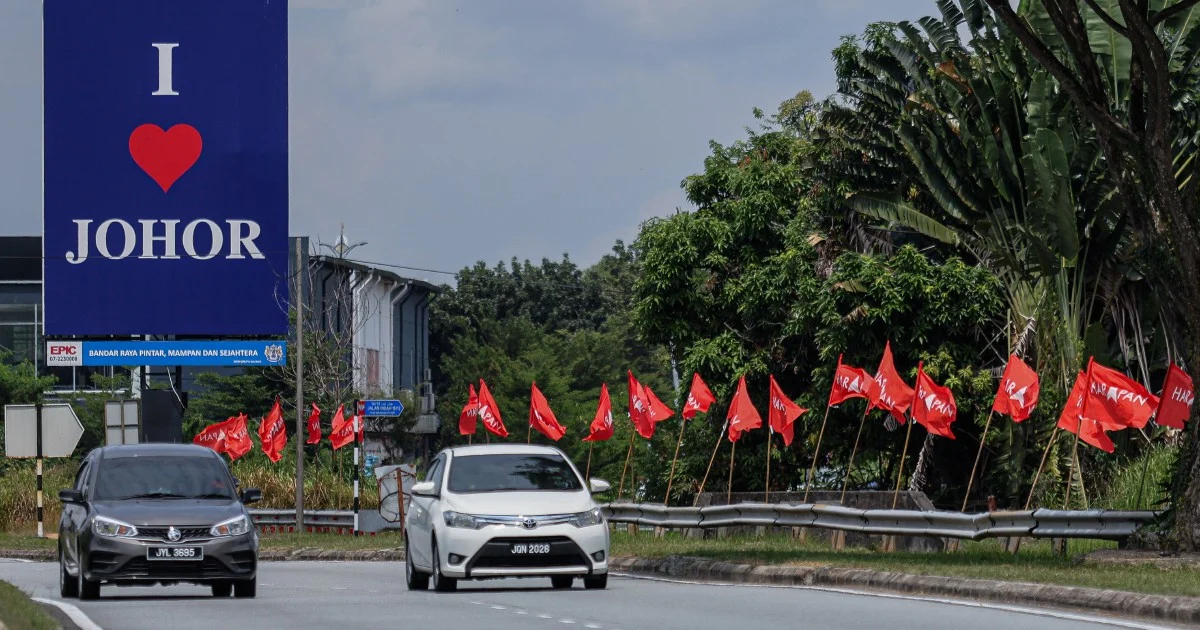
The upcoming Johor state election ought to transcend the personality-driven narrative that dominates Malaysian political discourse and instead function as a substantive examination of competing coalitions' capacity to deliver tangible improvements to residents' lives, according to voices within the PKR youth wing. This assertion represents an effort to shift focus from the traditional fixation on individual leadership candidates toward broader questions of governance, administrative competence, and policy direction that will determine the state's trajectory over the coming years.
In Malaysian politics, campaigns frequently crystallise around a single figurehead—the would-be menteri besar, in this context—who becomes the symbolic embodiment of a coalition's promise. This personalisation can obscure the institutional machinery and collective expertise that actually execute government functions. By arguing for a more expansive evaluation framework, PKR's youth leadership is attempting to recalibrate public expectations and encourage voters to examine the full roster of proposed representatives, their professional backgrounds, sectoral knowledge, and demonstrated track records in relevant fields such as economic development, infrastructure, education, or healthcare provision.
Johor's economic significance within Malaysia's broader landscape cannot be overstated. As the country's second-largest contributor to national gross domestic product, the state's performance directly influences regional prosperity and foreign investor confidence across Southeast Asia. A coalition's economic vision for Johor thus carries implications beyond state boundaries, affecting everything from manufacturing competitiveness to tourism development to supply chain resilience. When voters assess which team possesses superior economic plans, they are essentially determining how effectively Johor will compete regionally and globally, and whether local businesses and workers will benefit from coherent industrial policy and infrastructure investment.
The emphasis on coalition strength also addresses a recurring challenge in Malaysian state politics: the risk that elected governments become preoccupied with internal party management or factional disputes rather than public service delivery. A cohesive team with complementary skills and unified strategic direction can navigate these pressures more effectively than a disparate assembly of individuals united primarily by ambition for the top position. This consideration becomes particularly acute in states where government formation depends on coalition stability, as fractious partnerships frequently deteriorate once electoral mandates are secured, rendering campaign promises obsolete.
Social development in Johor encompasses multiple dimensions that require integrated, long-term planning. Infrastructure connectivity between urban and rural areas, skills training and vocational education aligned with labour market demands, affordable housing programmes, public health service accessibility, and environmental sustainability all merit serious consideration in electoral deliberations. A comprehensive coalition platform that addresses these interconnected challenges demonstrates greater sophistication than a candidate-centred campaign that risks reducing complex governance problems to matters of individual charisma or likability.
The PKR youth intervention also reflects broader strategic calculations within Malaysian opposition politics. By encouraging voters to evaluate overall coalition quality rather than focusing narrowly on who occupies the menteri besar's office, opposition parties can potentially appeal to swing voters who may harbour reservations about any single candidate but find the broader programme credible. This approach provides flexibility if candidate circumstances shift due to health, legal proceedings, or other unforeseen factors, since the coalition's strength would theoretically remain intact regardless of individual personnel changes.
Historically, Johor has been a bastion of BN support, though recent electoral shifts across Malaysia have demonstrated that state politics remain genuinely competitive. The question of which coalition can most convincingly articulate a vision for Johor that balances accelerating economic growth with inclusive development becomes crucial in mobilising diverse voter constituencies—from manufacturing workers concerned about job security to small business owners seeking regulatory clarity to young professionals seeking career opportunities and affordable living costs.
The emphasis on team strength and developmental planning also implicitly critiques a common Malaysian political pathology: the promotion of individuals based primarily on factional loyalty or family connection rather than demonstrated competence. By insisting that voters examine what coalition members collectively bring to the table, PKR youth are advocating for merit-based evaluation and institutional robustness. This represents a departure from personality-cult politics toward substantive governance assessment.
Furthermore, state elections increasingly carry implications for federal political balance. A strong showing by any coalition in Johor reverberates through national coalition dynamics, potentially affecting parliamentary stability and government formation at the federal level. Voters in Johor thus carry responsibility that extends beyond immediate state concerns, making the choice of a capable, coherent coalition even more consequential than localized issues might suggest.
The argument advanced by PKR's youth leadership ultimately reflects democratic maturity—the recognition that electoral contests fundamentally concern which group possesses the institutional capacity, policy expertise, and internal cohesion to govern effectively. While individual candidates will inevitably remain important, framing elections as competitions between coalitions' comprehensive visions encourages voters to think critically about governance rather than respond reflexively to personality narratives. For Johor particularly, where economic dynamism and social complexity demand sophisticated policy responses, this reframing could elevate the quality of electoral discourse and focus political accountability on measurable outcomes rather than symbolic gestures.

