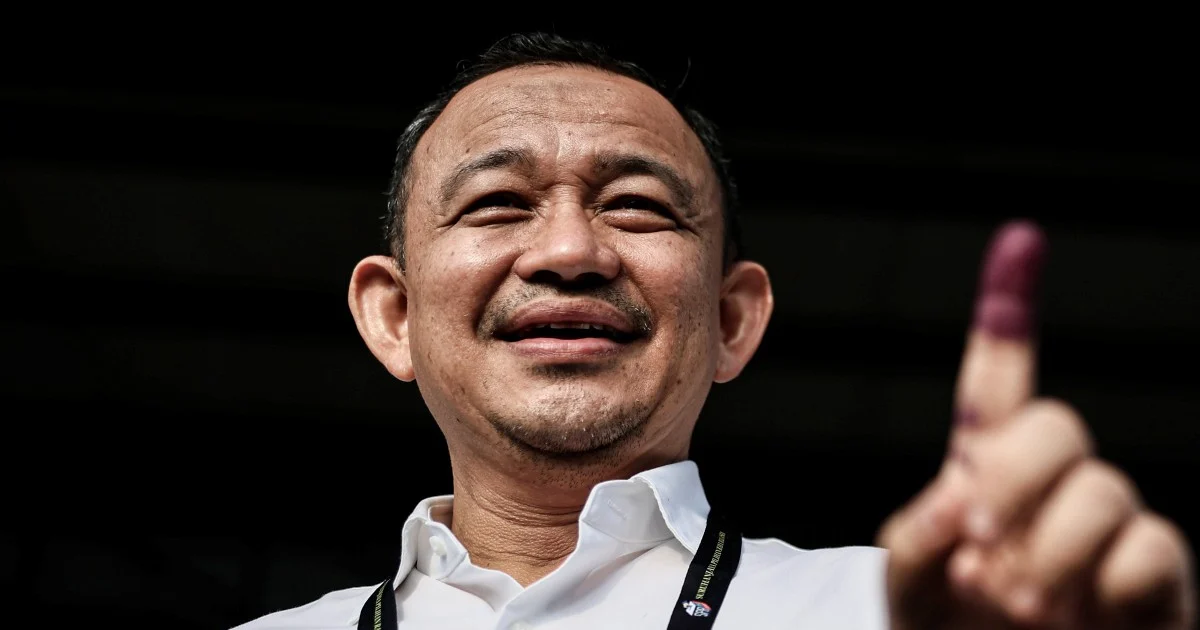
Dr Maszlee Malik, the former minister of education under the previous Pakatan Harapan government, is positioned to secure what would represent a significant milestone for his party PKR in Johor's ongoing state election. Based on tallies from the polling stations, Maszlee's performance in Puteri Wangsa suggests he is heading toward victory, which would mark the first time PKR has successfully won a state seat in Johor under the current electoral arrangement.
The trajectory of results across the state reveals a more competitive political landscape than many observers anticipated heading into polling day. Barisan Nasional, the long-dominant coalition that governed Johor for decades before the 2018 federal election upheaval, has demonstrated renewed capacity to challenge Pakatan Harapan in constituencies that have been regarded as opposition bastions since the political realignment of recent years. This represents a notable reversal of momentum compared to the opposition's strong showing in certain Johor seats during recent general elections.
Maszlee's ascent in Puteri Wangsa carries particular symbolic weight given his profile as a prominent PKR figure and his tenure as education minister from 2018 to 2020. His candidacy in this seat was viewed as an attempt by the opposition coalition to establish a foothold in state-level politics within Johor, a state where BN's traditional dominance had made inroads difficult for PH despite the coalition's federal-level successes. A victory here would validate the party's electoral strategy and provide momentum for future campaigns in a state where parliamentary representation has remained relatively fragmented between the coalitions.
The broader picture emerging from unofficial electoral results suggests that BN has successfully mobilized its traditional support base and appealed to voters in areas where PH had consolidated gains during the 2018-2022 period. This competitive dynamic reflects shifting voter preferences and the impact of local governance performance, economic conditions, and campaign messaging in specific constituencies. The results indicate that no political coalition can take voter support for granted even in areas previously considered secure.
Johor's political significance extends beyond its status as the second-largest state by population. As a major economic hub in Malaysia's south and a crucial component of federal coalition arithmetic, electoral outcomes here influence national political calculations and signal broader trends in voter sentiment. The state's rubber and palm oil industries, manufacturing sectors, and port facilities make it economically vital, meaning governance performance directly affects millions of Malaysians. Voter priorities in Johor—ranging from infrastructure and employment to education quality and religious affairs—often reflect nationwide concerns.
The contest in Puteri Wangsa and similar seats represents the modern reality of Malaysian electoral politics, where coalitional boundaries have become less rigid and individual candidates' reputations carry greater weight than in previous decades. Maszlee's appeal as an educated professional with ministerial experience contrasts with traditional party-based voting patterns that dominated earlier elections. His education background and policy record during the PH government provided a platform for engagement with voters concerned about school quality, curriculum development, and human capital investment.
BN's resurgence in Johor seats previously held by PH also reflects the coalition's restructuring following the 2020 political crisis and its rehabilitation through the Perikatan Nasional government interregnum. The party has invested considerably in rebuilding organizational capacity at state and grassroots levels, and Johor appears to be yielding returns on those efforts. Voters in certain constituencies may have shifted support due to perceived underperformance by PH state representatives or preferences for BN's federal influence in channeling development allocations.
The implications for Malaysia's political trajectory are substantial. A PKR victory in Johor, combined with BN's competitive showing across multiple seats, suggests that the coalition arithmetic for forming state governments remains fluid and unpredictable. Neither major coalition can assume dominance in particular regions, and individual constituency campaigns, local grievances, and candidate appeal have become primary determining factors. This fragmentation could complicate post-election coalition negotiations if no single grouping achieves commanding majorities.
For Malaysian business and investor communities watching Johor's election outcomes, the results provide insight into the stability and direction of state governance. Investor confidence depends partly on predictable political environments and continuity in policy implementation. The competitive nature of these elections, while beneficial for democratic representation and voter choice, introduces uncertainty about which coalition will prioritize particular infrastructure projects, industrial policies, and business-friendly regulations going forward.
The election also reflects evolving Malaysian demography and voter sophistication. Younger voters, particularly in urbanized areas of Johor like those in Puteri Wangsa, have demonstrated willingness to evaluate candidates on policy substance and professional credentials rather than solely on party affiliation. This shift challenges traditional party machinery that relied on communal networks and patronage structures to mobilize support, requiring all coalitions to invest more substantially in issue-based campaigning and candidate quality.
As counting continues across Johor's constituencies, the full picture of how voters distributed their preferences will clarify the direction of state-level politics. Maszlee's projected victory in Puteri Wangsa and BN's competitive performance elsewhere demonstrate that Malaysian elections remain genuinely contested affairs where outcomes remain contingent on multiple variables. The results will shape not only Johor's governance trajectory but also provide signals about voter priorities and coalition viability as Malaysia approaches future electoral contests at federal and other state levels.

