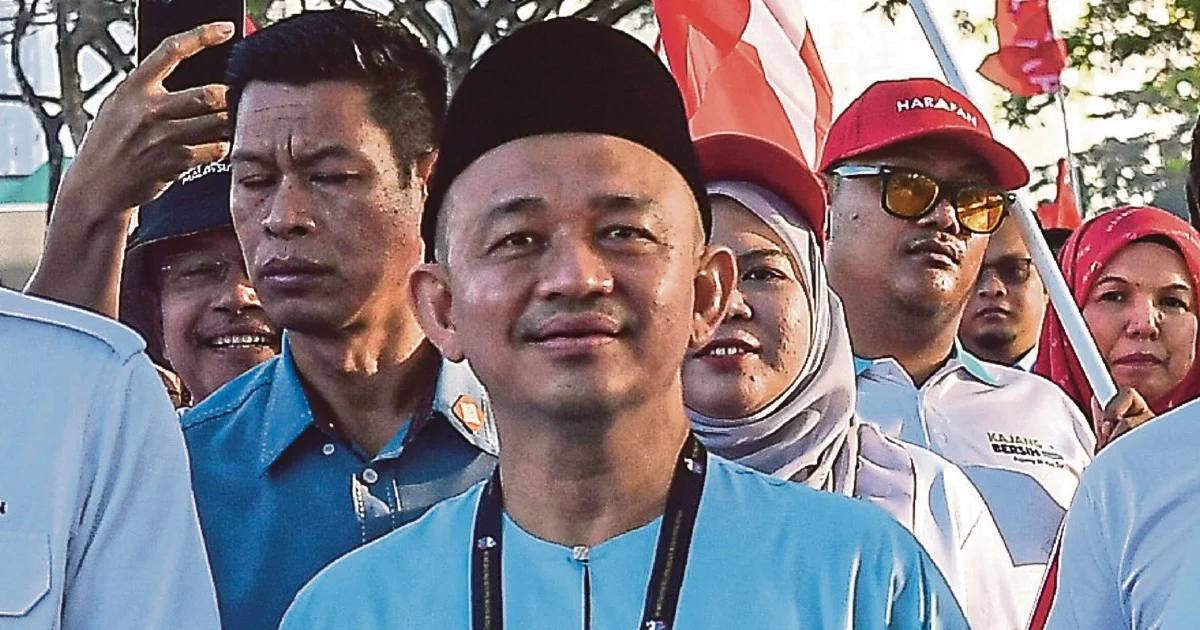
Former education minister Dr Maszlee Malik has characterised a Pakatan Harapan success in the forthcoming Johor election as a potential watershed moment for the state's trajectory. Speaking from Johor Baru, he highlighted how securing seats including Puteri Wangsa would position the opposition coalition to implement a renewed development agenda for the southern state.
Maszlee's remarks reflect the coalition's broader campaign strategy heading into the contest, which has centred on contrasting visions for Johor's future governance and economic direction. The coalition has positioned itself as an alternative capable of transforming public service delivery and infrastructure development across the state. By invoking the concept of a "new chapter," Maszlee sought to frame the election as a critical juncture where voters could reshape the political landscape that has long been dominated by traditional power structures.
Johor has remained a bastion of United Malay National Organisation-led governments for decades, and any significant inroads by Pakatan Harapan would constitute a notable political realignment in Malaysian politics. The state's importance extends beyond its own governance; as one of Malaysia's most economically developed regions, it carries symbolic and practical significance for any coalition seeking to demonstrate growing appeal across the country. A strong showing in Johor would validate the opposition's nationwide appeal and organisational capacity.
The coalition has specifically targeted marginal seats and constituencies where demographic shifts or economic grievances may have eroded traditional voting patterns. Puteri Wangsa, mentioned by Maszlee, exemplifies the type of urban or semi-urban constituency where younger voters and middle-class concerns about living costs and economic opportunity have gained traction. These constituencies require a different political message than rural strongholds, and Pakatan Harapan's emphasis on development and good governance may resonate with such voters.
Maszlee's own political journey adds credibility to his assessment. As a former education minister under the 2018 Pakatan Harapan government, he brings insider knowledge of how the coalition functioned in power and what priorities might guide its governance if returned to office. His comments suggest the coalition intends to emphasise proven competence and track record, despite the controversial nature of the 2018-2020 government's eventual collapse. By connecting electoral success to concrete development promises, the coalition aims to present itself as a pragmatic governing alternative rather than merely an oppositional force.
The election campaigns across Johor constituencies have increasingly centred on bread-and-butter issues: job creation, education quality, healthcare access, and infrastructure development. These themes align with Maszlee's framing of a "new chapter," which implicitly critiques the status quo while offering hope for improvement. For Malaysian voters weary of political instability and institutional drift, such messaging carries genuine appeal, particularly in developed states like Johor where expectations for public service are higher.
Beyond electoral arithmetic, Pakatan Harapan's electoral prospects in Johor carry implications for the broader structure of Malaysian politics. If the coalition can demonstrate strength in a traditionally opposition-weak state, it may shift perceptions about its viability as a nationwide government. Conversely, a poor showing would reinforce narratives about its limited appeal to certain voter demographics or regions. Johor's position as an economic bellwether means its political outcome influences investor confidence and economic planning across the region.
The state has witnessed gradual demographic changes that could favour the opposition coalition's electoral prospects. Urbanisation, rising education levels, and generational turnover have altered voter composition in key constituencies. Younger voters, in particular, often prioritise economic opportunity and transparent governance—themes central to Pakatan Harapan's platform. These structural shifts in the electorate may prove more durable and significant than short-term sentiment fluctuations.
Maszlee's intervention in the campaign reflects the coalition's strategy of deploying senior figures with ministerial experience to build confidence among voters who may view politics primarily through a governance lens rather than tribal or ideological allegiance. By highlighting the possibility of transformative development, he appeals to aspirational voters who believe new leadership could accelerate progress and improve service delivery. This approach seeks to transcend traditional communal voting blocs by framing the election around shared interest in functional, effective government.
For the broader Malaysian political ecosystem, the Johor election represents a test of whether opposition coalitions have stabilised sufficiently to mount sustained electoral challenges in traditional strongholds. The state's outcome may indicate whether the post-2020 political realignment continues evolving or whether traditional alignments reassert themselves. Maszlee's confidence in Johor's readiness for political change, articulated through the metaphor of a new developmental chapter, encapsulates how the coalition intends to persuade voters that electoral change serves their material interests and collective progress.

