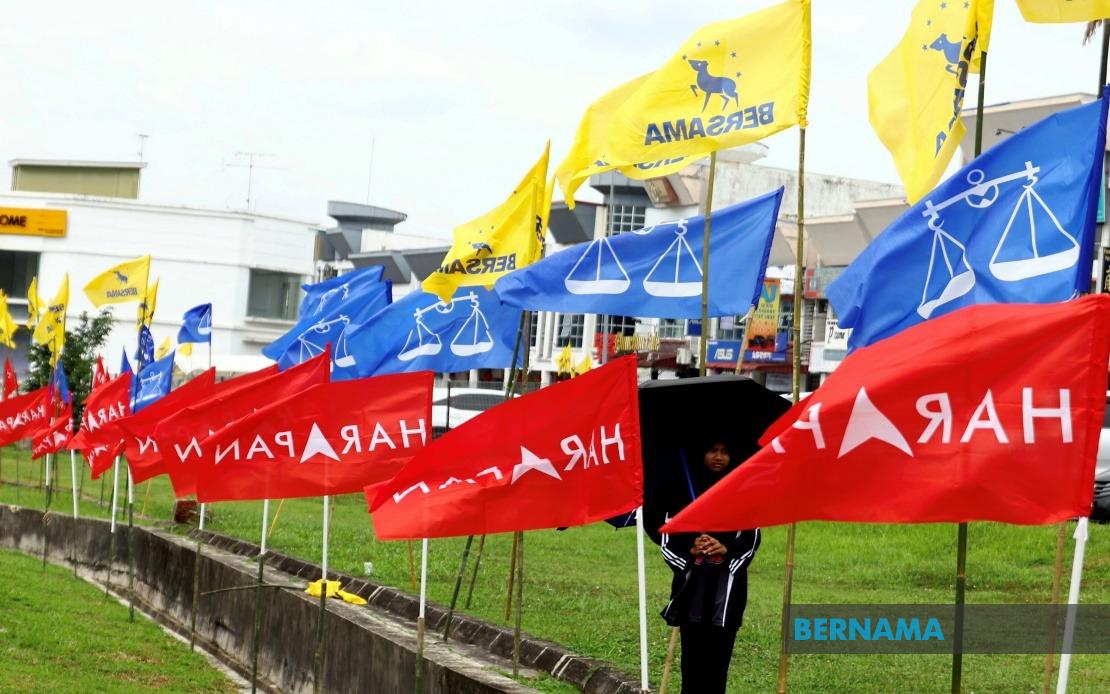
The campaign machinery for Johor's 16th state election will fall silent at 11.59 pm tonight, marking the end of a fortnight-long political sprint that has dominated the state's public discourse. With polling day arriving tomorrow, voters will proceed to 1,076 voting centres across the state to determine which of the 172 contesting candidates will represent them in the Johor State Legislative Assembly for the next five years. The Election Commission anticipates that full results could be announced as early as 10 pm, with voting set to commence at 8 am across the state.
The campaign period, which kicked off on June 27, has seen all major political coalitions deploy their heaviest hitters to secure voter backing. Prime Minister Datuk Seri Anwar Ibrahim and Pakatan Harapan chairman gave their backing to the opposition coalition's efforts, while Barisan Nasional marshalled Deputy Prime Minister Datuk Seri Dr Ahmad Zahid Hamidi and other senior figures to mobilise their ground support. The intensity of these efforts reflects how consequential the outcome is expected to be for Malaysia's political landscape at the state level.
Johor's electoral register encompasses 2.7 million eligible voters, a substantially larger electorate than the number of candidates competing—a sharp contrast to the previous state election, which saw 239 candidates field themselves across the same 56 seats. This reduction in candidate numbers suggests either tighter party discipline or a consolidation of support within existing political structures. The narrower field may simplify voter choice, though the outcome remains anything but predictable.
A significant preliminary phase of the electoral process already concluded last Tuesday with early voting by members of the Malaysian Armed Forces, Royal Malaysia Police, General Operations Force, and their spouses. A total of 20,607 personnel exercised their franchise in advance, reflecting the military and security establishment's role in shaping electoral outcomes. How these votes align with broader state-level trends will become apparent once the full tallies are released.
Throughout the campaign phase, the major coalitions have centred their messaging around bread-and-butter issues that resonate with ordinary Malaysians. The rising cost of living, economic recovery prospects, job creation opportunities, and the adequacy of public welfare provisions have dominated candidate speeches and party manifestos. These themes suggest that despite Malaysia's stable governance structures, voters are increasingly focused on tangible improvements to their household finances and employment security.
Dr Nazreena Mohammed Yasin, a political analyst at Universiti Tun Hussein Onn Malaysia, has identified voter turnout as a critical variable that could determine whether campaign momentum translates into actual electoral victory. She emphasises that turnout effects cannot be uniformly predicted across all constituencies, as different demographic groups and geographic areas respond differently to mobilisation efforts. In marginal seats—where winning margins are typically narrow—higher turnout can prove decisive, potentially benefiting whichever coalition has more effectively organised its supporters.
The 2022 Johor state election witnessed an overall turnout of 54.92 per cent, establishing a baseline for comparison. Should turnout this year exceed that threshold, it would suggest heightened civic engagement, though this alone cannot predict which parties will benefit. Rather, Dr Nazreena argues that turnout should be understood as one factor among several that influence outcomes in tightly contested constituencies. The strength of party machinery in mobilising supporters and managing polling day logistics, combined with the decisions of undecided voters who make up their minds in the final hours, will ultimately determine success in marginal seats.
Another dimension highlighted by Assoc Prof Dr Mazlan Ali of Universiti Teknologi Malaysia centres on how voters evaluate incumbent parties. Beyond campaign promises and manifestos, he observes that Malaysian voters increasingly base their decisions on concrete evidence of government performance and the track record of delivering on previous electoral commitments. Both Barisan Nasional and Pakatan Harapan have positioned political stability as a central campaign narrative, leveraging their respective performances in governing at federal and state levels and their roles within the current Unity Government framework.
Assoc Prof Dr Mazlan predicts that heightened public interest in this election will generate above-average voter turnout, making the outcome particularly sensitive to marginal shifts in voter sentiment. This heightened engagement suggests that Johor voters view this election as consequential for the state's direction, potentially elevating the stakes for all participating coalitions. The salience of the election in public consciousness may thus translate into stronger electoral participation, which in turn amplifies the importance of each individual vote.
The candidate slate presents a competitive field across multiple political actors. Barisan Nasional and Pakatan Harapan each field 56 candidates, positioning themselves as the main contenders. Perikatan Nasional follows with 33 candidates, Parti Bersama Malaysia with 15, and smaller parties including MUDA with four candidates, alongside single representatives from Parti Orang Asli Malaysia and Parti Sosialis Malaysia, with six independent candidates also contesting. This distribution reflects both the consolidation of larger coalitions and the persistent participation of smaller parties seeking to carve out space in Johor's political ecosystem.
The composition of the outgoing assembly provides context for interpreting tomorrow's results. Before its dissolution on June 1, Barisan Nasional held a commanding 40 seats, Pakatan Harapan controlled 12, Perikatan Nasional held three, and MUDA claimed one seat. Any significant shift from these proportions would signal changing voter preferences, while stability in the seat distribution would suggest that campaign efforts have largely reinforced existing patterns of support. Changes in victory margins across constituencies will prove equally informative, indicating whether particular parties have strengthened their positions or faced erosion of support since 2022.
As voting approaches, the question of economic management looms large in voter calculations. The Malaysian economy continues to navigate inflationary pressures and employment challenges that directly affect household budgets. Whichever coalition emerges with stronger representation will face immediate pressure to demonstrate tangible improvements in these areas, making tomorrow's outcome significant not merely as a state-level political event but as a referendum on the government's capacity to address the everyday economic concerns of ordinary Malaysians.

