Johor is broadening its ambitious education transformation agenda by bringing its successful Sekolah Rintis Bangsa Johor (SRBJ) model into the religious education sector. The state government has approved construction of the inaugural Sekolah Agama Rintis Bangsa Johor (SARBJ) in Kota Iskandar this year, representing a significant expansion of a programme that Menteri Besar Datuk Onn Hafiz Ghazi credits to the vision of Tunku Mahkota Ismail, the Regent of Johor. This move signals the state's commitment to raising standards across all educational domains, not just conventional schools.
The SRBJ initiative, which originated from royal direction, has already established four pilot schools since its inception. Two primary schools—Sekolah Kebangsaan (SK) Seri Kota Puteri 4 and SK Tasek Utara—operate in Pasir Gudang and Johor Bahru respectively, while two secondary institutions, Sekolah Menengah Kebangsaan (SMK) Seri Kota Puteri 2 and SMK Tasek Utara, similarly serve these communities. These four schools serve as testing grounds for an integrated approach to educational excellence that emphasises digital learning, multilingual capacity, character education, teacher development, and modern infrastructure. By extending this framework to religious schools, Johor aims to ensure that Islamic education institutions benefit from the same rigorous standards and contemporary pedagogical methods.
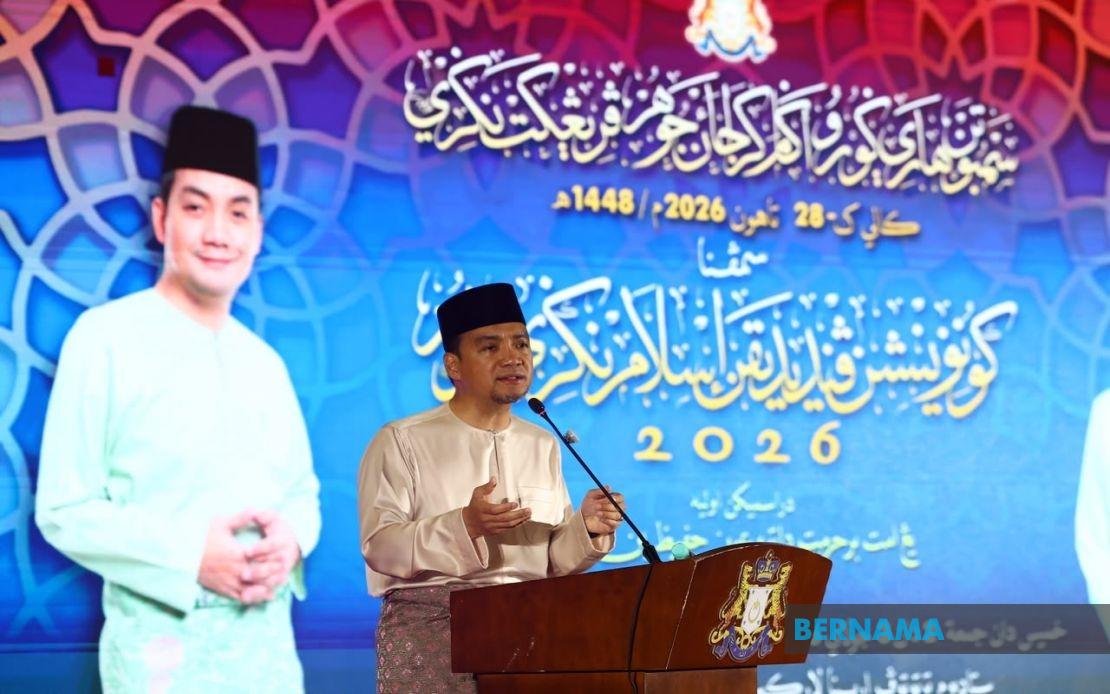
The announcement came during the 28th Johor Government Religious Teachers' Day celebration and the closing ceremony of the State Islamic Education Convention held at Arena Larkin Indoor Stadium. Johor's State Islamic Religious Affairs Committee chairman Mohd Fared Mohd Khalid formally revealed the government's decision to construct the first SARBJ, underscoring that religious education will no longer develop in parallel to mainstream reforms but will be fully integrated into the state's modernisation strategy. This alignment reflects broader recognition across Malaysia that Islamic schools must compete globally in academic rigour while maintaining their distinctive faith-based mission.
The SRBJ framework itself rests on five foundational pillars designed to address gaps in conventional schooling. Digital learning ensures students acquire technological competence essential for the modern workforce, while multilingual proficiency—extending beyond Malay and English—prepares graduates for international engagement. Character development remains central, recognising that academic achievement divorced from moral grounding produces incomplete individuals. Teacher empowerment through professional development and support systems acknowledges that quality educators drive quality outcomes. High-quality facilities, from laboratories to libraries, provide the physical environment necessary for contemporary learning.
Extending these principles into religious education spaces carries particular significance for Johor and the broader Malaysian context. Islamic schools have historically operated with distinct governance, curriculum frameworks, and resource allocation compared to national schools. By applying the SRBJ model to SARBJ institutions, Johor is attempting to bridge this divide without diluting religious content or objectives. Instead, the initiative proposes that excellence in Islamic education and excellence in academic delivery reinforce rather than compete with one another. A religiously-grounded school that excels in science, mathematics, and languages serves students and society more effectively than one that sacrifices academic breadth for spiritual focus.
Menteri Besar Hafiz indicated that the expansion does not end with the SARBJ establishment. The state government intends to cascade this approach further into early childhood education by launching a pilot kindergarten programme incorporating SRBJ principles. This move demonstrates commitment to a comprehensive, cradle-to-secondary vision of educational transformation rather than piecemeal reforms addressing individual school levels. Early intervention and consistent quality across developmental stages create cumulative advantages that conventional, fragmented approaches cannot achieve.
The timing of this initiative reflects broader national conversations about education quality amid growing competition from regional neighbours. Singapore's dominance in international academic rankings, Thailand's expansion of English-medium instruction, and Indonesia's curriculum revisions create pressure on Malaysian states to differentiate and elevate their offerings. Johor, as one of the nation's most developed states economically and the traditional seat of Malay royalty, carries both resources and responsibility to model educational excellence. The Regent's patronage of SRBJ lends it institutional legitimacy and sustained political support across potential changes in state administration.
Implementing the SARBJ concept will require careful planning regarding curriculum integration, teacher training, and parental communication. Religious schools serve families with specific expectations about Islamic content and values transmission. Any restructuring must demonstrate that emphasis on digital skills, multilingual capacity, and contemporary pedagogy enhances rather than compromises these objectives. Success will depend on recruiting qualified educators who combine Islamic scholarship with proficiency in modern teaching methodologies—a talent pool that may be limited and require targeted development programmes.
The initiative also carries implications for other Malaysian states and the federal education system. If Johor's SRBJ and SARBJ schools demonstrably outperform conventional peers on academic metrics while maintaining their distinctive identities, other states may adopt similar frameworks. Federal coordination through the Ministry of Education could amplify impact, ensuring quality standards are portable across state lines and that best practices from Johor's experience inform national policy. Conversely, purely state-level implementation risks creating fragmented excellence where only Johor students benefit from comprehensive reform.
From a Southeast Asian perspective, Johor's educational ambitions position Malaysia as a region actively engaged in 21st-century schooling rather than passively accepting inherited systems. The explicit integration of digital competence, linguistic diversity, and global-ready pedagogy into both secular and religious education institutions demonstrates that these are not competing visions but complementary necessities. This positioning may enhance the state's attractiveness to international investment, talent recruitment, and educational partnerships while serving local communities more effectively.
The success of these initiatives will ultimately be measured through student outcomes. Academic achievement, university placement rates, employment readiness, and long-term professional success will determine whether SRBJ and SARBJ schools justify their investment. Beyond quantitative metrics, qualitative assessment of student confidence, intercultural competence, and character development will matter to families and employers evaluating graduates. Johor's commitment to tracking and transparently reporting these outcomes will influence whether other states embrace similar reforms or remain sceptical of their applicability and sustainability.

