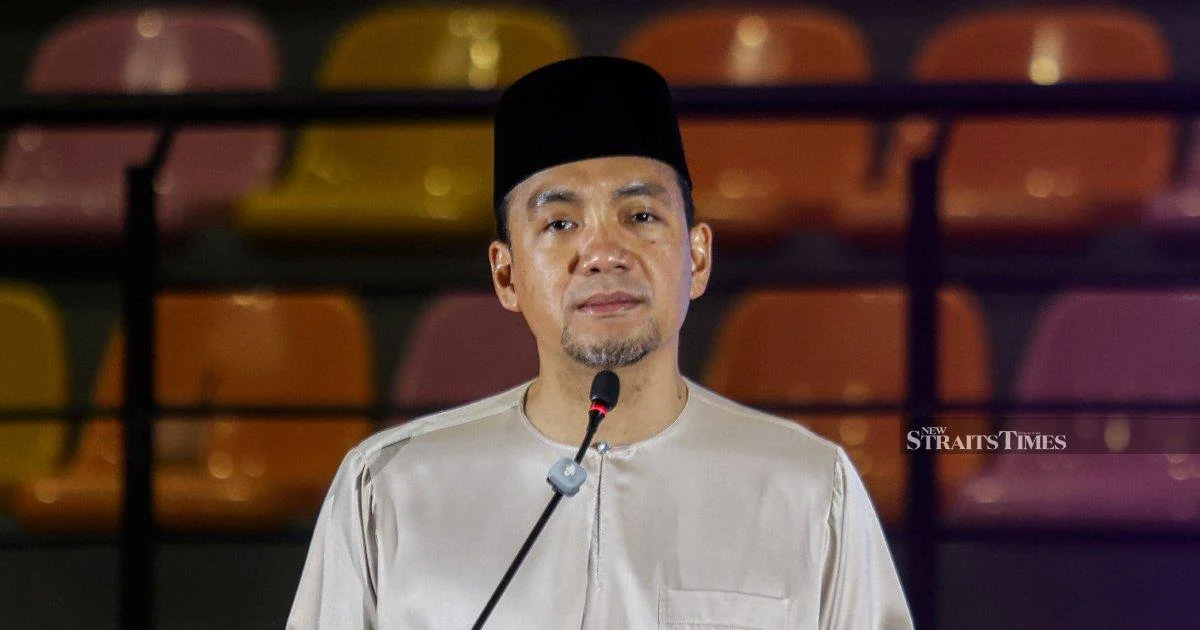
The Johor state government is demanding a formal inquiry into Network School in light of mounting allegations concerning its ties to Israeli interests, marking an escalation in scrutiny over the institution's operations and affiliations. The directive, issued by the Menteri Besar of Johor, reflects deepening concerns within the state administration about potential foreign influence on educational entities operating within its borders and raises broader questions about oversight mechanisms for private institutions in Malaysia's southern state.
The government's position articulates a fundamental principle that no organisation operating in Johor will be permitted to establish a foothold for advancing ideologies that contravene Malaysian law, undermine the nation's sovereignty, or work contrary to the economic, political and social interests of the state. This stance underscores the Malaysian authorities' vigilance regarding what they perceive as inappropriate external influences seeking to leverage educational platforms for ideological purposes that may conflict with national policy and values.
Network School has come under increasing public scrutiny in recent months, with civil society groups and political figures raising questions about its governance structure, curriculum orientation, and international connections. The allegations, while contested by some quarters, have prompted officials to examine more closely the school's organisational relationships and whether it maintains connections to entities or movements that Malaysia has historically viewed with concern. The Johor government's intervention signals that such matters are taken with utmost seriousness by state authorities.
Educational institutions in Malaysia, particularly private schools and international establishments, operate within a regulatory framework overseen by the Ministry of Education and state-level agencies. However, the reality of modern educational entrepreneurship means that schools often maintain global networks and partnerships that merit ongoing scrutiny. The case of Network School exemplifies the tension between Malaysia's openness to international educational collaboration and its determination to safeguard national values and security interests. This balance has become increasingly complex as globalised education systems create multifaceted relationships across borders.
The timing of the Johor government's demand for investigation reflects broader regional and domestic sensitivities surrounding Israel and Palestinian affairs. Malaysia has consistently maintained a principled stance on the Israeli-Palestinian question, viewing it through the lens of international law and humanitarian concerns. Any suggestion that educational institutions within Malaysian territory might be serving as conduits for normalising relations or spreading perspectives sympathetic to Israeli policies without proper transparency triggers immediate official concern and public scrutiny.
For parents and students associated with Network School, the announcement creates immediate uncertainty regarding the institution's future operations and regulatory standing. Educational authorities will likely intensify their examination of the school's curriculum content, fee structures, employment practices, and particularly its institutional connections and funding sources. Such investigations typically involve detailed documentation reviews, interviews with staff and administrators, and consultations with relevant federal and state agencies to ensure comprehensive fact-finding.
The Johor government's assertive stance also reflects changing political dynamics within the state, where various stakeholder groups maintain heightened vigilance regarding foreign influence and ideological positioning. State governments in Malaysia increasingly view education as a domain where they must exercise responsibility to ensure alignment with national and regional values. This tendency has intensified in recent years as globalisation creates more complex networks of international influence and as public discourse around sovereignty becomes more prominent in electoral and policy discussions.
Network School's response to these allegations will prove critical in determining the investigation's trajectory and the school's reputation. Many international schools in Malaysia have successfully navigated similar scrutiny by demonstrating transparency, clarifying their governance structures, and affirming their commitment to Malaysian values and regulations. Schools that can provide comprehensive documentation of their funding sources, board composition, and academic independence often emerge from such investigations with reputational recovery and renewed stakeholder confidence. Conversely, schools that resist transparency or provide incomplete explanations typically face more severe consequences, including regulatory sanctions or closure.
The broader Malaysian context reveals an ongoing tension between the nation's desire to attract high-quality international educational options and its commitment to protecting cultural and ideological sovereignty. Prime Minister and state governments constantly navigate this balance, recognising that quality education drives economic competitiveness and attracts expatriate talent while simultaneously maintaining guardrails against influences perceived as threatening national identity or security. The Network School case will likely inform how authorities calibrate these policies in coming years.
Stakeholders across Southeast Asia will watch developments carefully, as Malaysia's approach influences regional regulatory standards for international institutions. Education sectors throughout the region face similar questions about foreign influence and institutional independence. How Malaysia handles the Network School investigation may establish precedents that other governments reference when managing their own international school ecosystems. The outcome will also signal to potential investors and educational entrepreneurs what threshold of scrutiny and transparency they should expect when establishing educational enterprises in Johor and Malaysia more broadly.
Regulatory agencies at both state and federal levels will coordinate their investigative efforts, examining whether Network School's operations comply with existing educational laws, financial regulations, and licensing requirements. The investigation may also determine whether additional legal or administrative frameworks are necessary to address gaps in current oversight mechanisms. Such findings could inform future policy development regarding international schools and institutions with foreign connections across Malaysia.

