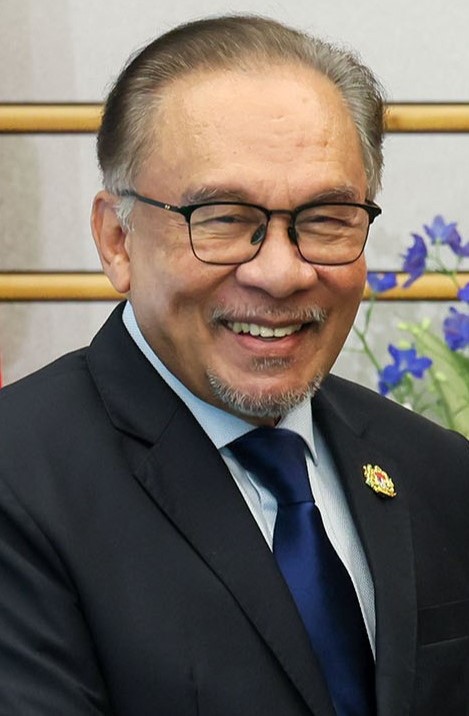
Pakatan Harapan has moved to rebut persistent suggestions that Johor state has suffered from reduced federal support, instead contending that the state has benefited from substantially elevated development spending since Prime Minister Datuk Seri Anwar Ibrahim took office. The coalition's response addresses widespread political discourse questioning whether the southern state receives equitable treatment from Putrajaya, a sensitive issue given Johor's historical and economic significance within Malaysia's federation.
The RM14.6 billion in allocations represents a significant financial commitment to infrastructure, services, and development projects across Johor, according to Pakatan Harapan calculations. This figure encompasses various federal programmes and investments distributed through different government departments and agencies operating within the state's boundaries. The quantum of funding underscores the administration's positioning of balanced regional development as a policy priority, particularly as it navigates complex political relationships across Malaysia's diverse state administrations.
The assertion carries particular weight given the political dynamics surrounding Johor. The state has historically been perceived as crucial to national economic performance and regional stability, hosting major industrial zones, port facilities, and serving as a gateway to Singapore. Claims of federal neglect, whether substantiated or rhetorical, can rapidly gain traction in local political conversations and influence voter sentiment during election cycles. Pakatan Harapan's quantified response suggests an attempt to defuse such narratives with concrete figures rather than general assurances.
Understanding federal allocation patterns requires examining how development funds flow to states under Malaysia's fiscal federalism framework. The Federal Government distributes resources through multiple channels including direct budget allocations, infrastructure projects executed by federal agencies, and co-funding arrangements with state governments. Johor's allocation encompasses roads, education facilities, healthcare infrastructure, and economic development initiatives, though the coalition has not provided granular breakdowns of sectoral distribution across its RM14.6 billion figure.
Comparative analysis with preceding administrations forms the crux of Pakatan Harapan's claim. By asserting that allocations have increased under Anwar Ibrahim's leadership, the coalition implicitly benchmarks against the Perikatan Nasional and earlier Barisan Nasional governments. Such comparisons inevitably become politically contested, as opposition coalitions and state governments may dispute both the baseline figures and the methodology for calculating allocations. The absence of independent verification mechanisms means such claims remain subject to political interpretation and counterargument.
For Malaysian readers, particularly those in Johor, the broader implication concerns equitable distribution of national resources across the federation. Federal-state relations represent a perpetual tension in Malaysian politics, with state governments frequently alleging inadequate central support while federal authorities defend allocation decisions through efficiency and policy priorities arguments. Johor's case reflects this systemic dynamic, complicated by the state's political composition and its relationship with the federal government. When a state is governed by a coalition or party different from those controlling Putrajaya, allocation disputes become more pronounced and politically charged.
The timing of such statements typically correlates with political activity or public criticism. Pakatan Harapan's emphasis on Johor allocations may respond to specific complaints from state officials, public discourse, or positioning ahead of local elections or by-elections. The coalition seeks to establish that its governance model distributes resources equitably, countering narratives that federal power concentrates resources in favourable constituencies or penalises opposition-controlled states. This messaging strategy aims to build electoral confidence among Johor voters that federal investment supports their state's progress.
Contextualising development spending requires considering Malaysia's broader economic trajectory and fiscal constraints. Federal budgets face competing demands across all states, national infrastructure priorities, and debt servicing obligations. Allocations to individual states reflect complex negotiations between competing interests, demographic considerations, and strategic economic zones. Johor's substantial allocation may reflect its population size, industrial importance, and development needs, though opponents might argue these factors should justify even greater investment.
For Southeast Asian observers, Malaysia's federal allocation debates reflect broader challenges confronting decentralised governance systems. Indonesia, the Philippines, and Thailand all grapple with centre-periphery resource distribution tensions. Malaysia's relatively mature federal structure and explicit budget transparency provide a model, albeit contested, for how regional governments can claim accountability through quantified allocations. However, the political contestation surrounding these figures highlights the absence of consensus mechanisms for determining equitable distribution across federal systems in the region.
The RM14.6 billion claim's significance extends beyond Johor's immediate interests. It establishes a marker against which future administrations may be judged, creating expectations that subsequent allocations should maintain or exceed this baseline. Political opponents will undoubtedly scrutinise how these funds translate into visible development, employment generation, and improved services. Public perception of allocation effectiveness matters as much as the absolute quantum of spending, meaning Pakatan Harapan's assertion must ultimately be validated through tangible developmental outcomes observable to Johor residents.
Moving forward, the sustainability of federal support for Johor depends on maintaining fiscal stability and political cohesion within Malaysia's governing coalition. Pressure exists to ensure allocations support inclusive growth benefiting all Johor communities rather than concentrating resources in politically favourable areas. The coalition faces expectations that its development spending translates into improved quality of life, infrastructure quality, and economic opportunities, particularly among younger Johor residents considering migration or career prospects within the state.