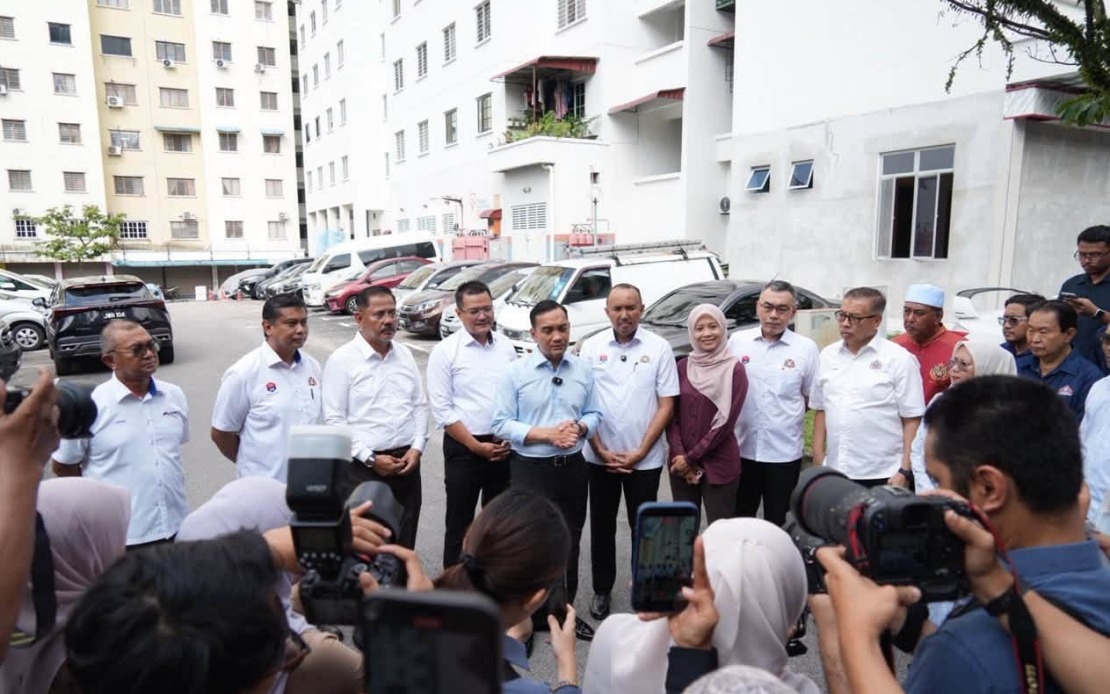
The Johor state government has committed RM50 million towards a comprehensive repainting initiative aimed at revitalising low-cost residential blocks and public housing estates throughout the state. The large-scale programme represents a significant investment in physical infrastructure renewal that will ultimately touch the lives of nearly 46,772 residents spread across 26 strategic locations statewide, according to Datuk Mohd Jafni Md Shukor, chairman of the State Housing and Local Government Committee.
The initiative encompasses a substantial scope of work, with contractors tasked to repaint 170 housing blocks totalling 11,693 residential units. This scale of operation requires careful coordination between multiple state agencies, including the Johor State Housing Development Corporation (PKPJ) and the Local Government Division of the Johor State Secretary's Office, alongside municipal authorities such as Johor Bahru City Council (MBJB), Iskandar Puteri City Council (MBIP), Pasir Gudang City Council (MBPG) and Kulai Municipal Council (MPKu). The distributed implementation structure underscores the complexity of managing such a widespread programme across urban and suburban areas.
While surface-level maintenance might appear merely cosmetic, Datuk Mohd Jafni emphasised during an inspection at Desa Muafakat Apartments that the true value extends well beyond visual improvements. A freshly painted, well-maintained residential environment contributes meaningfully to residents' psychological well-being and sense of community cohesion. For lower-income households often constrained by limited personal resources for home maintenance, such state-sponsored upgrades signal governmental acknowledgment of their living standards and dignity. The enhanced aesthetic environment fosters greater neighbourhood pride and strengthens social bonds among residents who may otherwise feel marginalised from broader development narratives.
The Johor Menteri Besar Datuk Onn Hafiz Ghazi accompanied Datuk Mohd Jafni during the inspection, underlining the political significance attached to the programme. Their visit to Desa Muafakat Apartments extended beyond the repainting initiative to encompass broader residential concerns. The delegation received briefings on slope subsidence issues near the apartment parking facilities and damage to internal road infrastructure, suggesting that maintenance challenges extend beyond cosmetic concerns. This holistic approach to addressing housing estate problems reflects growing recognition that physical deterioration, whether affecting aesthetics or structural integrity, accumulates and compounds community dissatisfaction.
Quality assurance emerged as a critical concern during the inspection, with Datuk Mohd Jafni explicitly cautioning implementing agencies and contractors against delivering projects that merely appear satisfactory upon completion before deteriorating rapidly. Historical experience with government-funded maintenance projects has sometimes revealed premature degradation, often stemming from inadequate material specifications or rushed execution. The state's emphasis on adhering to stipulated schedules, specifications and quality standards represents an attempt to break such cycles and establish genuinely durable improvements rather than superficial remedial work.
The programme's timing reflects broader policy shifts across Malaysian states toward visible infrastructure investment that directly impacts lower-income communities. As urban populations expand and existing housing stock ages, maintenance backlogs accumulate within low-cost developments that frequently receive minimal resources for upkeep. By allocating RM50 million specifically for this purpose, Johor demonstrates commitment to addressing this gap, though the quantum allocated must be contextualised within the broader demands across 11,693 units. The investment equates to roughly RM4,280 per unit, a figure that constrains scope but signals seriousness of intent.
The initiative also encompasses construction activities beyond repainting, including the Tabika KEMAS Bangsa Johor facility at Desa Muafakat Apartments. Early childhood development centres integrated within housing estates serve dual purposes: providing accessible childcare for working parents and building social infrastructure that strengthens community nodes. Such complementary investments suggest coordinated planning rather than standalone projects, potentially maximising social returns from government expenditure.
For Malaysia's property sector and urban planners, the Johor initiative carries broader implications. Low-cost housing schemes, essential for meeting national affordability mandates, often face chronic maintenance challenges due to limited financial resources and weak structural accountability. Public sector investment in systematic maintenance programmes could establish templates applicable elsewhere, particularly as federal and state governments grapple with ageing residential stock that deteriorates without intervention. The repainting programme, while modest in scope, represents institutional commitment to asset preservation rather than cyclical crisis management.
Statewide, the programme's geographic distribution across 26 locations signals an attempt to balance development across Johor rather than concentrating benefits within metropolitan areas. While Johor Bahru naturally dominates housing concentrations, inclusion of estates across Pasir Gudang, Iskandar Puteri and Kulai ensures broader-based delivery, potentially addressing perceptions of unequal development benefit distribution that frequently emerge in state-level politics. Such distributive logic maintains political support beyond core urban constituencies while genuinely addressing maintenance needs across peripheral areas.
The emphasis on maintaining highest standards throughout implementation reflects lessons learned from previous maintenance failures across Malaysian public housing. Contractual enforcement mechanisms and transparent quality monitoring will determine whether Johor's repainting initiative becomes a model for sustainable estate maintenance or merely another time-limited beautification exercise. The state government's determination to prevent rapid re-deterioration suggests awareness that resident satisfaction hinges on durability rather than initial appearance. Success will ultimately depend on post-completion maintenance regimes that sustain improvements without requiring major repainting cycles within a decade, a common pattern that undermines confidence in such initiatives and wastes public resources.

