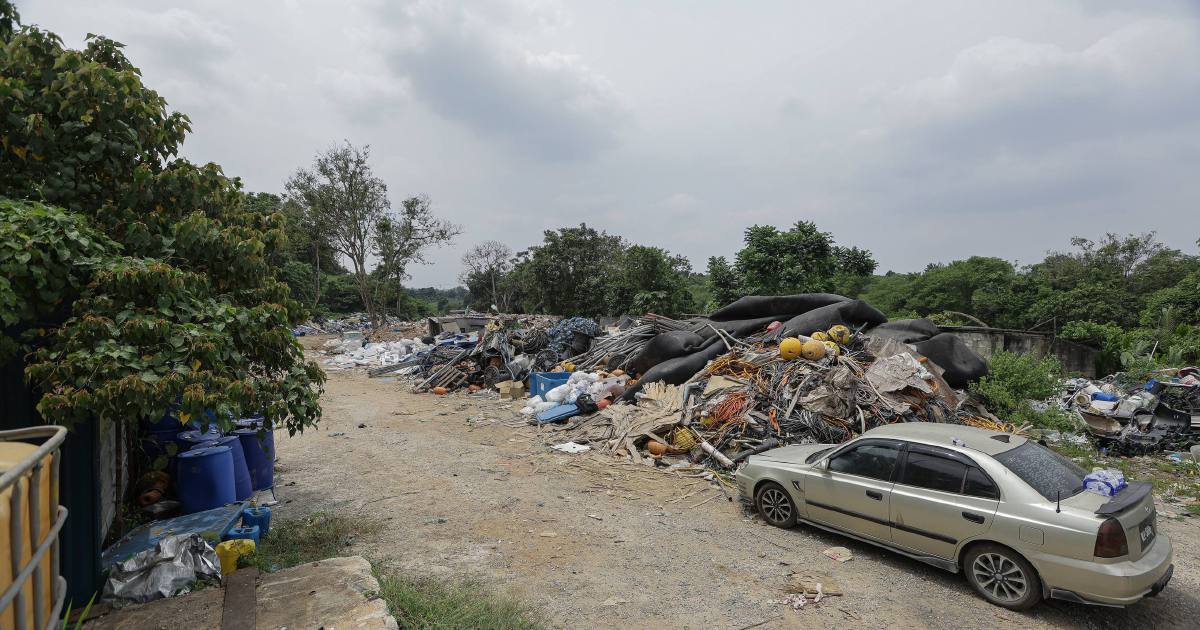
The Johor state government has announced its intention to establish a coordinated multi-agency task force dedicated to investigating allegations that construction waste originating from Singapore has been deposited at several locations across the Pontian district. This initiative represents an escalation in Johor's response to transboundary environmental and regulatory violations, drawing together regulatory bodies, enforcement agencies, and environmental specialists to examine the scope and implications of the alleged dumping.
The formation of this investigative body underscores growing concerns within Johor about the disposal practices affecting its border regions, particularly in areas adjacent to Singapore where logistical and regulatory differences may create opportunities for illicit waste management. Pontian, positioned at the southern tip of Johor and sharing close commercial and infrastructural ties with Singapore, has historically been susceptible to cross-border environmental pressures. The establishment of the task force signals a commitment to curb practices that circumvent Malaysian waste management regulations and environmental protection standards.
Construction waste disposal has become an increasingly contentious issue across Southeast Asia as rapid urbanisation and infrastructure development intensify pressure on landfills and waste management facilities. In Singapore's context, stringent regulations and high disposal costs have created incentives for operators to seek cheaper alternatives across the border. The alleged dumping reflects a wider regional pattern where wealthier jurisdictions with strict environmental enforcement export their waste challenges to neighbouring areas with less stringent oversight, compounding environmental degradation and regulatory fragmentation.
For Malaysia, particularly states like Johor that bear the practical consequences of such practices, this represents not merely an environmental challenge but also a sovereignty and regulatory integrity issue. Illegal waste importation undermines domestic waste management frameworks and places unfair burden on local authorities responsible for environmental stewardship. It also creates potential public health hazards, as construction debris may contain toxic materials, asbestos, or other hazardous substances that pose risks to residents and groundwater resources if improperly disposed.
The multi-agency approach adopted by Johor reflects best practice in environmental enforcement, recognising that effective investigation and remediation requires coordination across multiple expertise domains. Such task forces typically encompass environmental protection agencies, customs or border management authorities, municipal waste management departments, and police or enforcement personnel capable of pursuing legal action against culprits. This integrated structure enables comprehensive evidence gathering, site assessment, waste characterisation, and subsequent prosecution or remediation efforts.
The investigation will likely examine several critical dimensions, including the identity of entities responsible for the dumping, the precise locations and quantities of waste deposited, the methods used to transport and deposit the material, and the timeline of these activities. Investigators will need to establish whether dumping occurred with complicity from local operators, transport companies, or site owners, and whether systematic networks have been established to facilitate such practices. Understanding these mechanisms is essential for designing preventive measures and regulatory enhancements.
From a legal standpoint, the investigation must identify which Malaysian environmental laws and regulations have been breached. This could encompass legislation governing hazardous waste management, environmental quality standards, and potentially customs regulations concerning transboundary waste movement. If dumping is substantiated, responsible parties—whether foreign waste generators, intermediaries, transport operators, or local recipients—may face civil liability for remediation costs and environmental restoration, alongside potential criminal charges under relevant environmental protection statutes.
The issue also carries implications for Malaysia-Singapore bilateral relations and environmental cooperation frameworks. While both nations maintain diplomatic channels and various memoranda of understanding, enforcement gaps and conflicting incentive structures can undermine collaborative environmental stewardship. This investigation may prompt discussions about enhanced monitoring mechanisms at border crossings, stricter penalties for illegal waste imports, and mutual enforcement cooperation to address systematic dumping networks that exploit regulatory jurisdictional gaps.
For Pontian residents and businesses, the investigation addresses immediate concerns about land contamination, water pollution, and public health risks. Construction waste containing glass, metals, ceramics, and organic matter can degrade soil quality and compromise agricultural productivity if affected areas are subsequently repurposed for farming or residential development. The investigation's findings will determine whether remediation efforts are necessary and who bears financial responsibility for restoration.
Regionally, this investigation contributes to broader Southeast Asian efforts to strengthen waste governance and address the transboundary movement of hazardous materials. As ASEAN nations grapple with rapid industrialisation and urbanisation, incidents like alleged waste dumping in Pontian highlight the necessity for harmonised regional standards, enhanced monitoring capabilities, and strengthened enforcement mechanisms. Countries must move beyond defensive national approaches toward proactive collaboration that prevents exploitation of regulatory gaps.
The establishment of Johor's task force also sends a message to potential offenders that Malaysian authorities are prepared to investigate, prosecute, and hold accountable those engaged in illegal waste disposal. Credible enforcement deters similar infractions and signals serious commitment to environmental protection. Success of this investigation—measured by thorough evidence gathering, identification of responsible parties, and appropriate accountability measures—will influence the effectiveness of future enforcement actions and the deterrent impact on prospective offenders.
Stakeholders including environmental organisations, community groups, and local authorities await the task force's preliminary findings. The scope and findings will likely shape policy discussions about Malaysia's regulatory frameworks, border control enhancements, and bilateral environmental agreements. Johor's initiative demonstrates that even in an economically integrated region characterised by tight interdependencies with wealthier neighbours, states retain agency to protect their environmental integrity and enforce national standards, provided they invest in coordinated, professional investigative and enforcement capacity.

