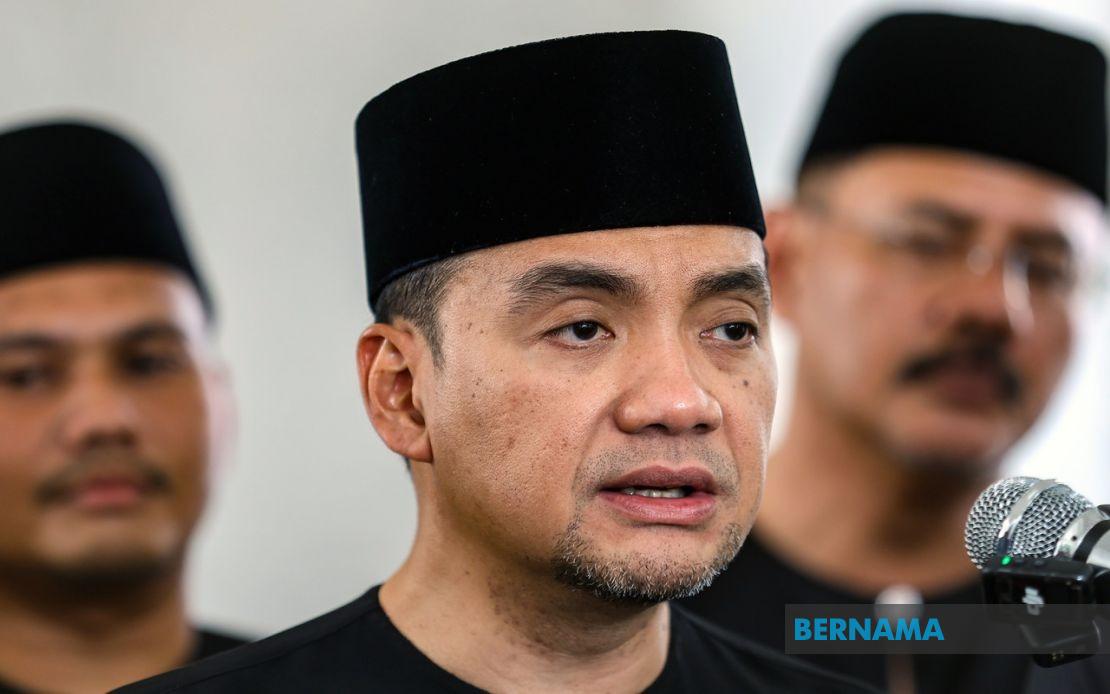
The Johor state government has unveiled a new initiative designed to revitalise congregational prayer practices and reinvigorate mosque communities across the state. The Semarak Maghrib and Isyak programme, announced by Menteri Besar Datuk Onn Hafiz Ghazi, represents an expansive push to deepen religious engagement among Muslims in Johor, building on previous efforts to encourage participation in dawn prayers. The scheme reflects a strategic approach to positioning mosques not merely as places of worship but as vibrant community hubs for learning, spiritual development, and the cultivation of brotherhood among the faithful.
According to Onn Hafiz, the initiative embodies the state administration's broader vision of ensuring mosques function as multifaceted institutions that serve congregational prayer, facilitate knowledge-sharing on Islamic teachings, and nurture the bonds of kinship within Muslim communities. This framing positions the programme within a larger governmental framework aimed at building what officials describe as a progressive Johor that remains anchored in Quranic principles and the practices of Prophet Muhammad. The programme forms part of the state government's mandate to advance syiar Islam—the propagation and demonstration of Islamic values—as a foundational pillar of state development and social cohesion.
The launch of Semarak Maghrib and Isyak occurred at Masjid Jamek As-Syakirin in Bukit Saujana, where the inaugural event combined communal evening prayers with structured religious learning. The opening session included a scholarly discourse on the 40 Hadith centred on the theme of intention determining moral action, delivered by Johor Bahru district kadi Mohd Zaini Mohd Salleh. Attendees also participated in recitation of Surah Al-Mulk, underscoring the programme's integration of multiple formats for religious engagement—from structured prayer to Quranic study to thematic lectures that connect classical Islamic jurisprudence with contemporary spiritual practice.
Onn Hafiz positioned the initiative as a fulfilment of campaign commitments made during the 16th Johor state election under the Barisan Nasional banner. This alignment with electoral pledges signals that religious programming has become a central component of how the state administration validates its governance mandate. By explicitly framing Semarak Maghrib and Isyak as a redemption of promises to voters, the leadership underscores the political weight assigned to Islamic institutional strengthening in Johor's electoral calculus. The sequencing of this announcement—following prior drives to boost Subuh prayer participation—suggests a systematic, phased approach to deepening religious observance across different prayer times.
The programme's focus on Maghrib and Isyak prayers, the evening and night congregational prayers, addresses a particular challenge facing many mosques in urban and suburban Malaysia: maintaining robust congregation sizes during evening hours when worshippers are dispersed across homes and workplaces. By creating a coordinated state-level initiative that emphasises the spiritual benefits and communal importance of attending these prayers, the government seeks to reverse trends of declining evening mosque attendance. The structured format—combining prayer with educational components and spiritual reflection—aims to make mosque visits more attractive by offering layered benefits beyond the obligatory prayer itself.
The Menteri Besar's public call for Muslims in Johor to support and participate in Semarak Maghrib and Isyak extends the initiative beyond government machinery into the broader community. This framing positions religious participation as a collective responsibility and civic act, transforming individual attendance decisions into contributions to state-level religious revitalisation. Onn Hafiz's invocation of blessing and mercy upon Johor in his statement reflects the theological dimension underlying the political initiative—the belief that strengthened religious practice yields societal prosperity and divine favour.
For Malaysian observers, the Johor programme illustrates how state governments increasingly integrate religious programming into their governance portfolios. Unlike purely federal religious affairs, state-level initiatives can be tailored to local contexts and directly connected to electoral mandates. This approach has gained prominence across multiple Malaysian states, where religious institutions and programming serve dual functions: spiritual edification and political legitimacy-building. The success or perception of programmes like Semarak Maghrib and Isyak can influence how state administrations are evaluated by their Muslim-majority electorates.
The integration of educational components—particularly the Hadith discussion on intention—reveals a sophisticated understanding of how to sustain long-term mosque engagement. By moving beyond basic prayer facilitation toward deeper religious literacy and contemporary relevance, the programme addresses a key challenge facing mosque communities: maintaining intellectual and spiritual vitality in competitive modern environments. The choice of 'Niat Penentu Perbuatan Hamba'—intention determining the value of one's deeds—carries particular resonance in a programme explicitly designed to inspire behavioural change, suggesting theological sophistication in programme design.
Regionally, Johor's initiative reflects broader trends across Southeast Asian Muslim-majority contexts, where state and local authorities increasingly recognise the potential of formalised religious programming to address social cohesion, community participation, and moral formation. The emphasis on mosques as multi-functional community anchors rather than purely devotional spaces aligns with similar developments in neighbouring countries, where religious institutions are repositioned as essential infrastructure for social stability and cultural continuity.
Looking forward, the Semarak Maghrib and Isyak programme's effectiveness will likely depend on sustained institutional support, engagement from mosque leadership, and genuine community uptake beyond initial ceremonial launches. The initiative's integration into the state government's broader religious and social agenda suggests long-term commitment, though widespread participation will ultimately reflect complex factors including work schedules, family commitments, and the depth of community spiritual motivation. For Johor's religious affairs sector and mosque administrators, the programme represents both opportunity and responsibility to strengthen institutional relevance and community connection.
The timing of this announcement also merits consideration within Johor's recent political developments and the state's positioning within Malaysia's broader religious governance landscape. As religious matters remain highly sensitive and politically charged across the country, the Menteri Besar's visible engagement with mosque-centred initiatives serves to reinforce his administration's commitment to Islamic values and community welfare. Whether Semarak Maghrib and Isyak becomes a sustained, embedded feature of Johor's religious ecosystem or remains a high-profile but temporary initiative will offer insights into the state government's capacity to translate electoral promises into enduring institutional change.

