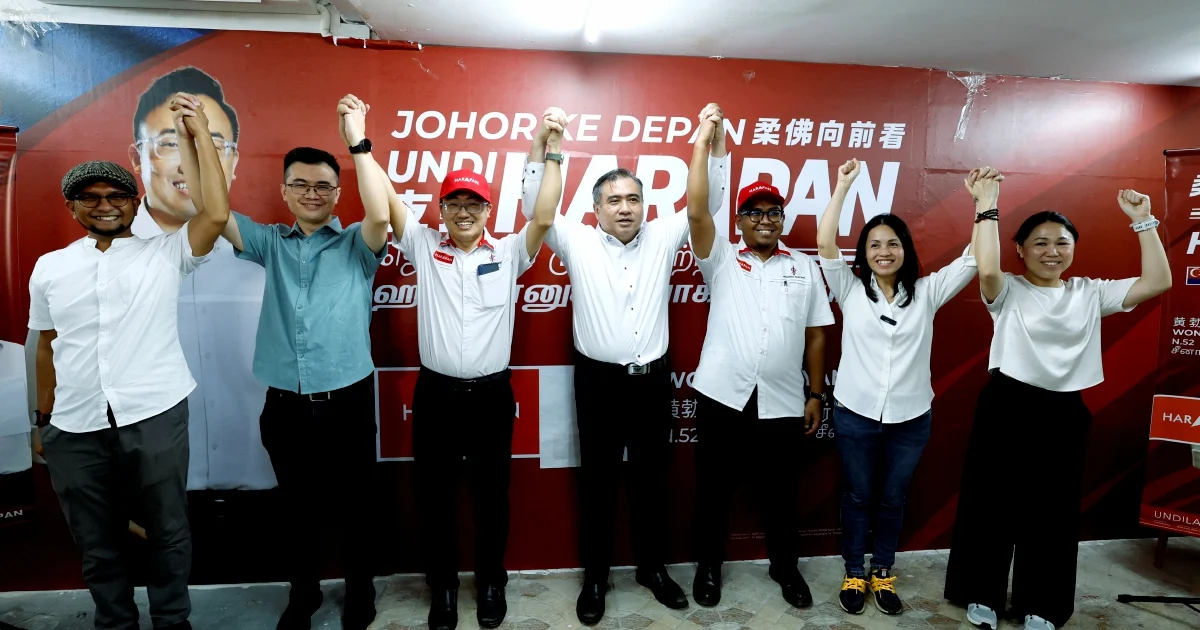
Pakatan Harapan's focus remains squarely on securing electoral victory in Johor rather than pre-empting the choice of its chief ministerial candidate, according to the coalition's leadership. The decision on who will serve as Menteri Besar should the opposition coalition triumph in the forthcoming state election will be deferred until after voting concludes, allowing the top decision-making body within the alliance to deliberate on the appointment. This sequencing reflects a deliberate strategy to maintain coalition unity during the critical campaign period and avoid unnecessary internal friction over leadership positions.
The announcement comes as Pakatan Harapan prepares for what could be a significant electoral contest in Malaysia's southern industrial state. Johor has long been a stronghold of the ruling Barisan Nasional coalition, though recent political shifts across the country have created new uncertainties in state-level politics. By withholding the announcement of its chief ministerial nominee, Pakatan Harapan appears intent on keeping all attention directed towards campaigning and winning voter support, rather than allowing speculation about internal power distribution to dominate discussion.
This approach carries strategic implications for the coalition's campaign messaging. When voters cast ballots, they will do so without knowing definitively which Pakatan Harapan leader the alliance intends to elevate to the Menteri Besar position. This can work both ways—it prevents opponents from launching personalised attacks on a specific candidate before the election, but it also denies the coalition the advantage of building a public persona around a chosen leader. The calculation appears to be that demonstrating unity and coherence as a coalition matters more than showcasing an individual frontrunner.
The practice of announcing key appointments only after electoral success is not uncommon in Malaysian politics, though it often generates considerable speculation and jostling among senior party figures in the interim period. For Pakatan Harapan, which comprises several distinct parties including the Democratic Action Party, Amanah, and others alongside the People's Justice Party, managing the expectation of ambitious politicians within the coalition becomes a delicate balancing act. Delaying the announcement reduces opportunities for factional disputes to surface publicly before the election.
Johor represents a critical test case for Pakatan Harapan's electoral prospects in the peninsula. The state's economic importance as a major commercial and manufacturing hub means its political complexion carries significance beyond its borders. A successful campaign in Johor would signal growing voter acceptance of the opposition coalition and suggest momentum that could influence future national electoral calculations. Conversely, a defeat would be interpreted as a rejection and potentially dampen Pakatan Harapan's broader political fortunes.
The coalition's emphasis on prioritising victory over leadership announcements also reflects lessons learned from previous electoral contests. Internal disputes over power-sharing and ministerial positions have occasionally damaged opposition coalition morale in the past. By ringfencing such discussions until after votes are counted, the alliance seeks to prevent personality-driven or ambition-driven conflicts from undermining the unified campaign presentation necessary to persuade voters to make a change of government.
For Malaysian voters in Johor, this decision means they will be evaluating Pakatan Harapan largely on the basis of its party records, policy platforms, and broader coalition credentials rather than on the specific leadership face it is offering at state level. This arguably places greater emphasis on the reputation and performance records of the major parties within the coalition, as well as on the quality of local candidates fielded in individual constituencies. It creates an environment where campaign messaging focuses on governance competence and programmatic promises rather than cult-of-personality politics centred on a chief ministerial candidate.
The coalition's leadership council, which will ultimately make the final decision on the Menteri Besar appointment if Pakatan Harapan emerges victorious, comprises senior figures from across the constituent parties. This body is tasked with balancing the interests and claims of different parties within the alliance, ensuring that power-sharing arrangements reflect electoral contributions and party strengths. The deliberation process, when it eventually occurs, will likely consider not only individual qualifications but also the need to maintain equilibrium within a multi-party coalition structure.
For Southeast Asian observers of Malaysian politics, this approach also demonstrates the structural challenges faced by coalition-based governance in the region. Unlike single-party systems where leadership succession typically follows established hierarchies, multi-party coalitions must negotiate power-sharing arrangements that satisfy multiple stakeholders. Delaying such negotiations until after electoral success can be tactically sound but may also create uncertainty that complicates post-election government formation.
The emphasis on election victory as the paramount near-term objective is politically astute given the competitive environment in Johor. Both Pakatan Harapan and Barisan Nasional will mobilise substantial resources and campaign machinery to influence voter sentiment. In this context, maintaining internal coalition discipline and preventing divisive leadership questions from surfacing publicly until after the election serves the opposition's strategic interests. Once voters have delivered their verdict, the coalition's top leadership can then openly deliberate on how best to translate electoral success into an effective state administration.

%22%2F%3E%3C%2Fpattern%3E%3C%2Fdefs%3E%3Crect%20width%3D%22100%25%22%20height%3D%22100%25%22%20fill%3D%22url(%23ph1ejxxg)%22%2F%3E%3Crect%20width%3D%22100%25%22%20height%3D%22100%25%22%20fill%3D%22url(%23ph1ejxxp)%22%2F%3E%3Ctext%20x%3D%2250%25%22%20y%3D%2250%25%22%20text-anchor%3D%22middle%22%20dominant-baseline%3D%22central%22%20fill%3D%22rgba(255%2C255%2C255%2C0.95)%22%20font-family%3D%22Georgia%2C%20'Times%20New%20Roman'%2C%20serif%22%20font-weight%3D%22700%22%20font-size%3D%22320%22%20letter-spacing%3D%22-0.02em%22%3EMMC%3C%2Ftext%3E%3C%2Fsvg%3E)