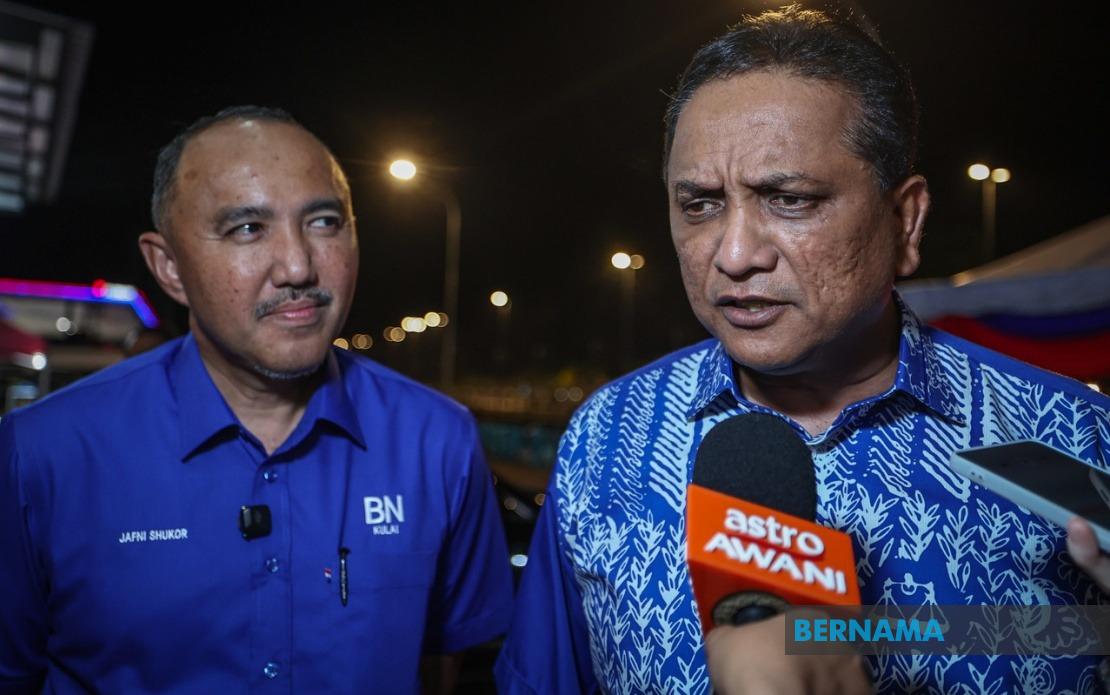
Allegations that Johor's Regent, Tunku Mahkota Ismail, has effectively transformed the state administration into a tool of palace interests have been firmly rebutted by senior UMNO figures, who argue the narrative misrepresents the constitutional role of the royal institution in the state's governance structure. Datuk Seri Reezal Merican Naina Merican, a member of the UMNO Supreme Council, defended the Regent's public interventions on developmental matters as a legitimate exercise of authority rather than an overreach into executive functions.
The controversy emerged within a politically charged context, with Johor scheduled to conduct state elections following the June 27 nomination day and July 11 polling date set by the Election Commission. The timing of these allegations has prompted scrutiny regarding their motivation and the broader implications they carry for the state's political stability during a sensitive electoral period. Reezal Merican's intervention represents an attempt by UMNO's leadership to contain the narrative and prevent further erosion of confidence in the party's relationship with the palace.
According to Reezal Merican's account, the Regent's assertive stance on state development matters should be understood as part of the constitutional safeguards built into Johor's governance framework rather than as evidence of executive overreach. He characterised the Regent's role as providing essential checks and balances against the Menteri Besar and the State Secretary, a mechanism that operates within established protocols and conventions. This framing positions the palace as a guardian of proper governance rather than as a shadow government operating behind closed doors.
The specific catalyst for these recent tensions involves Datuk Dr Mohd Puad Zarkashi, the former Speaker of the Johor State Legislative Assembly, who chose to resign from UMNO and publicly articulated concerns about the state government's autonomy. His decision to depart the party and raise these allegations publicly has been interpreted by some observers as a significant political statement about internal dynamics within Johor's ruling structure. Reezal Merican questioned the former Speaker's motives for introducing the palace into state political discourse at such a critical juncture.
The broader context involves ongoing tensions between different factions within Johor's political establishment regarding the extent of influence various stakeholders should wield. Constitutional monarchies across Southeast Asia routinely navigate similar questions about the proper boundaries between royal prerogative and executive authority, yet the manner in which such tensions are managed through public discourse can significantly affect institutional credibility. In Malaysia's context, where the institution of the monarchy occupies a constitutionally protected and culturally significant position, allegations of institutional dysfunction carry particular weight.
Reezal Merican's assertion that he has encountered no suggestions within UMNO circles that the party operates as a palace instrument appears designed to signal party unity and to reassure grassroots members ahead of the forthcoming elections. His statement carries implicit messaging that concerns about institutional relationships should not undermine electoral prospects or party cohesion during a period when the party faces competitive pressure. The invocation of his position within the Supreme Council adds institutional weight to his denial.
The emerging narrative around Johor's governance raises important questions about elite communication and the management of sensitive constitutional matters in democratic settings. When former public officials choose to ventilate concerns about institutional balance through media channels rather than through internal party mechanisms, it often signals deeper fractures within political coalitions. Mohd Puad's decision to leave UMNO publicly while making allegations about palace influence represents a departure from conventional practices of managing such disagreements discreetly.
For Malaysian observers, the Johor situation illuminates how constitutional questions about institutional boundaries can become weaponised in intra-party disputes. The reference to the Regent "turning the state government into a palace puppet" employs provocative language calculated to resonate with those concerned about democratic principles and executive independence. However, such framing may also misrepresent the nature of constitutional checks and balances that exist explicitly to prevent governmental overreach.
The timing of these allegations, occurring immediately before a state election, invites analytical consideration of their electoral dimensions. Opposition to the current state government may seek to amplify these concerns to suggest that Johor's administration lacks genuine autonomy. Simultaneously, ruling parties have incentive to contain such narratives to prevent voter scepticism about governance quality. This dynamic shapes how political actors communicate about the underlying institutional questions.
Reezal Merican's defence of the Regent's role as a legitimate check on executive authority reflects a particular constitutional interpretation that many legal scholars would endorse. In parliamentary monarchies, royal institutions do function to ensure governmental accountability and proper procedure. The question becomes whether the specific instances invoked by critics represent appropriate exercise of this function or substantive interference with legitimate executive discretion. Without detailed examination of particular decisions, blanket characterisations of either impropriety or baseless allegations remain unsubstantiated.
Moving forward, Johor's political leadership faces the challenge of clarifying institutional relationships and governance expectations in ways that satisfy both royal prerogative and executive accountability. The controversy may prompt broader discussion within Malaysian political circles about managing sensitive constitutional relationships in ways that build confidence rather than generate suspicion about hidden power arrangements. The approaching elections will test whether voters view current institutional arrangements with confidence or concern.

