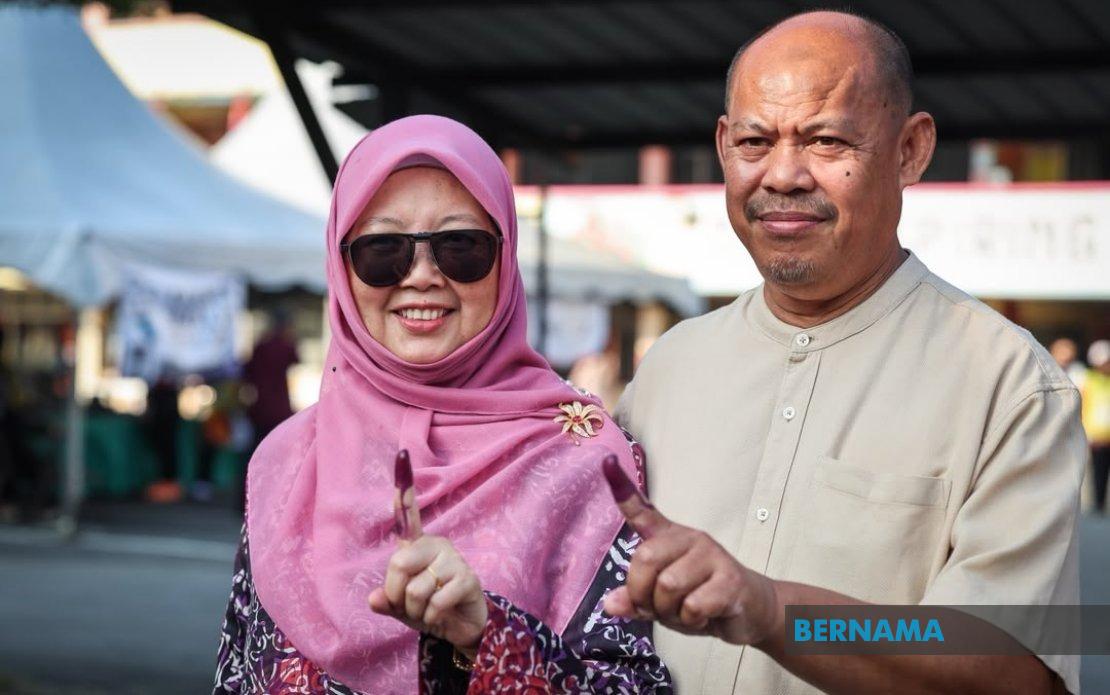
The 16th Johor state election saw prominent political figures heading to polling stations in the early morning hours on July 11, setting the tone for what observers expect to be a closely watched contest in the crucial southern state. The presence of senior party leadership at the ballot box in the opening hours of voting underscores the significance both major coalitions are placing on the outcome in a state that has historically played a pivotal role in shaping Malaysia's political landscape.
Johor PKR chairman Datuk Seri Dr Zaliha Mustafa arrived at Sekolah Menengah Kebangsaan Bandar Baru Uda in Johor Bahru at 9 am to cast her vote. The veteran politician, who previously held the position of Minister in the Prime Minister's Department with responsibility for Federal Territories, cast her ballot in the Larkin constituency alongside her husband, Dr Ahmad Adzlan Musa. Her appearance at the polls sent a symbolic signal to PKR supporters and the broader Pakatan Harapan coalition that leadership continuity and commitment to the electoral process remained strong despite recent political turbulence in the state.
Dr Zaliha's decision to be among the first voters was not merely ceremonial. Speaking to reporters after casting her ballot, she actively encouraged the Johor electorate to follow suit by arriving at polling stations early. Her specific reference to the meteorological forecast became significant context for her appeal. She highlighted that rain was expected to arrive by midday and persist through the afternoon, a development that could potentially suppress turnout if voters delayed their participation. In Southeast Asian electoral contexts, weather disruptions frequently translate into tangible impacts on voter numbers, making her early participation a practical statement to constituents about the importance of beating climatic obstacles to the ballot box.
Parallel to the PKR leadership's voting activity, the Democratic Action Party made its own high-profile statement through the participation of Johor DAP chairman Teo Nie Ching. She exercised her franchise at Sekolah Jenis Kebangsaan Cina Kulai Besar in the Kulai district, casting her ballot at approximately 9.30 am, roughly thirty minutes after Dr Zaliha had completed her voting process. The DAP's representation at these early polling venues reflected the coalition's strategy to maintain visible party presence throughout election day and to project confidence in their electoral prospects across different demographic constituencies.
The timing and location choices by these party leaders revealed deeper strategic considerations about representation and voter base mobilization. Dr Zaliha's participation in the Larkin constituency represents an urban, mixed demographic area critical to PKR's prospects in the state capital and its surrounding regions. Teo Nie Ching's voting in Kulai, meanwhile, demonstrates DAP's continued engagement with the Chinese-majority and Chinese-vernacular school communities that have traditionally formed part of the party's core support base. Both constituencies carry symbolic weight within their respective parties' electoral narratives.
The phenomenon of senior leadership voting early has become an increasingly common feature of Malaysian elections across federal and state levels. This practice serves multiple functions simultaneously. From a practical standpoint, it allows party leaders to demonstrate their personal commitment to the democratic process without requiring them to navigate the inevitable congestion that develops at polling stations later in the day. From a communications perspective, their early appearance and statements to waiting media photographers and reporters generate initial day-of-election coverage that shapes early narrative formation around the contest.
For Malaysian political analysts observing the Johor election, the early participation of such prominent figures also functions as a bellwether for internal party confidence levels. When senior leaders appear relaxed and accessible to media at the polls, it typically suggests internal polling and strategic assessments have produced sufficiently positive projections to justify this public visibility. Conversely, reduced leadership presence at polling stations or evident reluctance to engage with media can sometimes signal internal concerns about electoral momentum or constituency-level challenges.
The weather warning issued by Dr Zaliha introduces a practical dimension often underappreciated in electoral analysis. Malaysia's tropical climate presents recurring challenges for poll administration and voter participation. Afternoon thunderstorms are reliably predictable during certain seasons, and their occurrence during election days can materially reduce turnout, particularly among constituencies with less reliable transportation infrastructure or among voters with time constraints relating to work or family obligations. Her explicit encouragement for early voting therefore represented both a practical voter mobilization strategy and tacit acknowledgment that weather-related logistical challenges could influence the final vote tally.
The Johor state election itself carries significance extending well beyond the state's borders. As Malaysia's second-largest state by population and a consistent economic powerhouse within the federation, Johor's political complexion influences broader national political calculations. Control of the state government affects not only local development priorities and resource allocation but also provides a crucial power base for whichever coalition secures the mandate. This electoral significance partly explains why senior national-level figures often make prominent appearances during Johor's electoral cycles, and why their voting choices and public statements receive close scrutiny from political observers across the peninsula.
The early morning voting by party leaders in Johor also reflects a broader trend toward normalizing women's leadership visibility in Malaysian electoral politics. Dr Zaliha's prominent role as PKR's state chairman and her past ministerial experience position her among the most visible female politicians in national politics. Her public appearance at the polling station on election day, combined with her media engagement, continues a pattern of increasingly prominent female leadership participation in electoral processes that would have been less common in previous electoral cycles. This gradual shift in political representation patterns, while distinct from the immediate electoral question at hand, forms part of the broader context within which state elections are conducted and understood by Malaysian observers.

