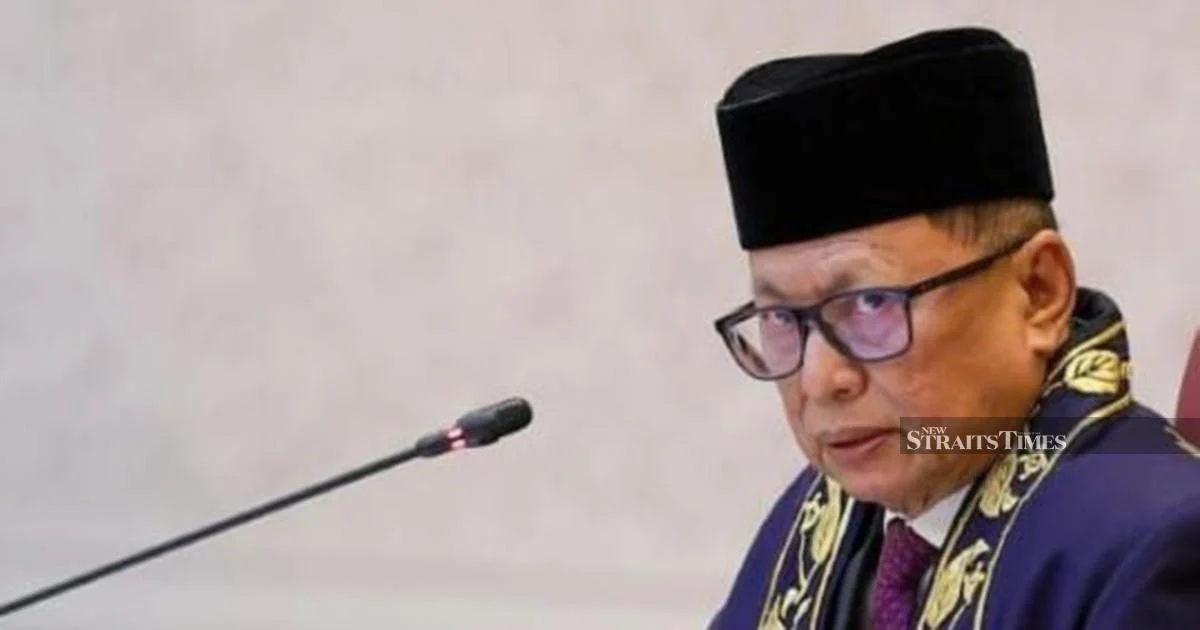
The political temperature in Johor has risen sharply as PKR leaders in the state have issued a direct challenge to a prominent Umno figure to back up his explosive allegations regarding palace interference in state governance. Speaking from Pontian, Johor PKR representatives called on Datuk Dr Mohd Puad Zarkashi, a former member of Umno's supreme council, to produce concrete evidence supporting his public assertions about royal involvement in political matters affecting the state.
This confrontation reflects the ongoing tensions within Johor's political landscape, where questions of institutional autonomy and palace prerogatives have become increasingly contentious. The Johor palace has historically wielded considerable influence over state affairs, yet recent years have witnessed growing debate about the appropriate boundaries of royal involvement in partisan politics. PKR's intervention signals an attempt to shape the discourse around these sensitive constitutional questions while positioning the party as a defender of democratic accountability.
Puad Zarkashi, having occupied a senior position within Umno's party machinery, carries sufficient standing to command attention when raising allegations of this magnitude. His claims, if substantiated, could reshape political calculations across Johor's complex network of competing factions and constituencies. The former supreme council member's public pronouncements have apparently touched on a nerve within PKR's state organization, prompting them to demand immediate clarification and documentation rather than allowing the allegations to circulate without challenge.
The timing of this exchange is particularly significant given Johor's pivotal role in Malaysian electoral politics. As the nation's second-largest state and a traditional Umno stronghold, developments in Johor politics reverberate throughout the broader Malaysian political ecosystem. Any substantiated claims of institutional overreach could influence public perception of governance standards across the country and potentially affect voter behaviour in future electoral contests.
PKR's demand for evidence represents a calculated political strategy designed to place Puad on the defensive. By insisting on documentation and specific examples rather than accepting broad accusations, PKR aims to diminish the credibility of the allegations should Puad struggle to produce satisfactory proof. This approach transforms what might otherwise be a damaging claim into an opportunity for PKR to demonstrate strength and demand transparency from their political opponents.
The nature of palace-politics relationships in Malaysian states remains constitutionally ambiguous in certain respects. While the Sultan's role as constitutional monarch is clearly defined, the extent to which royal offices should engage with partisan political processes generates ongoing disagreement among legal scholars, political practitioners, and constitutional commentators. Johor's particular governance structure, which has historically featured a strong state ruler with considerable political influence, makes these questions especially acute in the sultanate.
Furthermore, Puad's allegations invite examination of how different political parties perceive and interact with state institutions. What some actors characterize as problematic interference, others might describe as the legitimate exercise of royal prerogatives within constitutionally recognized domains. This interpretive gap frequently complicates public discourse on institutional matters and creates space for competing narratives to flourish unchallenged.
The PKR challenge also suggests that the party views Puad's claims as sufficiently serious to warrant formal refutation rather than dismissal. Had PKR leadership deemed the allegations trivial or easily disprovable through public knowledge, they might have adopted a more dismissive posture. The decision to demand substantiation indicates PKR's recognition that such claims, circulating without contradiction, could gradually erode public confidence in the party's standing among Johor voters who may harbour concerns about institutional propriety.
For Malaysian readers following Johor politics, this exchange underscores the complexity of state-level governance in systems where traditional institutions retain significant social and political salience. The confrontation between PKR and Puad is not merely a partisan squabble but reflects deeper questions about how contemporary Malaysia balances democratic representation with respect for historical institutions and established protocols governing the monarchy's role in political affairs.
Beyond Johor's borders, this incident also carries implications for national political stability. Should Puad produce documentation supporting his allegations, Malaysian politics would face new scrutiny regarding institutional relationships across multiple state governments. Conversely, should he fail to substantiate his claims, the episode may reinforce perceptions that serious allegations against political opponents sometimes originate from partisan motivations rather than documented evidence. Both scenarios contain potential consequences for how Malaysian citizens evaluate political claims and institutional credibility.
The coming weeks will reveal whether Puad can marshal evidence supporting his public assertions or whether PKR's challenge will prove effective in neutralizing these allegations through demanding verification. Regardless of the outcome, this confrontation demonstrates that questions of palace involvement in state politics remain live issues in contemporary Malaysian political discourse, particularly in Johor where traditional authority structures and modern democratic practices continue negotiating their respective roles.

