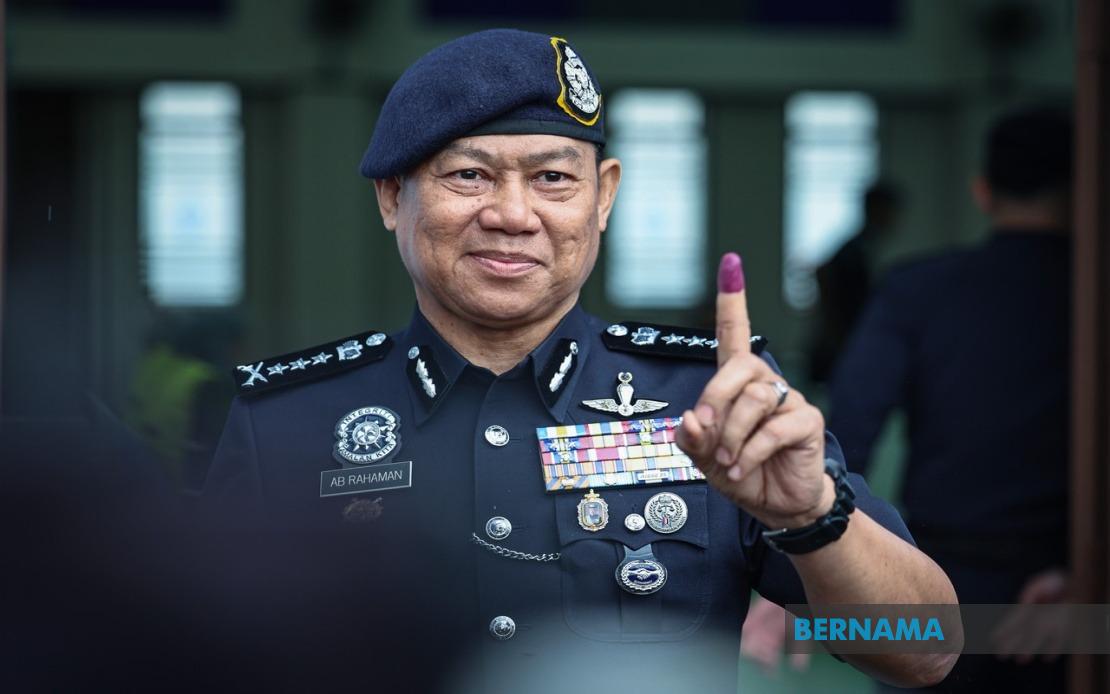
Early voting in Johor proceeded without incident on July 7 as police and military personnel began casting ballots ahead of Saturday's state election, with 4,257 police officers—representing 36.3 per cent of eligible early voters—having voted by mid-morning. The smooth conduct of the parallel voting arrangements underscored the Electoral Commission's preparation for what will be one of the region's significant political contests, with 172 candidates contending for 56 state seats before an electorate exceeding 2.7 million registered voters.
Johor police chief Datuk Ab Rahaman Arsad reported no irregularities or security concerns at any of the 53 dedicated early voting centres operating across the state. The entire operation involving both police and Malaysian Armed Forces members proceeded according to schedule, he told reporters after voting at the Johor Police Contingent Headquarters in Johor Bahru. The staggered closure of polling stations—timed between noon and 6 pm depending on voter capacity and geographic considerations—reflected the logistical complexities of managing early votes across a geographically dispersed state.
The early voting mechanism, reserved for security personnel who cannot easily access regular polling stations during their official duties, has become a standard feature of Malaysian elections. For Johor's contest, the system allowed 20,607 registered early voters to participate across the 64 polling centres that opened simultaneously at 8 am. The 36.3 per cent turnout by mid-morning suggested sustained interest among eligible voters, though Datuk Ab Rahaman cautioned that final participation figures would only become clear once all polling centres closed later that afternoon.
The orderly commencement of early voting stood in contrast to some of the tensions that characterised the preceding campaign period. Police reports filed during the canvassing phase predominantly involved vandalism targeting campaign infrastructure, including political party flags and advertising billboards—a recurring challenge in Malaysian electoral contests. These incidents, while notable, fell within the range of routine electoral management rather than representing systemic security threats.
A more significant controversy emerged around allegations levelled by former Johor State Assembly Speaker Datuk Dr Mohd Puad Zarkashi concerning purported interference by the Johor Palace in the dissolution of the state legislative assembly. The claim triggered 153 police reports nationwide as of the afternoon of July 7, reflecting the sensitivity surrounding institutional relationships and constitutional processes in Malaysian politics. Investigations into the former speaker's assertions remained ongoing at the time of the early voting, with no immediate resolution anticipated before Saturday's polling day.
The Johor election assumed particular importance within Malaysia's broader political landscape as a significant state contest occurring during a period of considerable flux in the country's political dynamics. The fielding of 172 candidates for 56 constituencies indicated robust multi-party competition, suggesting voters would encounter genuine choices across much of the state. The turnout patterns established during early voting—where participation could be measured precisely—would likely offer early indicators of the broader electoral engagement likely during Saturday's main polling day.
For regional observers, the Johor contest carries implications extending beyond state boundaries. As Malaysia's southernmost peninsular state and home to substantial urban and industrial centres adjacent to Singapore, Johor's political direction influences not only local governance but also federal-level dynamics. Election outcomes in the state reverberate through coalition calculations and factional alignments within national parties, making the campaign and voting process subjects of attention well beyond Johor itself.
The police and military voting arrangements on July 7 demonstrated institutional capacity to execute complex electoral logistics without compromising security or integrity. The absence of reported irregularities—despite the challenging environment created by campaign-related tensions—reflected both professional execution by election officials and apparent compliance among political actors with established electoral rules. This baseline of procedural normalcy would need to hold across Saturday's main voting day if the election were to achieve widespread legitimacy among voters and stakeholders.
As early voting concluded on July 7, the countdown to Saturday's main polling day entered its final phase. Political parties completed their campaign activities, voters made their final decisions, and electoral machinery positioned itself for what would be one of Malaysia's more closely watched state elections. The early voting turnout of 36.3 per cent among police personnel provided one data point suggesting substantive engagement with the electoral process, though whether this pattern would replicate across the broader voting population remained to be determined when the full electorate cast their votes on Saturday.

