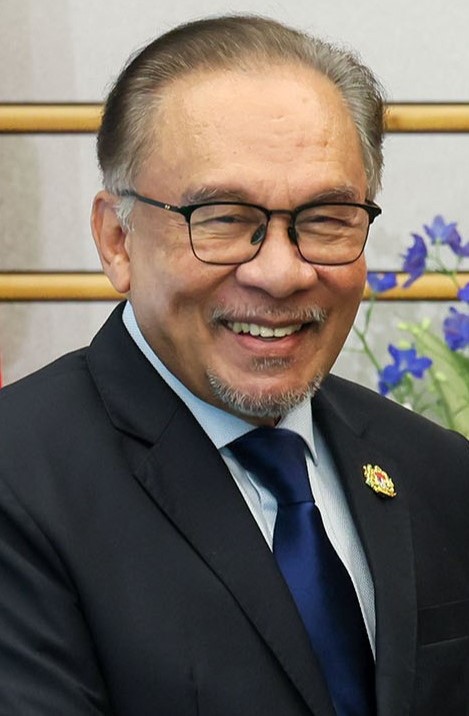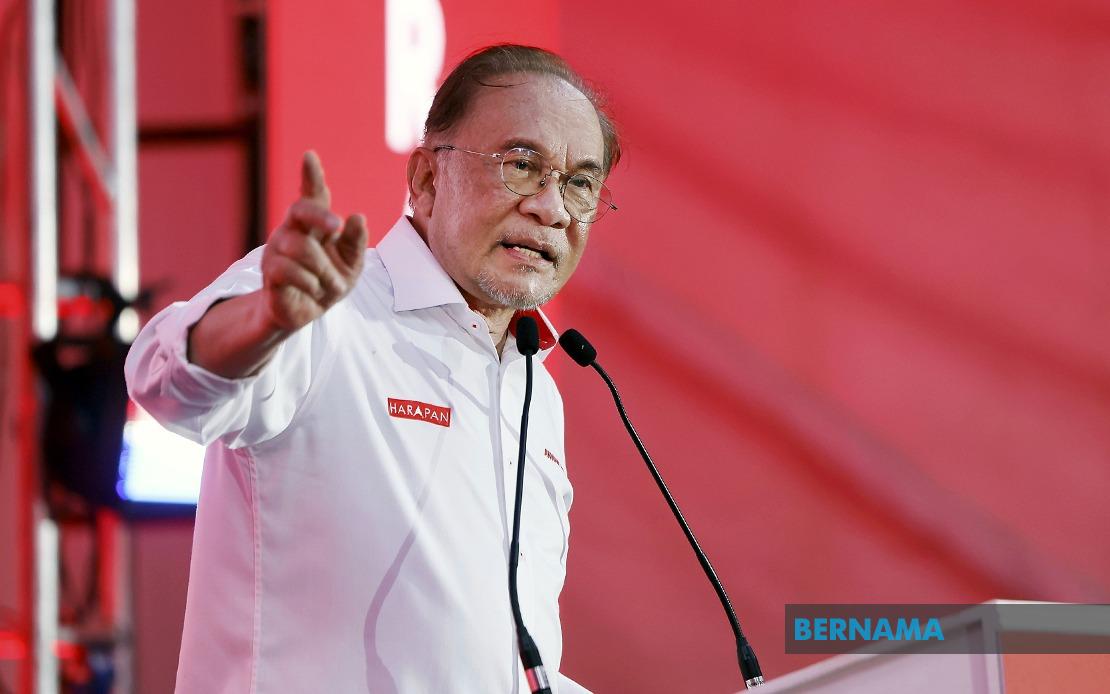
Prime Minister Datuk Seri Anwar Ibrahim has highlighted a favourable fiscal relationship between the Federal government and Johor, stating that the state has received considerably more in federal funding than it has contributed in tax revenue. Speaking at a Pakatan Harapan candidate announcement ceremony in Tangkak on June 22, Anwar presented financial data suggesting that whilst Johor generated approximately RM14 billion in federal revenue between 2023 and 2025, it received RM16 billion in return through various development initiatives, operational budgets and welfare programmes. This narrative reflects the government's effort to demonstrate equitable resource distribution ahead of state elections.
The Prime Minister, who also holds the Finance Ministry portfolio, emphasised the importance of transparently communicating this fiscal dynamic to voters. His presentation of the figures served to counter any perception that Johor was being financially neglected by the federal administration. By quantifying the gap at RM2 billion in the state's favour, Anwar sought to illustrate what he characterised as the Federal government's commitment to prioritising Johor's developmental agenda and improving living standards for its residents. The timing of such announcements during an election campaign underscores how fiscal federalism and resource allocation have become central election-year talking points in Malaysian politics.
A significant component of Anwar's argument centred on increased operating expenditure allocations to the state. Under the previous government, Johor received between RM6 billion and RM7 billion annually in operational spending. This figure has risen to RM8.7 billion under the current MADANI Government, representing a meaningful increase in year-on-year funding for state administration, salaries, and day-to-day government operations. Such incremental improvements in operational budgets directly affect a state's capacity to maintain existing services and implement routine programmes without requiring additional deficit spending or reallocation from developmental funds.
Development expenditure allocations have also expanded substantially. Data released by the Prime Minister indicates that Johor's development allocation climbed from RM2.3 billion in 2022 to RM4.8 billion in 2026, effectively more than doubling over the four-year period. This trajectory suggests accelerated investment in infrastructure, capital projects, and long-term developmental initiatives. For states seeking to modernise transport networks, upgrade healthcare facilities, or expand educational infrastructure, such development funding proves crucial to competitive positioning within the federation and economic competitiveness.
Within the broader federal allocation landscape, Johor occupies a significant position. According to Anwar's presentation of 2026 projections, the state ranks as the third-largest recipient of combined operating and development expenditure allocations, trailing only the East Malaysian states of Sabah and Sarawak. This positioning reflects both Johor's substantial population and its strategic importance as Malaysia's southernmost peninsula state, home to major industrial zones and the critical Port Klang-connected trading corridors. The ranking also suggests that federal resource distribution, at least in terms of absolute allocations, does account for state size and economic contribution.
Beyond general operating and development budgets, Johor has benefited substantially from targeted welfare assistance programmes. The state qualified as the second-largest recipient of both Sumbangan Tunai Rahmah and Sumbangan Asas Rahmah cash assistance schemes, exceeded only by Selangor in aggregate distribution. These direct-transfer programmes, designed to provide financial relief to lower-income households, have expanded significantly under the current administration and represent a shift toward more visible, immediate forms of government support that resonate with household-level economic anxieties.
For Malaysian political observers, Anwar's emphasis on fiscal metrics reflects a deliberate strategy to frame federal-state relations through quantifiable economic performance rather than governance ideology. By presenting Johor as a net beneficiary of federal expenditure, the government positions itself as a custodian of equitable development rather than a centralising force extracting resources from states. This argument proves particularly potent in Johor, where political rivalry between federal and state governments has historically created friction over resource allocation and investment priorities.
The presentation also addresses a persistent concern in Malaysian federalism: whether economically productive states disproportionately subsidise less developed regions. By demonstrating that Johor receives more in federal spending than it contributes in revenue, Anwar implicitly argues that the federation's fiscal mechanism redistributes wealth while ensuring that developed states maintain capacity for further growth. This framing attempts to reconcile two competing narratives: the principle of national solidarity and equitable development across all states, and the economic logic of concentrating resources where they generate highest returns.
The numbers merit contextual analysis. The RM14 billion revenue figure represents only direct state-source contributions to federal coffers and does not capture indirect fiscal flows, such as corporate taxes from companies headquartered in Johor, excise duties on manufactured goods, or customs revenues from port activities. Actual federal revenue attribution to Johor may significantly exceed the presented figure, meaning the RM2 billion net benefit could represent a smaller proportion of total federal-Johor fiscal interaction. Similarly, the RM16 billion expenditure figure encompasses all federal spending within Johor, including national programmes not specifically targeted at state priorities, such as defence installations, federal civil service operations, or federal institution overhead.
Nevertheless, Anwar's fiscal argument holds strategic value in election campaigning. Tangible figures about increased operating budgets and development allocations provide concrete evidence of federal action, distinguishing the current administration from its predecessor. The comparison showing RM6-7 billion annual operating expenditure under the previous government rising to RM8.7 billion under MADANI demonstrates measurable policy shift. For voters evaluating government performance through investment patterns, such data provides quantifiable differentiation between competing political coalitions.
The timing of these disclosures, coinciding with state-level electoral contests, reflects how Malaysian politics increasingly centres on fiscal federalism debates. As states expand their policy ambitions and constituencies demand increased services, the allocation of federal resources becomes a primary measure of political success. By presenting Johor as receiving enhanced federal support, Anwar positions the federal government favourably against any incumbent state administration that might argue for greater autonomy or resources from federal authorities.
Looking forward, the sustainability of these increased allocations depends on federal fiscal health and political continuity. If economic growth slows or federal revenues contract, maintaining RM8.7 billion annual operating expenditure and RM4.8 billion development spending becomes challenging. Such fiscal pressures could reshape federal-state negotiations and investment priorities in subsequent budget cycles. For Johor specifically, understanding these allocations as commitments subject to economic and political fluctuation provides important context for evaluating long-term developmental prospects and governance planning.
Ultimately, Anwar's presentation of Johor's fiscal relationship with the federal government represents an attempt to quantify government performance through disbursement data. Whether electorates find such metrics persuasive depends on tangible outcomes—visible infrastructure, improved service delivery, and perceptible economic opportunity. The numbers provide political ammunition for campaign messaging, but their real significance emerges only through implementation quality and resident-level impact.