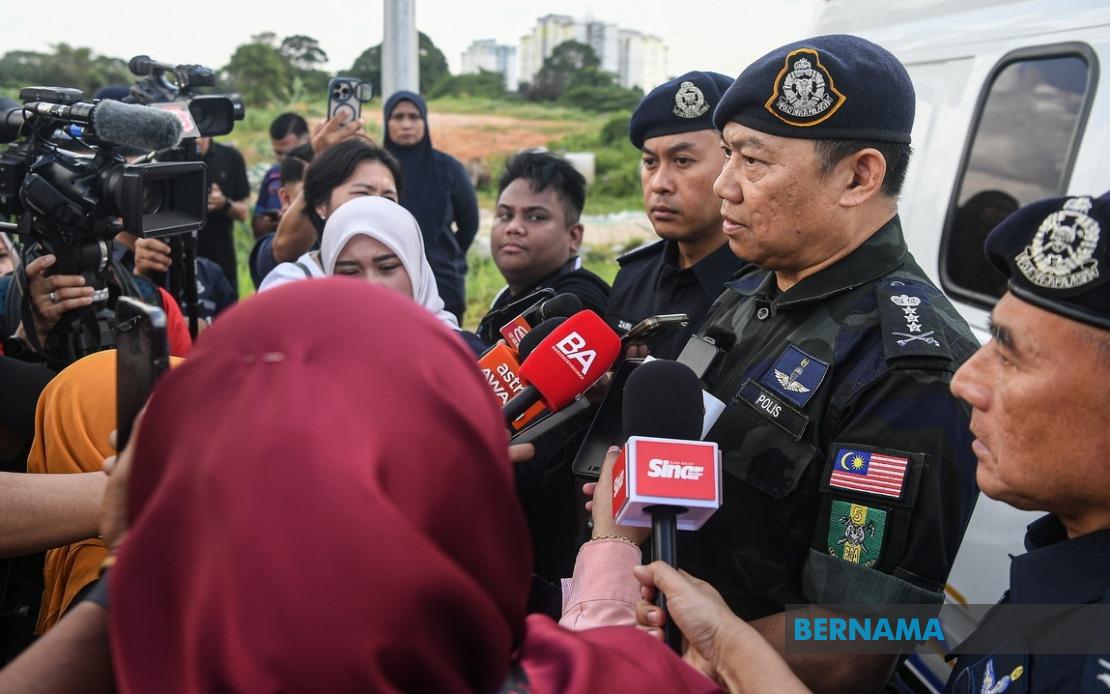
The nomination process for Johor's 16th state election proceeded without incident across all 56 centres statewide on June 27, marking a secure and orderly start to the electoral cycle. Johor police chief Datuk Ab Rahaman Arsad confirmed that the force received no reports of disturbances or untoward events that might have compromised the integrity of the nomination stage, a critical juncture when candidates formally register their candidacy and voter sentiment often runs high.
The smooth administration reflects careful preparation by both state law enforcement and the Election Commission. To maintain order and prevent potential flashpoints, the Johor police mobilised 4,832 officers and personnel across the nomination centres. This substantial deployment—equivalent to a force that could field multiple battalion-strength operations—underscores official concern that large-scale political contests can occasionally attract troublemakers or partisan elements seeking to gain tactical advantage through disruption rather than democratic persuasion. The comprehensive presence appears to have deterred such behaviour entirely.
During a visit to observe proceedings at the Puteri Wangsa nomination centre located at Sekolah Menengah Kebangsaan Bandar Dato Onn, the police chief indicated that campaign infrastructure was already taking shape. The Election Commission had approved 26 campaign permits statewide by that date, with expectations that additional authorisations would be issued as parties mobilise their machinery across the state. These permits govern rallies, roadshows, and public gatherings, setting boundaries on campaign conduct to prevent chaos or safety risks.
For Malaysian observers accustomed to occasionally fractious state and federal elections, the absence of reported incidents carries weight. Johor, as Malaysia's second-largest state by population and a stronghold alternately dominated by Umno-Barisan Nasional and Pakatan Harapan coalitions, represents terrain where electoral competition often intensifies. Nomination days have occasionally witnessed heated confrontations, candidate challenges, or even minor scuffles between rival party supporters. The seamless process here suggests either diminished partisan animosity, heightened public awareness of the reputational cost of disruption, or simply effective police presence serving as a visible deterrent.
Datuk Ab Rahaman used the occasion to issue stern reminders to all political parties and candidates regarding their obligations during the campaign period. He urged responsible campaigning in line with election laws and regulations, a standard admonition but one that carries implicit warning. Police made clear they would tolerate no actions threatening public order, signalling readiness to invoke laws against sedition, incitement, breach of peace, and electoral misconduct should candidates or supporters overstep.
The Election Commission's timetable now moves into its acceleration phase. Early voting has been scheduled for July 7, providing opportunity for those unable to vote on the main day—including voters working elsewhere, students in distant locations, and persons with mobility constraints—to participate in choosing their representatives. This measure aims to broaden the franchise exercise while reducing queue pressures on polling day itself, a lesson learned from previous elections where logistics occasionally strained polling centre operations.
Polling day proper arrives on July 11, giving candidates and parties precisely two weeks for intensive campaigning. This compressed timeframe means campaign dynamics will accelerate sharply once nomination concludes. Digital and traditional media will intensify coverage, grassroots operations will intensify canvassing, and the electorate will crystallise its preferences. For Malaysian voters, these 16 state seats represent either continuity or change in a state government, with ripple effects across federal politics given Johor's symbolic importance and resource endowment.
The seamless nomination process establishes a constructive tone that election officials and political stakeholders will hope to maintain through the campaign and voting phases. In a nation where electoral credibility underpins democratic legitimacy, incident-free administration at each stage reinforces public confidence that democratic processes function fairly. Conversely, disruptions or irregularities, however minor, feed narratives of institutional weakness or partisan capture that damage long-term civic trust.
Johor's performance on nomination day also reflects broader Malaysian electoral maturation over recent election cycles. The 2022 federal election and subsequent state contests have generally proceeded with fewer major security incidents than feared in some quarters, suggesting that voter education, party discipline, and police capability have collectively improved. That said, the substantial police deployment indicates authorities maintain vigilance against potential risks, recognising that complacency would be imprudent in a competitive electoral environment where stakes—ministerial positions, development funding allocation, policy direction—remain substantial.

