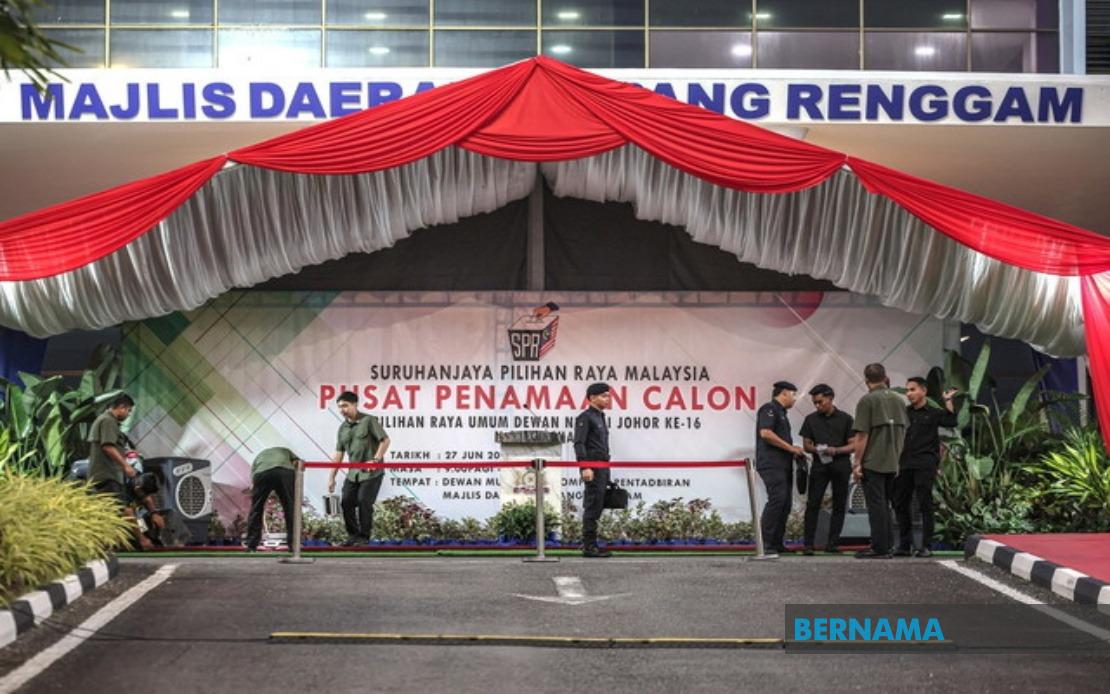
The 16th Johor State Election formally commenced its candidacy phase on June 27 when all 56 nomination centres across the state opened their doors at 9am, marking the official start of the electoral process. The tight one-hour submission window, lasting until 10am, created a critical bottleneck through which all prospective candidates had to pass before becoming eligible participants in the forthcoming campaign and election. This compressed timeline underscores the structured nature of Malaysian electoral procedures, where Election Commission regulations impose rigid deadlines to ensure orderly progression through each election phase.
The nomination submission procedure accommodated various attendance scenarios to ensure accessibility for candidates and their supporting parties. Candidates could present their nomination forms personally alongside their appointed proposer and seconder, or any combination thereof—meaning a candidate could theoretically submit alone, with one supporter, or with both required witnesses. This flexibility recognises practical constraints candidates might face while maintaining the formal verification requirements necessary for electoral integrity. The returning officers stationed at each centre bore responsibility for initial validation of these documents before forwarding them for comprehensive assessment.
Following the completion of verification procedures, the Election Commission will trigger a precisely scheduled 14-day campaign period that will run until 11.59pm on July 10. This standardised campaign window applies uniformly across all state constituencies, providing equal promotional opportunity for competing candidates and parties. The definitive end-time specification reflects the meticulous regulatory framework governing Malaysian elections, where even the final seconds of campaigning fall under formal control. Candidates who successfully cleared the nomination hurdle will utilise this fortnight to canvas voters, hold ceramah gatherings, and mobilise party machinery across their respective constituencies.
The electoral register for this state-level contest reflects Johor's substantial population base. According to Election Commission data, approximately 2.73 million voters are eligible to participate, with the overwhelming majority—2.70 million—classified as ordinary voters. The electorate additionally includes 12,041 military personnel and their spouses, plus 12,710 police officers and their spouses, who constitute a separate voting cohort with tailored early voting arrangements. This composition demonstrates how federal security forces are integrated into state-level democratic participation, with their service obligations accommodated through dedicated voting schedules rather than exclusion from the franchise.
Party supporters demonstrated considerable enthusiasm from the pre-dawn hours, with loyalists assembling near nomination centres as early as 6.30am to publicly champion their respective candidates. These gatherings served both symbolic and organisational purposes—expressing grassroots commitment while simultaneously providing logistical support for candidates navigating the submission process. Such displays of partisan mobilisation have become customary features of Malaysian election nomination days, where the atmosphere surrounding these centres often reflects the competitive intensity characterising the campaign period ahead.
Weather considerations added an element of uncertainty to the nomination day proceedings. The Malaysian Meteorological Department had forecasted scattered rainfall across several districts including Johor Bahru, Muar, Batu Pahat, Kota Tinggi, Pontian, Tangkak and Kulai during the morning hours when nominations were being submitted. Conversely, Segamat, Kluang and Mersing were expected to remain predominantly clear. The afternoon outlook proved more unsettled, with thunderstorms anticipated across most districts, potentially affecting both nomination centre operations and early supporter gatherings. Such weather forecasts, while routine, can influence voter turnout patterns and campaign scheduling in the subsequent weeks.
Security arrangements formed a crucial dimension of the nomination day operation, recognising that electoral processes require protection from disruption or violence. Police personnel, supplemented by members of the People's Volunteer Corps (RELA), deployed comprehensively around nomination centre zones to maintain order and regulate traffic flows. These measures aimed specifically at preventing untoward incidents that might compromise the electoral process or endanger participants. The coordination between police and volunteer corps reflects standard Malaysian practice for managing potentially high-tension political events where partisan emotions run elevated.
The Election Commission established July 7 for early voting, providing military and police personnel with dedicated voting opportunities several days before the general poll. This staggered approach acknowledges the operational constraints facing uniformed services personnel who may face deployment or duty restrictions on the main election day. The principal polling day is scheduled for July 11, at which point all eligible voters—ordinary civilians, military and police alike—will visit designated polling stations to cast their ballots. This sequential structure, with nomination, early voting, and general polling separated by defined intervals, creates a predictable electoral calendar allowing candidates, parties and administrators adequate preparation time.
For Malaysian and Southeast Asian observers, the Johor election represents a significant regional political development, as the state constitutes one of the federation's most populous and economically important territories. The smooth commencement of the nomination process, despite weather complications and logistical complexity across 56 venues, suggests institutional capacity to manage competitive democratic contests at scale. The substantial eligible voter population of 2.73 million underscores Johor's demographic weight within national electoral dynamics, making state-level outcomes there consequential for both federal coalition calculations and regional governance. The compression of nomination procedures into single-hour windows, while operationally challenging, reflects mature electoral administration capable of processing thousands of nominations across dispersed locations simultaneously.

