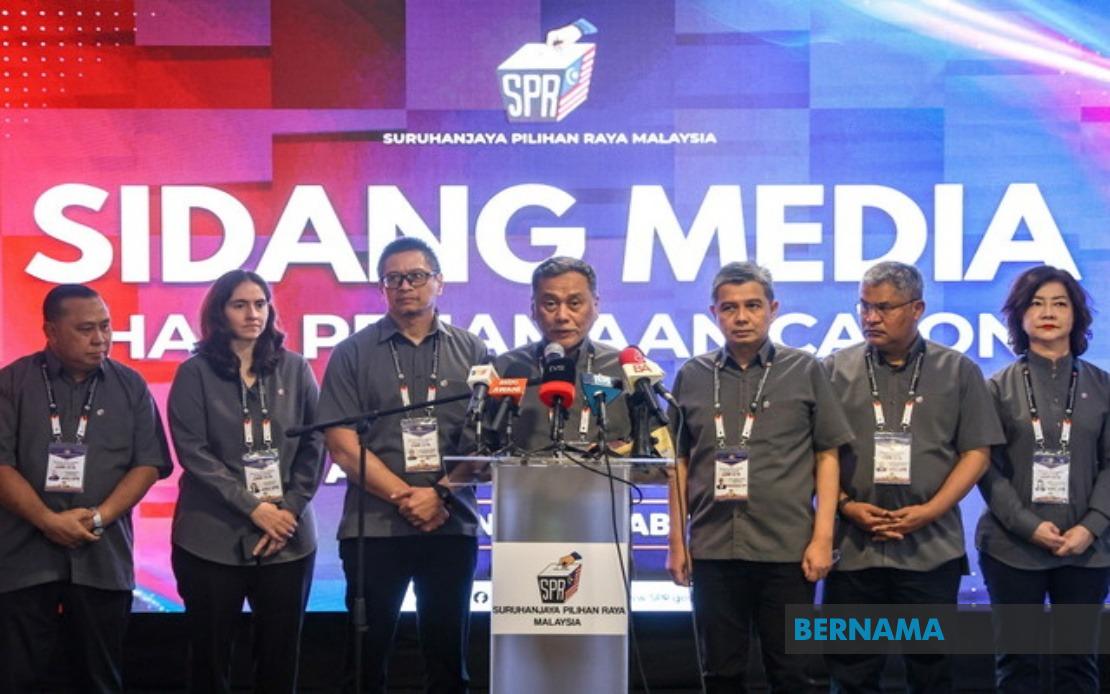
The Election Commission has formally cleared 172 candidates to contest the 16th Johor state election following the completion of nomination proceedings at all 56 centres on Thursday, June 27. EC chairman Datuk Seri Ramlan Harun announced that every nomination paper submitted met the regulatory requirements, resulting in zero disqualifications—a sign of a relatively smooth administrative process as the state prepared to enter its campaign phase. The candidate roster reflects the competitive landscape across Malaysia's southern corridor, with multiple coalitions and smaller parties vying for electoral advantage in a state that has historically been a political bellwether.
Of the 172 approved nominees, 138 are men while 34 are women, underscoring persistent gender imbalances in political candidacy across Malaysian electoral contests. This 4:1 male-to-female ratio, though gradually shifting in recent elections, remains a structural characteristic of how major parties field their representatives. The inclusion of women candidates has become increasingly important to party messaging around inclusivity, yet the numbers suggest substantial scope for deeper change in how parties identify and promote female political talent. The gender composition across different political formations may reveal distinct recruitment philosophies, though the EC announcement did not break down the female representation by party affiliation.
Barisan Nasional and Pakatan Harapan each secured 56 candidacies, reflecting a precisely symmetrical contest that underlines the two coalitions' determination to compete evenly across all available seats in Johor. This parity stands in contrast to previous elections where candidate distribution varied, and it signals tactical confidence from both groupings. Barisan Nasional's fielding of the maximum possible nominees reflects its historical dominance in the state and determination to defend its position, while Pakatan Harapan's matching strategy demonstrates the coalition's commitment to presenting voters with a comprehensive alternative across all constituencies. The equal numbers also simplify voters' ability to make direct comparisons between the two main competing blocs.
Perikatan Nasional fielded 33 candidates, positioning itself as the third major contender but with substantially fewer resources deployed compared to the two frontrunner coalitions. The reduced footprint suggests either deliberate targeting of winnable seats or resource constraints, and it raises questions about PN's realistic ambitions in Johor given the fragmented opposition space. Smaller parties and independent candidates filled out the remaining slots: Parti Bersama Malaysia submitted 15 nominees, MUDA contributed four, while Parti Orang Asli Malaysia and Parti Sosialis Malaysia each fielded a single representative. Additionally, six candidates registered as independents, potentially reflecting either individuals dissatisfied with party structures or attempts to circumvent party discipline and messaging frameworks.
The distribution of candidates across contests reveals a highly fragmented electoral landscape that complicates predictions about vote efficiency and seat outcomes. According to Ramlan's breakdown, 14 seats feature straight fights between two candidates, suggesting contests between the two major coalitions or between a major party and a significant challenger. However, 27 constituencies involve three-cornered contests, 12 feature four-way races, and three draw five competing candidates. This fragmentation means that plurality victories become increasingly likely, potentially allowing candidates to win with vote shares below 40 percent or even lower if the opposition splits badly. The resulting complexity makes strategic voting crucial and potentially unpredictable for analysts forecasting seat allocations.
Johor's political significance extends beyond its 56 seats to the broader Malaysian electoral calculus. As one of the country's largest states by population and historically a Barisan Nasional stronghold, the state's election result typically signals broader health or malaise affecting the national ruling coalition. The nomination process proceeding without major surprises or disputes suggests administrative competence, though it provides limited guidance on actual voter sentiment heading into the campaign period. The presence of multiple viable challengers, ranging from Pakatan Harapan's established machinery to Perikatan Nasional's regional appeal and smaller parties' targeted activism, creates a genuinely multi-polar contest rather than a binary showdown.
The campaign phase now beginning will test how effectively each formation translates candidate nominations into persuasive messaging and ground organization. Barisan Nasional must defend its historical citadel while managing internal coalition dynamics and demonstrating governance competence across federal and state portfolios. Pakatan Harapan enters with both the advantage of fresh opposition credentials and the challenge of articulating distinguishing policy positions across all 56 constituencies. Perikatan Nasional's more limited candidacy suggests a strategy focused on regions of demonstrated strength or particular demographic appeal. For smaller parties and independents, the fragmented contests present opportunities to mobilize niche constituencies without requiring overwhelming resources, though winning seats will demand exceptional local performance or favorable vote-splitting circumstances.
From a Southeast Asian perspective, Johor's election demonstrates how Malaysian democracy continues to accommodate multiple political forces within a competitive but institutionally ordered framework. Unlike some regional neighbors, Malaysia's election machinery processes nominations, manages campaigns, and conducts voting without significant allegations of structural manipulation or disqualification arbitrariness—a feature that, while perhaps generating predictable outcomes, preserves democratic legitimacy. The nomination process completing cleanly without controversy reinforces public confidence in electoral administration, though this technical competence does not necessarily translate into high voter turnout or meaningful policy differentiation among competitors.
The economic and social implications of Johor's election extend to regional trade, investment, and development priorities given the state's role as Malaysia's industrial heartland and principal gateway to Singapore. Whichever coalition or combination of parties emerges from the election must address critical infrastructure, education, and manufacturing competitiveness issues that directly affect not only Johor residents but also supply chains and commercial networks spanning the region. The 172 candidates now entering the contest will need to articulate visions for Johor's future that balance development pressures, environmental concerns, and equitable distribution of resources and opportunities—themes that resonate across Southeast Asia's urbanizing democracies.

