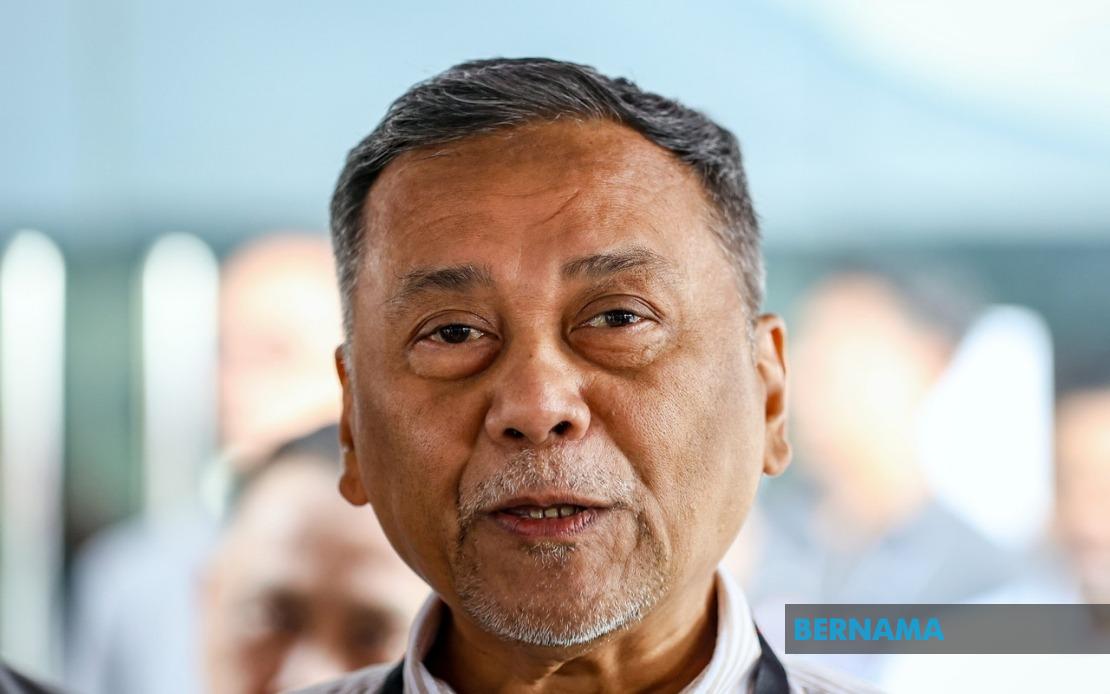
The Election Commission has forecast notably robust voter participation for the Johor state election, projecting that around 70 per cent of eligible citizens will cast their ballots. This optimistic outlook, articulated by EC Chairman Datuk Seri Ramlan Harun during a visit to Pontian on the eve of polling, reflects considerable momentum built through the campaign period and signals strengthening faith in democratic participation at the state level.
Ramlan attributed the projected turnout to observable patterns of heightened public interest during the campaign season. The EC's assessment was grounded in direct observation of voter sentiment and engagement levels across the state, indicating that Malaysians—particularly in Johor—remain invested in exercising their constitutional rights. This projection carries significance beyond mere statistics; it suggests that despite broader discussions about voter fatigue or political apathy, state-level contests continue to mobilise substantial segments of the electorate, particularly when campaigns generate substantive public discourse and visible party activity.
The underlying drivers of this anticipated participation include both practical and psychological factors. Public consciousness regarding the importance of electoral participation has demonstrably strengthened, according to the EC's assessment. This educational dimension—whereby voters increasingly recognise the tangible consequences of state elections on policies affecting schooling, healthcare, local infrastructure, and regional economic development—appears to be translating into concrete voting behaviour. For Malaysian observers, this trend suggests that sustained civic education and media coverage of electoral processes can meaningfully influence participation rates.
The scale of this election underscores why such turnout projections matter. Approximately 2.7 million registered voters in Johor are eligible to participate, making this a significant democratic exercise at the state tier. A 70 per cent turnout would represent roughly 1.89 million votes cast, generating a substantial mandate for whichever coalition secures victory. This magnitude ensures that election outcomes will reflect the preferences of a decisive majority of the registered electorate, lending legitimacy to the subsequent state government's policy agenda.
Logistical preparations reflect the complexity inherent in conducting elections across Johor's diverse geography. The EC has deployed 43,036 election workers to manage the voting process, a substantial workforce coordinated to ensure smooth operations across numerous polling stations. The staggered closing times—beginning at 11 am on the island of Pulau Besar (approximately 30 minutes from Mersing) and extending through Pulau Aur and Pulau Pemanggil at noon, progressing through afternoon closures at selected centres, with the majority of 1,114 stations operating until 6 pm—demonstrate the logistical engineering required to accommodate voters across both peninsular and island constituencies.
Postal voting arrangements introduce another dimension to the election's accessibility and inclusivity. The EC distributed 24,677 postal ballots to voters unable to cast ballots in person, with a strict requirement that these papers reach EC facilities before the 6 pm deadline. This mechanism recognises that not all eligible voters can physically attend polling stations on election day, whether due to overseas deployment, medical constraints, or other legitimate impediments. The deadline ensures that all votes can be properly verified and included in the count without extending the electoral process unduly.
Transportation logistics for island constituencies required meticulous planning to ensure that ballot boxes and materials could be securely transported despite geographical separation from the peninsular mainland. The EC coordinated extensively with both the Malaysian police and the Malaysian Armed Forces to establish contingency protocols addressing potential disruptions from weather, mechanical failure, or other unforeseen circumstances. This institutional cooperation demonstrates how contemporary Malaysian elections depend upon inter-agency coordination and advanced planning, particularly when physical geography presents obstacles to conventional electoral operations.
For Malaysian and Southeast Asian observers, the projected 70 per cent turnout assumption offers insights into evolving patterns of democratic participation. Many democracies in the region struggle to maintain consistent voter engagement, with turnout frequently fluctuating based on perceived stakes, campaign intensity, and economic conditions. Johor's anticipated performance suggests that state-level elections—though often overshadowed by federal contests in political discourse—can generate substantial public interest when local parties conduct vigorous campaigns and when the electorate perceives meaningful policy differences among competing coalitions.
The timing of this state election, coinciding with broader patterns of political realignment across Malaysia, invites consideration of how regional contests serve as indicators of shifting electoral preferences. Johor's result will likely be interpreted by political observers as a barometer of state-level sentiment, potentially influencing calculations within federal-level political formations. For investors, policymakers, and civil society actors monitoring Malaysian political developments, the election outcome will provide data points relevant to understanding the durability of current political alignments and the prospects for future coalition arrangements.
Ramlan's confidence in the 70 per cent projection rested ultimately on the EC's institutional capacity to manage a large-scale electoral exercise and the demonstrated willingness of voters to participate when given the opportunity. This confidence reflects years of accumulated experience in conducting Malaysian elections and observing voter behaviour patterns across diverse constituencies and demographic profiles. Whether the final turnout matches this projection will depend on factors including weather conditions on polling day, localised campaign dynamics in individual constituencies, and individual voter decisions made in the hours preceding ballot closure.
From a broader democratic governance perspective, high voter turnout confers legitimacy upon elected governments and creates stronger mandates for policy implementation. A Johor state government elected with substantial voter participation can claim to represent the considered preferences of a genuine majority of the electorate, enhancing its capacity to pursue contested policy initiatives and implement transformative programmes. Conversely, lower-than-projected turnout might suggest either heightened electoral competition that mobilises only partisan voters or declining confidence in the electoral process itself—each carrying distinct implications for subsequent state governance.
The Election Commission's preparedness for managing this substantial democratic exercise and its measured optimism regarding public participation reflect institutional confidence grounded in extensive planning and operational readiness. Whether actual results align with projections, the election itself represents a continuation of Malaysia's commitment to regular electoral contests and peaceful transfers of power at the state level—democratic practices that remain foundational to the nation's political stability and continued development within Southeast Asia's broader regional context.

