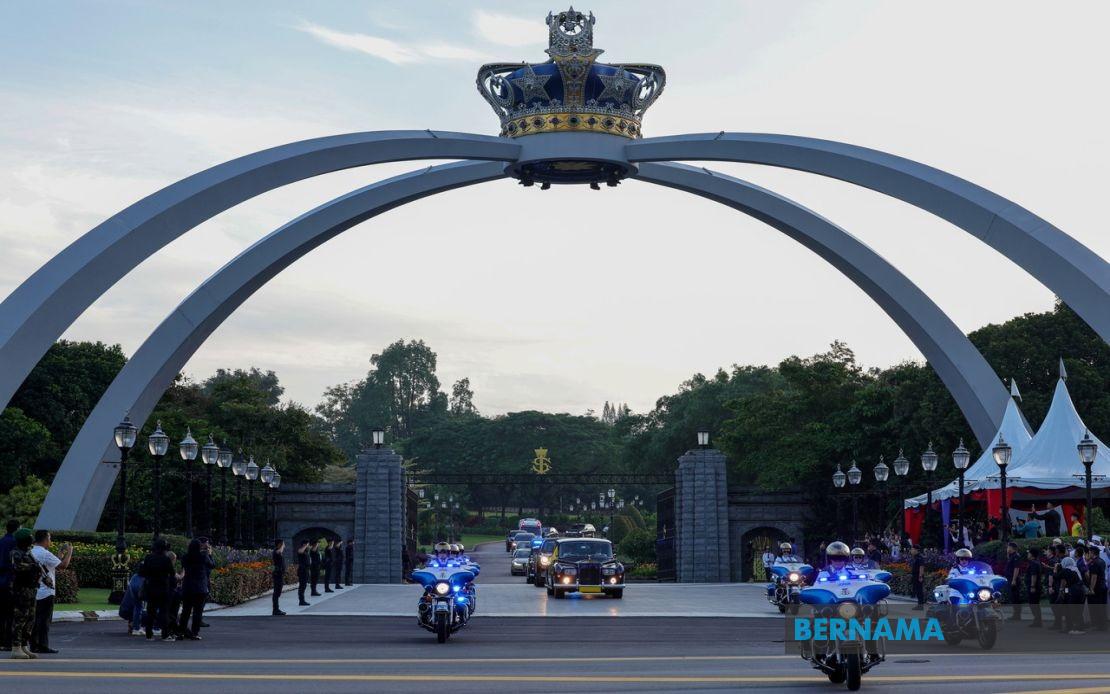
The swearing-in ceremony for Johor's State Executive Council has been postponed by a single day, with the event now scheduled to proceed on Saturday instead of Friday at Istana Bukit Serene in Johor Bahru. Media representatives received notice of the change on Friday morning, though state authorities declined to offer any public explanation for the shift in timing.
Tunku Mahkota Ismail, the Regent of Johor, was originally expected to preside over the ceremony on the initial date. The occasion would have witnessed Menteri Besar Datuk Onn Hafiz Ghazi formally present his newly constituted cabinet, alongside attendance from Johor Royal Council president Datuk Dr Rahim Ramli and State Secretary Datuk Mohammed Ridha Abd Kadir. The postponement affects the formal installation process but does not alter the composition of the leadership team that will be sworn in.
Onn Hafiz was sworn in as Johor Menteri Besar for his second consecutive term the previous Sunday, following Barisan Nasional's decisive performance in the 16th Johor State Election held the Saturday prior. The electoral outcome provided BN with a commanding majority in the state legislature, securing 48 of the 56 available seats in the Johor State Legislative Assembly. This result represented a strong endorsement of BN's governance in the state and positioned Onn Hafiz to continue leading the administration.
The Exco swearing-in represents a crucial procedural step in Malaysia's state-level governance structures. Unlike the menteri besar's personal oath of office, which typically occurs within days of an election, the formal installation of cabinet members requires coordination among multiple state institutions and ceremonial protocols. The postponement, though minor in duration, suggests either logistical considerations or possibly adjustments to the composition or arrangement of the executive council that required additional preparation time.
For Malaysian political observers, such delays are not uncommon during transitions between administrations. State governments must balance ceremonial requirements with practical governance needs, particularly when determining which assemblymen will receive exco portfolios and which positions they will hold. The decision to delay by a single day rather than extend the postponement further suggests that the underlying issues were relatively straightforward to resolve, whether they involved scheduling conflicts, documentation, or other administrative preparations.
The swearing-in ceremony carries particular significance in Johor's political landscape. As Malaysia's second-largest state by population and a major economic contributor, Johor's governance structure directly influences the prosperity of its 4.2 million residents and impacts regional economic stability. The strength of BN's mandate in the recent election, combined with Onn Hafiz's reelection as menteri besar, reflects substantial voter confidence in the coalition's track record in the state. The composition of the exco will determine how effectively the state government can implement its policy agenda across health, education, infrastructure, agriculture, and other critical portfolios.
Onn Hafiz, who represents the Machap state constituency, has positioned himself as a modernizing force within Johor's political establishment while maintaining alignment with BN's broader national strategy. His selection of exco members will signal his priorities for the coming term. The cabinet configuration can indicate whether the menteri besar intends to consolidate control, reward party loyalists, maintain balance between competing factions, or introduce fresh faces into the administration. Political analysts typically scrutinize such appointments closely for insights into future policy directions and coalition dynamics.
The postponement also occurs within a broader context of Malaysian politics where state governments have gained increasing prominence. Following the fragmentation of federal politics in recent years, state administrations have become laboratories for different governance models and policy experiments. Johor, under BN control, represents a significant bloc within the ruling coalition's efforts to rebuild its political machinery after the disruptions of the 2018 general election and subsequent political realignments. The state's stability and successful administration directly contribute to BN's narrative of competent, business-friendly governance.
For Malaysian businesses and investors focused on Johor, the swearing-in ceremony and subsequent exco appointments carry tangible implications. The composition of the executive council determines which leaders oversee critical portfolios such as local government, land development, trade and industry, and public works. These portfolios directly influence the regulatory environment, investment incentives, and infrastructure development timelines that businesses depend upon. A fully constituted and sworn-in exco therefore signals readiness to move forward with pending projects and policy initiatives.
The one-day postponement, while relatively minor in the grand scheme of state governance, also reflects the meticulous attention to ceremonial and constitutional procedure that characterizes Malaysia's monarchy-based system. The involvement of the Regent in the swearing-in process underscores the constitutional role of the state ruler in legitimizing the executive. The coordination required to align the Regent's schedule, senior government officials' availability, and media arrangements demonstrates the organizational complexity underlying seemingly routine state functions.
Moving forward, the Saturday swearing-in will formally install the exco members and set the administration's operational tempo for the term ahead. With BN's substantial majority secured and Onn Hafiz returning for a second term, the Johor government enters the new administration period from a position of electoral strength. The exco's composition will shortly become public knowledge, allowing stakeholders to assess the menteri besar's choices and anticipate the policy directions he intends to pursue during his tenure.

