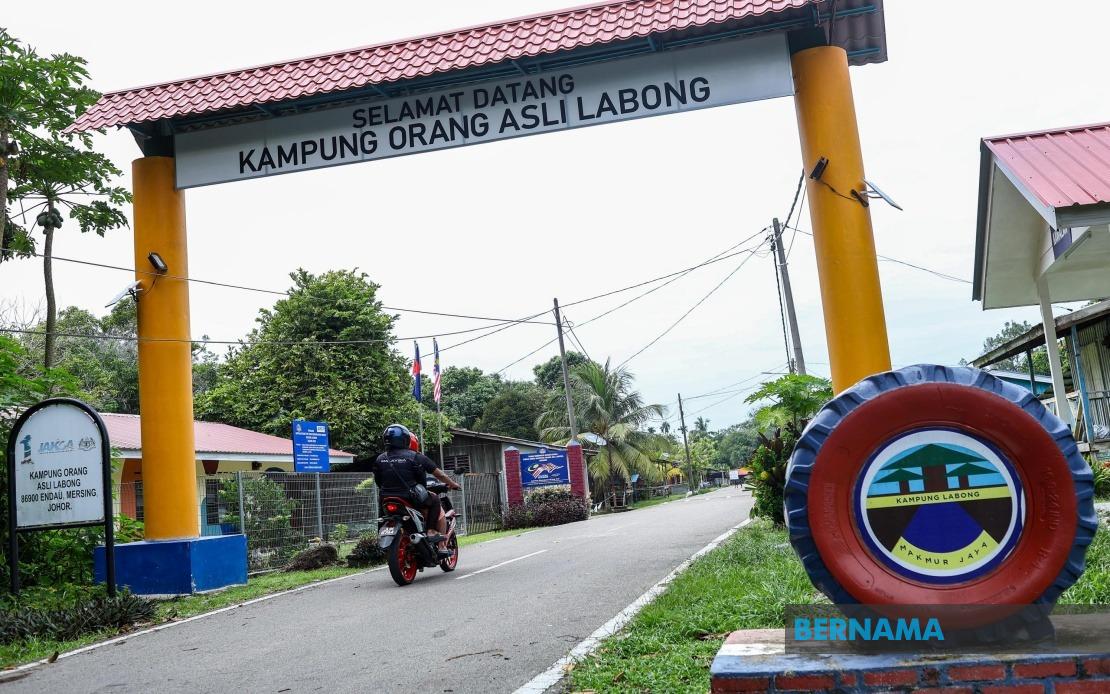
The Johor state government is deepening its commitment to improving the circumstances of Orang Asli communities through a coordinated partnership with the Department of Orang Asli Development, with residents of Kampung Orang Asli Labong in Mersing among those reporting meaningful improvements in their daily lives and governance structures.
Mabot Sela, the 80-year-old Tok Batin of Kampung Orang Asli Labong, has emerged as a vocal advocate for the initiatives being rolled out across villages in the state. He credits structured training programmes and increased financial support with enhancing his effectiveness as a community leader, allowing him to bridge communications between villagers and government agencies more efficiently. According to Mabot, the capacity-building courses administered by JAKOA have furnished him with practical administrative skills and knowledge necessary for managing village affairs and ensuring community governance meets contemporary standards.
The financial dimension of Johor's approach has also proven significant for household economies in indigenous settlements. The state government's decision to raise monthly allowances for village heads and Orang Asli leaders has alleviated immediate pressures on personal budgets, particularly regarding healthcare expenditure and medication purchases that often consume scarce resources. For older community members like Mabot, such supplementary income represents a tangible acknowledgement of the leadership role village heads play in maintaining social cohesion and facilitating development work.
Beyond individual benefit, however, community members articulate broader aspirations for economic transformation. Sekoi Janja, a 68-year-old resident, emphasises the generational shift occurring within Orang Asli settlements. Where previous decades saw livelihoods rooted almost entirely in forest resources and subsistence practices, contemporary aspirations centre on enabling younger residents to access pathways toward improved economic security and expanded opportunities. This intergenerational perspective reflects recognition that sustainable development requires investments in education, skills, and economic alternatives that extend well beyond traditional activities.
Skills development and income generation emerge repeatedly as priorities among residents interviewed during recent visits to Mersing settlements. Norma Lonchai, a 44-year-old trader, articulates a common refrain: while direct financial assistance provides necessary short-term relief, the community requires targeted programmes designed to build marketable capabilities and create genuine entrepreneurial pathways. She and others envision initiatives that go beyond welfare provision to encompass vocational training, business mentorship, and market access support that could durably improve household earnings and economic independence.
The scope of Johor's financial commitment to Orang Asli development underscores the state's stated policy priorities. During the most recent financial year, the state government allocated RM3.8 million toward nine distinct initiatives designed to empower and enhance welfare outcomes for more than 18,000 Orang Asli residing throughout Johor. This funding architecture encompasses multiple development vectors, including educational access, basic infrastructure improvements, healthcare support, and community-based economic initiatives intended to create interconnected pathways toward improved living standards.
The thematic breadth of approved assistance programmes reflects recognition that Orang Asli advancement requires multifaceted intervention rather than single-sector solutions. Educational support aims to enhance literacy rates and credential attainment among younger generations, expanding their labour market options beyond traditional economic roles. Infrastructure investments address basic services deficiencies that constrain health, mobility, and economic activity. Welfare components provide safety nets for vulnerable households. Development initiatives simultaneously attempt to strengthen economic agency and self-reliance, acknowledging that sustainable progress depends on community members' ability to generate income and make autonomous economic decisions.
Persistent environmental challenges underscore the complexity of rural development in areas adjacent to forest reserves and wildlife habitats. Mabot identifies recurring crop damage caused by wild elephants as a significant concern affecting agricultural productivity and food security, alongside hazards posed by stray cattle to both community members and motorists traversing village areas. These issues transcend typical welfare frameworks, requiring coordinated environmental management, conflict mitigation strategies, and potentially compensation mechanisms that address wildlife-related economic losses without displacing indigenous populations from ancestral lands.
The Johor government's approach reflects broader Malaysian policy evolution regarding indigenous communities, moving incrementally from paternalistic welfare models toward participatory development frameworks that privilege community voice and agency. By investing in leadership capacity among village heads like Mabot Sela, the state acknowledges that sustainable progress requires strengthening local governance structures and enabling indigenous leaders to articulate community priorities effectively. This institutional dimension complements direct welfare and infrastructure provision, creating conditions where development initiatives respond to community-identified needs rather than externally imposed agendas.
For Southeast Asian observers, Johor's Orang Asli development strategy carries relevance beyond Malaysia's borders. Indigenous communities across the region face similar pressures: historical marginalisation, limited economic opportunities, environmental threats, and generational transitions as younger members seek alternatives to traditional livelihoods. The integration of welfare support with skills development, leadership training, and infrastructure investment offers a replicable model for neighbouring countries grappling with equitable development questions.
The perspectives offered by Kampung Orang Asli Labong residents suggest cautious optimism about current trajectories, paired with recognition that realising intergenerational aspirations requires sustained commitment and resource allocation. Sekoi Janja's hope that future generations will enjoy materially improved circumstances and Norma Lonchai's vision of expanded skills-development opportunities capture aspirational dimensions that extend beyond immediate welfare provision. Sustaining this momentum will demand continued political will, adequate funding, and importantly, responsiveness to community members' evolving priorities as their circumstances change and new challenges emerge.

