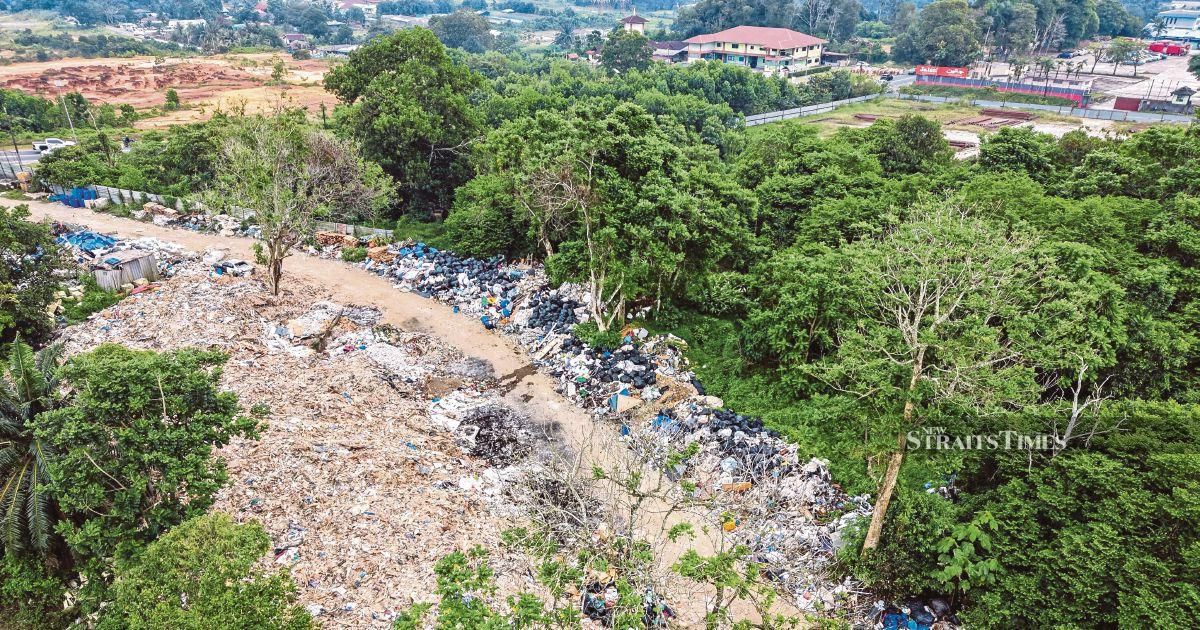
Authorities in Johor have announced plans to establish a multi-agency task force to conduct a thorough probe into allegations that construction waste originating from Singapore has been deposited at various locations throughout Pontian. The suspected dumping locations, which span multiple sites in the district, have raised alarm bells among environmental and local government officials concerned about the impact on the state's waste management practices and cross-border environmental responsibility.
The investigation marks an escalation in scrutiny over waste disposal practices that breach established protocols between neighbouring jurisdictions. Construction debris and similar waste materials typically require proper licensed disposal facilities and environmental clearance before being transported across state and international borders. The alleged placement of such materials without authorisation represents both a violation of Malaysian waste management regulations and a potential breach of bilateral environmental agreements.
Pontian, located at the southern tip of Johor's mainland, sits directly across the Johor Strait from Singapore and has long served as a commercial and logistical hub. Its proximity to the city-state makes it a critical point for monitoring cross-border activities, particularly in sectors involving waste management, recycling, and environmental compliance. The district's accessibility via road and sea routes has historically made it susceptible to irregular waste disposal practices that exploit regulatory gaps between jurisdictions.
The establishment of a coordinated task force involving multiple agencies underscores the complexity of addressing transnational waste management issues. Such investigations typically require cooperation between Johor's Department of Environment, local municipal authorities, the Solid Waste and Public Cleansing Corporation (SWCorp), customs officials, and potentially maritime enforcement agencies. Each agency brings specialized expertise in tracking waste sources, verifying disposal locations, and determining whether illegal practices have occurred.
Construction waste carries particular significance in this context. Unlike residential or commercial waste streams, construction debris—comprising concrete, timber, metal, and other materials—requires specialised disposal infrastructure and often commands fees for proper handling. The economic incentive to dispose of such materials illegally creates persistent temptation for cost-cutting operators, particularly when neighbouring jurisdictions lack robust enforcement mechanisms at border points.
For Malaysia and Johor specifically, such allegations carry implications beyond simple environmental management. They touch on issues of sovereignty, cross-border accountability, and the effectiveness of regulatory frameworks designed to protect Malaysian territory from becoming a dumping ground for external waste. Singapore's construction industry generates substantial quantities of waste annually, and ensuring this material remains within licensed disposal facilities represents a baseline environmental responsibility expected of both nations.
The investigation will likely examine multiple dimensions of the alleged violation. Authorities will need to identify the specific locations where dumping occurred, collect forensic evidence from waste deposits to determine Singapore origin, trace the chain of transport and decision-making that led to the dumping, and establish whether any local actors facilitated or collaborated in the scheme. Such investigations frequently involve examining truck routes, surveying GPS data, reviewing waste manifests where they exist, and interviewing local residents who may have witnessed suspicious activities.
Cross-border environmental enforcement represents a persistent challenge across Southeast Asia. Waste exports, often mislabelled as recyclable materials, frequently circumvent regulations designed to keep hazardous or voluminous waste within source countries. Malaysia has faced similar issues at other borders and maritime zones, where domestic and regional actors exploit jurisdictional ambiguity. Establishing effective deterrence requires not only identifying violators but demonstrating capacity and political will to impose meaningful penalties.
The task force approach offers practical advantages over unilateral investigation. Multi-agency coordination allows authorities to pool resources, share intelligence across sectors, and leverage different enforcement powers simultaneously. SWCorp's technical expertise in waste classification and management combines with municipal authorities' understanding of local geography and customs departments' capacity to monitor movement across borders. This integrated approach typically yields more comprehensive investigations and stronger prosecutorial foundations.
Successful resolution of these allegations will likely establish important precedents for how Malaysia handles similar future incidents. The investigation outcomes may inform revisions to waste management protocols at the Johor-Singapore border, potentially leading to enhanced monitoring systems, clearer disposal agreements, or strengthened penalties for violators. Regional neighbours will watch closely to assess whether Malaysian enforcement demonstrates sufficient rigour to deter future violations.
For residents and environmental advocates in Pontian and surrounding areas, this investigation represents a test of governmental commitment to protecting local environments from external pressures. The construction of an effective response framework now may prevent more extensive contamination and establish expectations that neighbouring jurisdictions must manage their own waste responsibly. The outcome will shape how seriously Malaysian authorities treat similar allegations in future and whether cross-border waste dumping remains a viable option for operators seeking to minimise disposal costs at Malaysia's expense.

