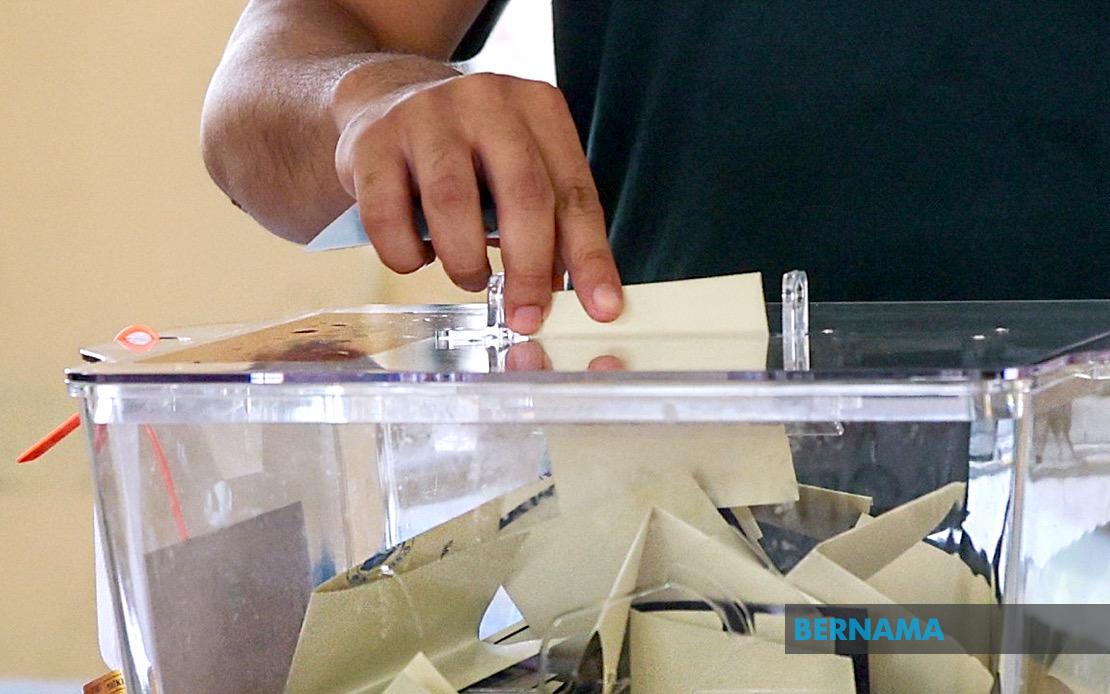
Rahmat Shukor, a 57-year-old self-employed worker, travelled 120 kilometres from Sri Medan in Batu Pahat to Johor Bahru on polling day for the 16th Johor state election, only to be turned away from the voting centre by a single minute. The frustration of his wasted journey encapsulates the sometimes cruel mechanics of electoral deadlines and the real-world complications voters encounter when distance and unexpected circumstances conspire against them.
Rahmat's journey should have been straightforward. He had originally planned to return to Johor Bahru on Friday to participate in voting, allowing ample time to reach his designated polling centre at SJK (C) Foon Yew 4. However, after completing demanding plantation and contract work, he decided to rest overnight at his late mother's house in Sri Medan, a decision that would ultimately cost him his vote. When he set out the following morning, he could not have anticipated the severity of the traffic conditions that would unfold across the highway connecting his starting point to the state capital.
The journey deteriorated significantly when Rahmat encountered unexpectedly severe congestion beginning around the Simpang Renggam Rest and Recreation Area and extending toward Sedenak. Heavy traffic persisted along the main Skudai road, the primary artery between Batu Pahat and Johor Bahru. Determined to reach the polling centre in time, Rahmat attempted to navigate around the congestion by exploring alternative routes, but each manoeuvre proved fruitless against the scale of the day's traffic disruption. Despite driving non-stop and making strategic attempts to circumvent bottlenecks, he fell victim to circumstances largely beyond his control.
When Rahmat finally arrived at SJK (C) Foon Yew 4, the polling centre's doors had just closed. Officials informed him that voting had officially ended at exactly 6pm, and he had arrived approximately one minute after that cutoff. In an effort to document his situation, Rahmat captured photographic evidence of the traffic jam that had delayed him and presented this proof to election officials, hoping to demonstrate that his lateness was attributable to force majeure rather than negligence. He spoke to Bernama outside the polling centre, expressing his sadness and articulating the circumstances of his journey with the composure of someone who understood that the electoral rules, however frustrating, are absolute.
The irony of Rahmat's predicament extends beyond his personal disappointment. His entire family, including his wife, had travelled from Johor Bahru earlier on Friday and successfully cast their votes. By remaining at his mother's home an extra night, Rahmat became the only family member unable to participate in the democratic process. This outcome underscores how travel decisions made for reasonable personal reasons—in this case, rest and recuperation after physical labour—can have unintended electoral consequences, particularly for voters living considerable distances from urban centres where polling infrastructure is concentrated.
The 16th Johor state election saw comprehensive polling infrastructure, with 1,076 polling centres spread across the state. Despite this extensive network, the centralisation of polling locations means that voters from outlying areas like Batu Pahat face significantly longer journeys than urban residents. For someone living and working in a smaller town, covering 120 kilometres is not an unusual distance to travel for important civic duties, yet the rigid closure time of 6pm accommodates no flexibility for traffic emergencies or unexpected delays that might occur on highways far from the polling centre itself.
Rahmat's response to his predicament demonstrates a pragmatic acceptance of electoral mechanics. Despite the disappointment of driving such a distance only to be turned away, he acknowledged that the democratic process itself remains important and expressed hope that the election would proceed smoothly without the complications that had affected his own participation. His graceful resignation to an unfavourable outcome reveals the dignity with which many voters accept these rare but devastating scenarios, even when the circumstances feel deeply unjust.
This incident raises subtle questions about electoral administration in Malaysia's context of dispersed population centres and congested highway networks. While polling closing times are fixed by necessity, allowing elections to function within a defined timeframe, the practical difficulties faced by voters from more distant constituencies occasionally highlight the tension between administrative convenience and comprehensive democratic participation. Rahmat's situation is not unique; voters across Malaysia's peninsular and East Malaysian regions regularly navigate significant distances to reach polling booths, and any unexpected delay—whether traffic, vehicle trouble, or personal emergency—carries the risk of disenfranchisement.
The broader implications for Johor specifically merit consideration. Batu Pahat is a substantial town within the state, yet voters there must travel to Johor Bahru or other larger centres for state elections. The concentration of polling infrastructure in major urban areas creates cascading risks: any disruption to highway connectivity, whether through accidents, weather, or simply election-day traffic volume, can prevent otherwise dedicated voters from participating. Early voting provisions exist in Malaysia for some eligible voters, yet many workers in self-employment or informal sectors like Rahmat may not qualify for such accommodations.
Rahmat Shukor's experience serves as a poignant reminder that electoral participation, while theoretically accessible to all registered voters, sometimes involves practical obstacles that administrative systems have yet to fully address. His 120-kilometre journey and the heartbreak of arriving just sixty seconds late illuminate the gap between formal voting rights and their reliable exercise across Malaysia's geographically dispersed population. As election authorities continue refining their processes, the experiences of voters like Rahmat should inform discussions about whether current mechanisms adequately protect the voting rights of citizens living and working considerable distances from urban polling centres.

