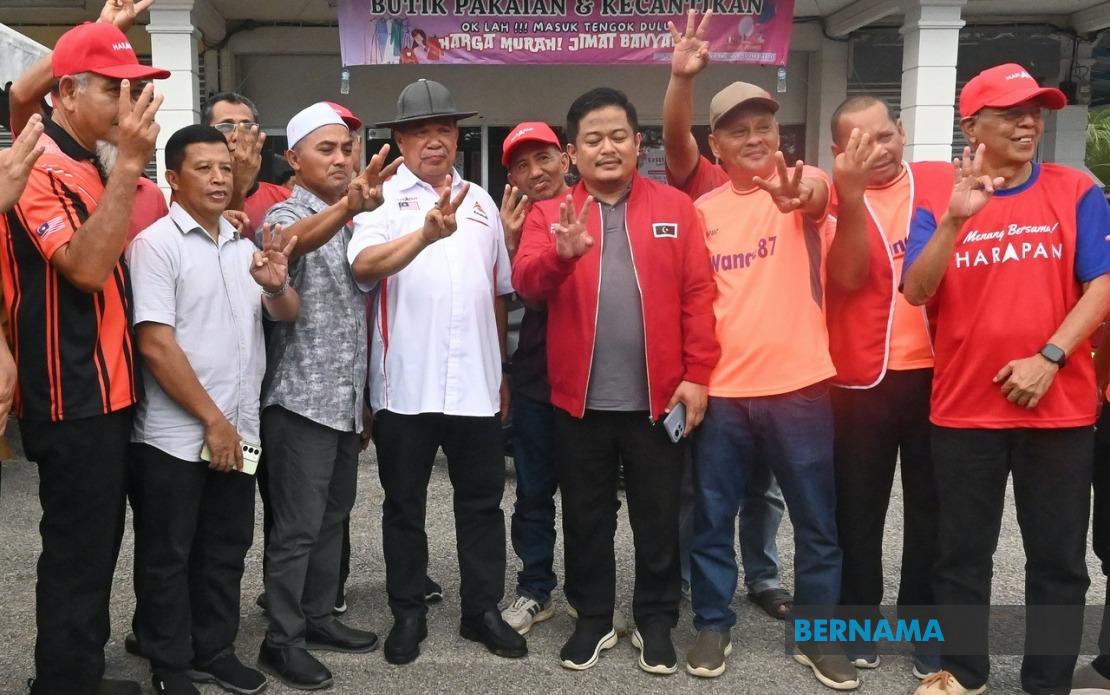
Datuk Seri Mohamad Sabu, president of Amanah and Minister of Agriculture and Food Security, has made an urgent appeal to Johor voters ahead of this Saturday's state election, urging them to support Pakatan Harapan candidates to give the coalition the mandate needed to execute its recently unveiled campaign platform. Speaking in Rengit during the Johor Tour with Bang Mat programme, Mohamad Sabu emphasised that while manifestos are plentiful in politics, the true measure of any political movement lies not in the promises it makes but in its capacity to deliver concrete results on the ground.
The core of Mohamad Sabu's message centred on a critical distinction between campaign rhetoric and genuine implementation. He acknowledged that opposition parties have dismissed the PH manifesto as derivative, accusing the coalition of simply copying existing proposals. However, he countered that the real differentiator for voters should be which political force can actually translate pledges into working solutions. Mohamad Sabu stressed that without electoral victory, Pakatan Harapan would be unable to fulfil the commitments outlined in their manifesto, effectively rendering all campaign promises hollow.
The Amanah leader elaborated on the development process behind the manifesto, arguing that it emerged from genuine grassroots engagement rather than disconnected policymaking. He highlighted that the coalition had spent considerable time traversing Johor, listening directly to residents' concerns and understanding their daily struggles. This extensive consultation process, according to Mohamad Sabu, formed the foundation of the platform now being presented to voters. The manifesto therefore represents not an abstract policy document but a direct response to problems articulated by ordinary Johoreans themselves.
Mohamad Sabu conveyed optimism about the implementation timeline should Pakatan Harapan secure victory in the election. He pledged that if voters grant the coalition a mandate, the machinery of government would begin moving swiftly to activate the manifesto commitments starting from July 12. This immediate timeline underscores PH's determination to move beyond campaigning and into the practical work of governance, signalling to voters that the coalition views the election not as an endpoint but as the beginning of substantive policy execution.
A notable aspect of Mohamad Sabu's campaign observations relates to shifts in voter sentiment across different demographics. He highlighted a marked improvement in how rural communities are responding to PH candidates and campaign activities during this election cycle compared to the 2018 general election. At that earlier juncture, Pakatan Harapan remained relatively unknown in Johor's rural areas and smaller villages, a significant disadvantage in a state where such communities represent a substantial voter base. The contrast he described reveals growing brand recognition and acceptance among populations that had previously been unfamiliar with the coalition.
This changing rural landscape reflects deeper developments in Johor's political consciousness over the intervening years. During the 2018 campaign, PH was still establishing its presence in state-level politics following the federal victory. The coalition's profile has been substantially elevated through its role in federal government and through sustained engagement with local communities. Mohamad Sabu's observation that residents now actively greet PH campaigners and seek photographs suggests that the novelty factor has worn off, replaced by a degree of familiarity and, apparently, growing acceptance.
The timing of the Johor state election carries particular significance for Pakatan Harapan's overall political trajectory in Malaysia. Should the coalition perform strongly or secure control of the state assembly, it would demonstrate resilience and electoral competitiveness despite challenges at the national level. Conversely, a poor showing would raise questions about PH's capacity to maintain voter support across diverse regions and demographic groups. For Malaysia's broader political evolution, Johor represents a critical testing ground for whether the coalition can consolidate support beyond its traditional urban strongholds.
The early voting period for security personnel is scheduled for July 10, with the main polling day set for July 11. This structure allows members of the armed forces and police to vote before the general population participates. The logistics of securing votes across this dispersed voter base add complexity to campaign strategies, as political parties must ensure their messages reach security personnel through distinct channels while simultaneously maintaining momentum in the broader population.
Johor's electoral dynamics have shifted considerably since the 2018 general election, with multiple political realignments occurring at both state and national levels. The composition of electoral coalitions has changed, and voter preferences have evolved in response to shifting political circumstances. In this context, Mohamad Sabu's emphasis on implementation rather than promises reflects a recognition that voters are increasingly demanding evidence of competence and results rather than simply accepting campaign pledges at face value. The appeal to back PH candidates rests ultimately on the proposition that this coalition possesses the capacity to translate manifesto provisions into actual improvements in Johorean life.

