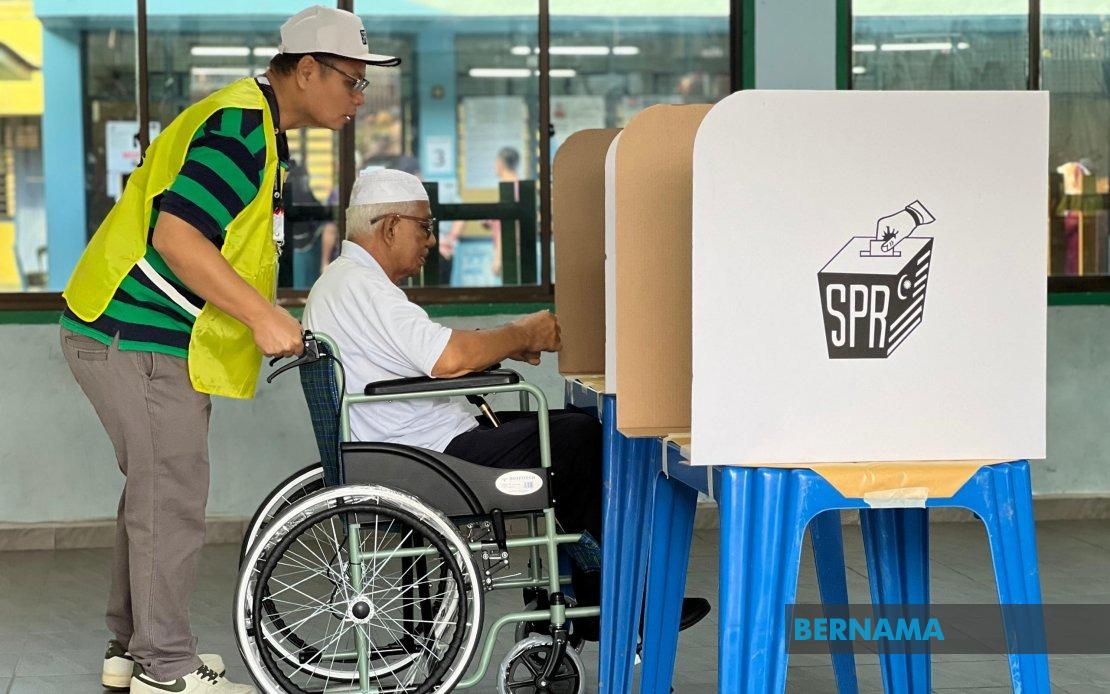
Johor's bid to elect a new state government began in earnest this morning as all 1,076 polling centres swung open their doors at 8 am, initiating what promises to be a decisive contest that will reshape the political landscape of Malaysia's southernmost peninsula. The simultaneous activation of 4,889 polling streams across the state marks a logistical achievement, coordinated by the Election Commission to provide seamless voting access to the electorate after a fortnight of intensive campaigning that concluded at midnight the previous evening.
The sheer scale of voter participation underscores Johor's political significance within the nation's federal structure. With 2.7 million registered voters heading to the polls, the state election represents one of the most substantial electoral exercises in the region. The voting exercise is designed to conclude by 6 pm, though strategic polling stations serving constituencies with smaller populations will wind down operations progressively from 11 am onwards, a practical measure that allows election officials to manage resources efficiently without compromising accessibility for voters across varied demographic zones.
The contest itself reflects the competitive nature of contemporary Malaysian state politics. One hundred seventy-two candidates are contending for the 56 State Legislative Assembly seats, a configuration that generates considerable strategic complexity. The contests range across multiple tiers of competition: 12 four-cornered battles split votes among four contenders, 27 three-cornered fights create triangular struggles typical of modern Malaysian elections, and 14 straight fights pit sole opponents against each other. This fragmentation of candidacies illustrates the diversification of political representation beyond the traditional two-coalition framework that has historically dominated Malaysian electoral competition.
Election Commission officials have projected a voter turnout of approximately 70 per cent, a benchmark that reflects expectations grounded in recent electoral behaviour across Malaysian states. Should this projection materialise, it would indicate robust engagement from the Johor electorate and validate the perceived significance of this particular state election. The Commission's confidence in such turnout suggests confidence in both voter interest and the efficacy of administrative preparations undertaken across the state's various constituencies.
The logistical footprint of the election extends beyond mere polling infrastructure. Security deployment at polling stations has been comprehensively arranged to safeguard the integrity of the voting process and ensure orderly conduct throughout the day. These measures reflect standard democratic protocols designed to maintain the sanctity of the ballot while reassuring voters of a secure electoral environment. Media representatives had already begun positioning themselves across polling stations by 7 am, underlining the press's commitment to real-time coverage of the unfolding democratic exercise.
Weather conditions proved largely cooperative for the electoral exercise, with clear skies dominating most regions across Johor throughout the morning. The lone exception came in Muar, where rainfall affected polling procedures, though such meteorological variance is typical for the region during this period and generally presents only minor disruptions to voter accessibility. The relative clemency of weather patterns facilitated voter movement and reduced potential complications that inclement conditions might otherwise have introduced.
The timing of result announcements provides another dimension to understanding the electoral calendar. The Election Commission anticipates that full results may be declared by 10 pm, a relatively expedient conclusion that reflects both technological advancement in vote tallying and the organisational efficiency of Malaysia's electoral machinery. This timeline allows voters, political parties, and the broader national audience to receive clarity on Johor's political direction within a single day, minimising the period of uncertainty that elongated counting processes might otherwise extend.
For Johor specifically and Malaysia more broadly, this state election carries considerable weight. The state has historically served as a bellwether for broader national political trends, and the configuration of forces that emerges from today's contest will inevitably inform assessments of momentum for major coalitions and individual parties. The results will reverberate beyond Johor's borders, providing indicators of voter sentiment that analysts and political operators across the country will scrutinise meticulously in the months ahead.
The 16th Johor state election represents a moment of democratic renewal, one in which millions of voters translate their political preferences into concrete outcomes. As polling stations proceed through the day's operations, the machinery of democracy continues its familiar rhythms, processing choices that will determine which political forces govern one of Malaysia's most economically significant and geopolitically important states for the next electoral term.

