The contest for control of Johor's state government intensified sharply on July 10 as all major political coalitions executed their closing strategies ahead of the official end of campaigning at 11:59 pm that evening. The 16th Johor State Election, scheduled for July 11, would determine which alliance could command 56 state legislative seats, and the final hours witnessed a concentrated flurry of activity designed to consolidate voter support and reverse any late momentum shifts. With 172 candidates in the race, the competition remained fluid until the last permissible moment for campaign activity.
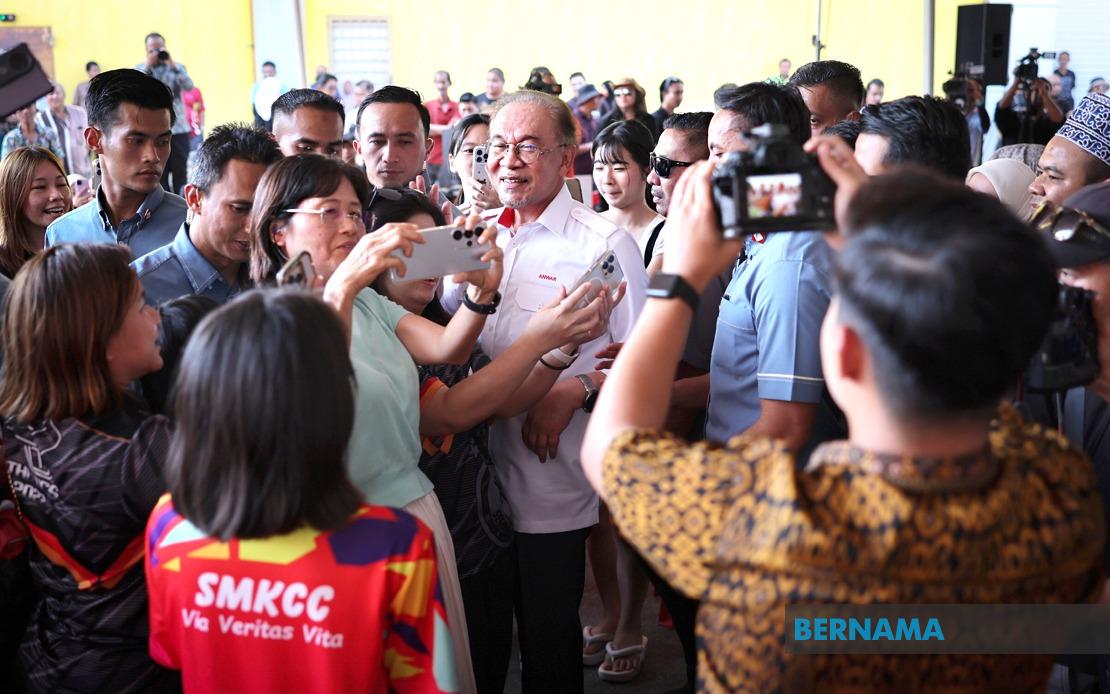
Pakatan Harapan's leadership placed particular emphasis on a final coordinated push. The coalition's Chairman, Datuk Seri Anwar Ibrahim, conducted a tour spanning five carefully selected locations throughout Johor Bahru, beginning in the Bukit Gambir state legislative assembly constituency and subsequently moving through Bukit Batu and Layang-Layang before concluding with the 'Johor Ke Depan, Undi Harapan Grand Finale Programme' in Pasir Gudang. This itinerary represented a geographic spread designed to maintain PH presence across urban and suburban areas simultaneously. Through social media, the Prime Minister appealed for divine intervention, expressing hope that all matters confronting his coalition during the election would proceed smoothly.
Within the Pakatan Harapan machinery, individual candidates adopted complementary approaches. Suhaizan Kaiat, contesting the Larkin state seat, employed a ground-level engagement strategy by conducting walkabouts at a shopping mall in the city proper, accompanied by Amanah Vice President Datuk Seri Dr Dzulkefly Ahmad. This retail politics methodology stood in contrast to the larger rally format, allowing direct voter interaction and feedback collection. Suhaizan framed the campaign period as an accumulation of public input that would inform his governance if voters granted him the mandate, positioning himself as a listening candidate responsive to constituent concerns.
Barisan Nasional pursued a distinctly different tonal register in its closing activities. The coalition's Chairman, Datuk Seri Dr Ahmad Zahid Hamidi, attended a 'BN Grand Supplication & Doa Selamat' event in Kulai, anchoring BN's final message around spiritual and religious invocation rather than policy articulation. This choice reflected a particular cultural approach to mobilising Muslim-majority constituencies in Johor during the campaign's concluding phase. Separately, the incumbent Johor Menteri Besar and BN candidate for Machap, Datuk Onn Hafiz Ghazi, adopted a notably apologetic posture in a Facebook video message, openly expressing regret for perceived shortcomings during his administration. This mea culpa represented a tactical acknowledgment that incumbent performance had come under scrutiny and required explicit address before voting commenced.
Within Barisan Nasional's broader coalition, Bersatu took an independent messaging line. Party President Tan Sri Muhyiddin Yassin released a video address urging Johoreans to make considered voting decisions based on accumulated information gathered throughout the two-week campaign period. Rather than aggressive persuasion, Muhyiddin framed the election as an information exercise in which voters had accumulated sufficient data to make rational choices. This rhetorical approach positioned Bersatu as facilitators of rational deliberation rather than partisan agitators, potentially signalling confidence in how the campaign narrative had developed from the coalition's perspective.
The Bersama party, contesting as a distinct political force, concluded its campaign with a 'Ceramah Finale BERSAMA' featuring leaders Datuk Seri Rafizi Ramli and Nik Nazmi Nik Ahmad. Rafizi promised his final speech would constitute a comprehensive summary and counter-argument addressing all substantive issues that had emerged throughout the election campaign. This framing positioned Bersama as capable of synthesising and responding to the entire campaign discourse in a coherent final statement, appealing to voters seeking a comprehensive political narrative ahead of their voting decision.
MUDA, the newer political entrant, executed their closing campaign through the 'Puteri Wangsa Grand Finale Lecture', with party President Amira Aisya Abd Aziz centring her message on voter agency and power. MUDA's approach emphasised citizen empowerment and the transformative potential of voter choice, messaging particularly calibrated to appeal to younger voters and those seeking fresh political alternatives. The emphasis on citizen power represented a distinct positioning relative to more established coalitions, appealing to those attracted by reform narratives.
The Malaysian Meteorological Department's forecast for July 11 predicted clear morning conditions across most areas, with potential afternoon rainfall or thunderstorms in some regions. This weather intelligence carried practical implications for campaign mobilisation on polling day itself, as rain might affect voter turnout in affected areas. Both coalitions would need to calibrate their get-out-the-vote operations based on meteorological conditions, with morning activities potentially concentrated in constituencies where weather deterioration seemed probable.
The scale of the contest remained substantial. One hundred and seventy-two candidates distributed across five major political coalitions—plus independent candidates—competed for 56 state seats across Johor's diverse constituencies. This represented a competitive density that suggested genuine uncertainty regarding outcomes, with neither Barisan Nasional nor Pakatan Harapan able to claim uncontested dominance heading into polling day. The presence of Bersama and MUDA as secondary competitors added further fragmentation to the electoral landscape, potentially creating scenarios where narrow vote-splitting could determine outcomes in marginal constituencies. For Malaysian politics broadly, the Johor result would constitute the first major electoral test following the Anwar Ibrahim-led government's formation, carrying implications for whether PH could consolidate support or whether voters would signal desire for alternative leadership.

