The nomination phase of Johor's 16th state election concluded seamlessly on June 27 when all 56 polling centres across the state shuttered their doors at 10am, marking the formal end of candidate submissions and setting the stage for an intensive two-week campaign period. Returning officers at each venue announced the closure after the designated one-hour window for lodging nomination papers—which ran from 9am to 10am—had elapsed without incident.
The orderly progression through the nomination process reflects careful coordination by the Election Commission (EC), which has established an accelerated but structured timetable for the entire electoral exercise. With nominations now finalised, the commission will proceed to announce the official roster of eligible candidates and confirm how many contenders will vie for each of the state's legislative seats. This administrative step, though routine, carries significance as it determines the competitive landscape across Johor's constituencies and provides clear information to voters about their choices.
Johor's electoral schedule maintains momentum, with the EC designating July 7 as the date for early voting—a provision that accommodates those unable to cast their votes on polling day. July 11 has been set as the main election day, giving candidates and parties exactly 14 days to conduct their campaigns. This campaign window extends from now through 11.59pm on July 10, a relatively compressed timeframe that requires political movements to mobilise supporters efficiently and communicate their policy platforms with urgency and clarity.
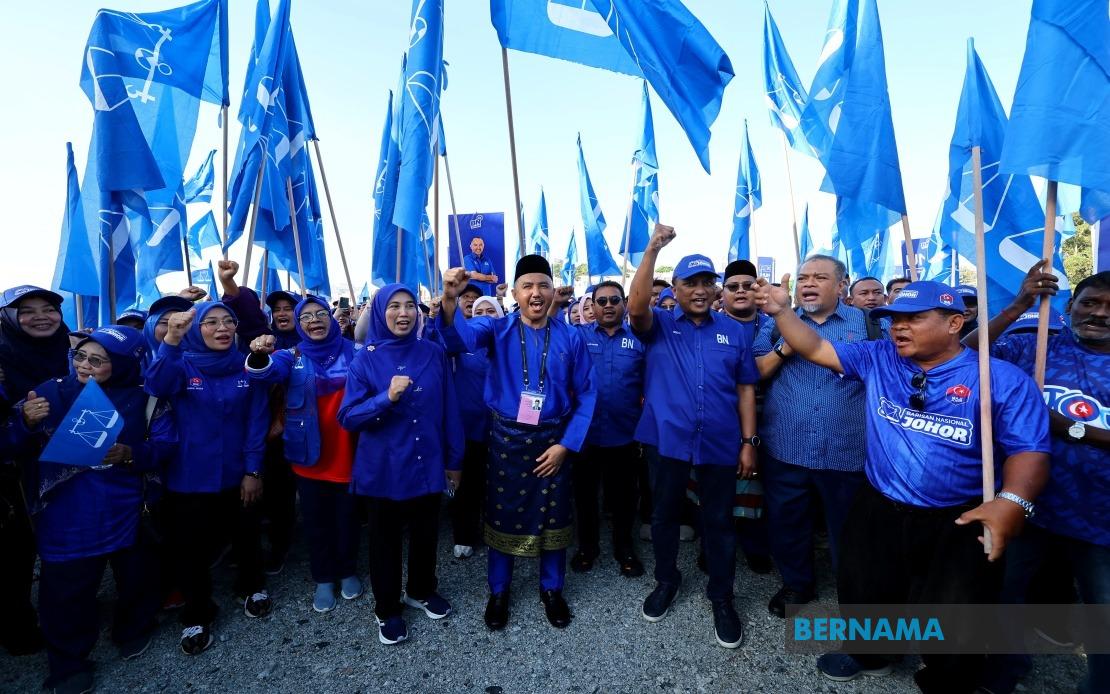
The scenes at nomination centres throughout the day reflected the engagement typical of competitive electoral contests. Across various venues, party supporters mustered to accompany their candidates as they submitted nomination documents, creating visible displays of grassroots enthusiasm. However, despite this activity and the heightened tension that often surrounds candidate registration, the proceedings maintained decorum throughout. Security forces, including personnel from the Royal Malaysia Police (PDRM) and the People's Volunteer Corps (RELA), maintained a visible presence at all locations, though their intervention proved unnecessary as no provocative incidents occurred.
The demographic scale of this election underscores Johor's weight within Malaysia's electoral system. Approximately 2.73 million voters are registered to participate in the 16th state election, a figure comprising 2.70 million ordinary voters alongside 12,041 military and police personnel along with their spouses. This substantial electorate reflects Johor's status as Malaysia's second-largest state by population and its economic significance as a major industrial and commercial hub. The voting population's size means that outcomes in Johor can meaningfully influence broader political narratives at the national level, particularly regarding coalition stability and government formation.
For Malaysian observers and regional commentators, Johor's elections carry implications beyond state boundaries. As a traditional stronghold with shifting political allegiances in recent years, the state has become a barometer for voter sentiment on governance, economic performance, and political leadership. The 16th state election will test whether recent political transitions have solidified or whether further realignment among constituencies remains possible. The compressed campaign timeline means that messaging must be sharp and targeted, with parties relying heavily on established networks and digital communication platforms to reach voters effectively.
The security arrangements surrounding the nomination process, though unmarked by conflict, signal the seriousness with which electoral authorities approach maintaining the integrity of democratic processes. The coordinated presence of police and volunteer corps at 56 separate venues across the state demonstrates institutional capacity to manage logistical complexity while protecting electoral conduct. This procedural rigour, though sometimes taken for granted in mature democracies, underscores Malaysia's commitment to ensuring that electoral competition occurs within orderly frameworks that protect both candidates' rights and public confidence in results.
Looking forward, the campaign period from late June through early July will test the organisational capacity and messaging discipline of all participating parties. With nominations now closed, the identity of candidates is fixed, and the competitive terrain is clearly mapped. Parties must now translate their organisational infrastructure and financial resources into persuasive communication that influences voter decisions. The early voting provision on July 7 will provide initial signals of turnout patterns and voter engagement levels, information that campaigns may seek to leverage during the final weekend before main polling.
For Johor residents and Malaysian political observers more broadly, the orderly completion of nominations represents a return to routine democratic practice after a period of political volatility. The state's electoral machinery has demonstrated its capacity to manage the technical aspects of large-scale elections effectively. As the campaign intensifies over the coming fortnight, focus will shift from administrative procedures to substantive political debate—the terrain on which competing visions for the state's future will ultimately be tested before voters on July 11.

