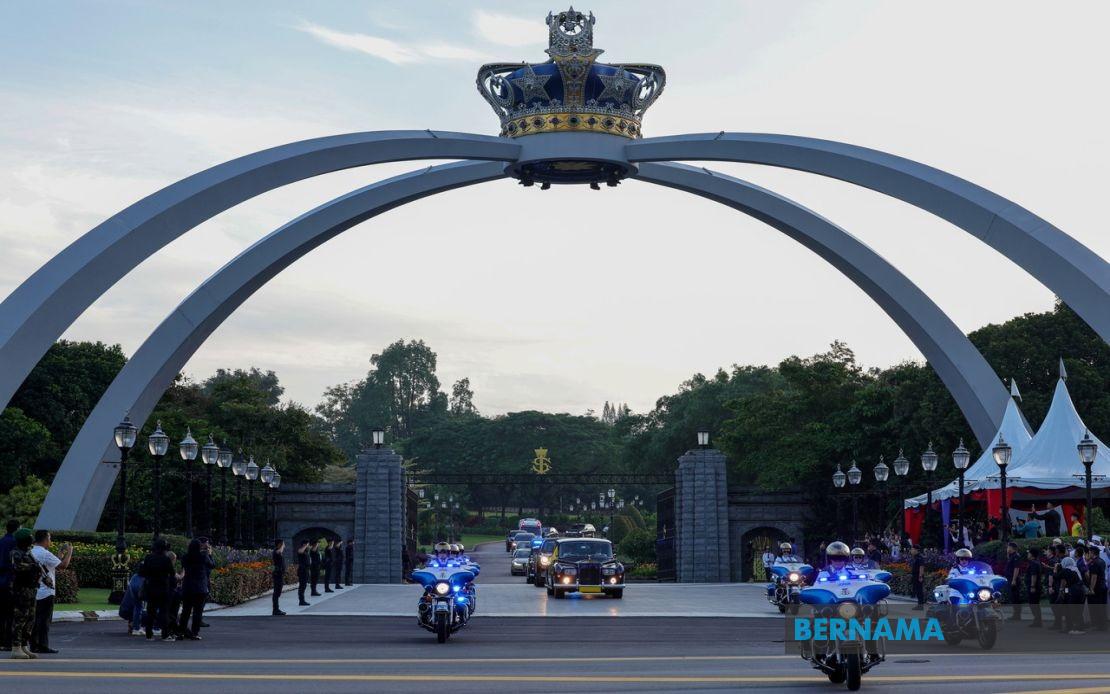
The swearing-in ceremony for Johor's incoming Menteri Besar will take place this afternoon at Istana Bukit Serene, the royal palace announced through official invitation channels. The formal investiture is scheduled for 3 pm, with members of the press granted access to observe proceedings from the Crown Arch entrance of the historic palace. However, organisers withheld disclosure of the individual designated to assume the office, leaving speculation about the appointment to continue until the actual ceremony commences.
The palace invitation, circulated via WhatsApp to accredited media outlets, stipulated clear protocols for news coverage, permitting journalists to gather at the designated vantage point. Since early afternoon, reporters and photographers have positioned themselves both at the Menteri Besar's official residence in Saujana and beyond the palace gates, anticipating the official announcement and seeking to capture the significant moment when the state's political leadership transitions. The media presence underscores the considerable public and institutional interest in the appointment decision.
Earlier on July 12, Sultan Ibrahim Iskandar granted an audience to Datuk Seri Ahmad Zahid Hamidi, the national chairman of Barisan Nasional, at Istana Pasir Pelangi. The private meeting, which extended for nearly an hour, also included Johor's state-level BN chairman Datuk Onn Hafiz Ghazi. Such royal consultations preceding formal appointments are customary constitutional practice in Malaysian monarchical governance, allowing the ruler to engage directly with senior political figures before finalising major state administration decisions. The presence of both national and state BN leadership at this audience suggested deliberation over the critical staffing choice.
Barisan Nasional's commanding electoral performance in yesterday's state election provides the political foundation for today's appointment. The coalition captured 48 of the 56 contested state assembly seats, delivering what observers characterised as a landslide outcome. This substantial majority grants the incoming Menteri Besar and the BN-led government a robust parliamentary position to pursue legislative initiatives without dependence on opposition support or minority coalition partners. The scale of victory reflects significant voter endorsement of the coalition's state-level platform and political direction.
For Malaysian and Southeast Asian political observers, Johor's leadership transition carries importance beyond the state boundaries. Johor, as Malaysia's second-largest state by population and a significant economic contributor, influences regional political dynamics and shapes federal coalition calculations. The identity of the appointed Menteri Besar may signal BN's strategic priorities, whether emphasising continuity, generational transition, or particular political alliances within the coalition structure. The formal ceremony today will crystallise these considerations into concrete governance reality.
The constitutional framework governing such appointments reflects Malaysia's unique hybrid system, wherein state rulers retain substantial prerogatives in selecting executives from among elected representatives commanding legislative confidence. While the ruler's choice typically aligns with the majority coalition's preference, the formal power of appointment remains vested in the monarchy. This constitutional arrangement distinguishes Malaysia's system from purely Westminster parliamentary models and maintains the symbolic and practical authority of the institution.
The timing and location of today's ceremony carry ceremonial significance reflecting the dignity accorded to the office. Istana Bukit Serene, serving as both the royal palace and symbolic seat of state authority, provides an appropriately elevated setting for the investiture. The afternoon timing allows for organised media presence and formal procedures befitting an occasion where executive power formally transfers within a structured constitutional framework.
For Johor residents and the broader Malaysian electorate, today's swearing-in marks the beginning of the incoming administration's mandate to govern. The specific policy priorities, cabinet composition, and strategic initiatives of the new Menteri Besar will soon become apparent through official announcements and subsequent governmental action. The strength of the electoral victory provides the new leadership with considerable political capital to implement agenda items and departmental reforms during its term.
The undisclosed identity of the appointee maintains a degree of uncertainty extending until the formal moment itself, reflecting either security considerations, final deliberative processes, or conventional practice in royal ceremonial matters. Once the swearing-in concludes and the individual takes the oath of office before the Sultan, the administration can proceed to public statement, portfolio announcements, and the practical commencement of state governance under new executive direction. The appointment today thus represents both conclusion of the electoral cycle and commencement of active administration.

