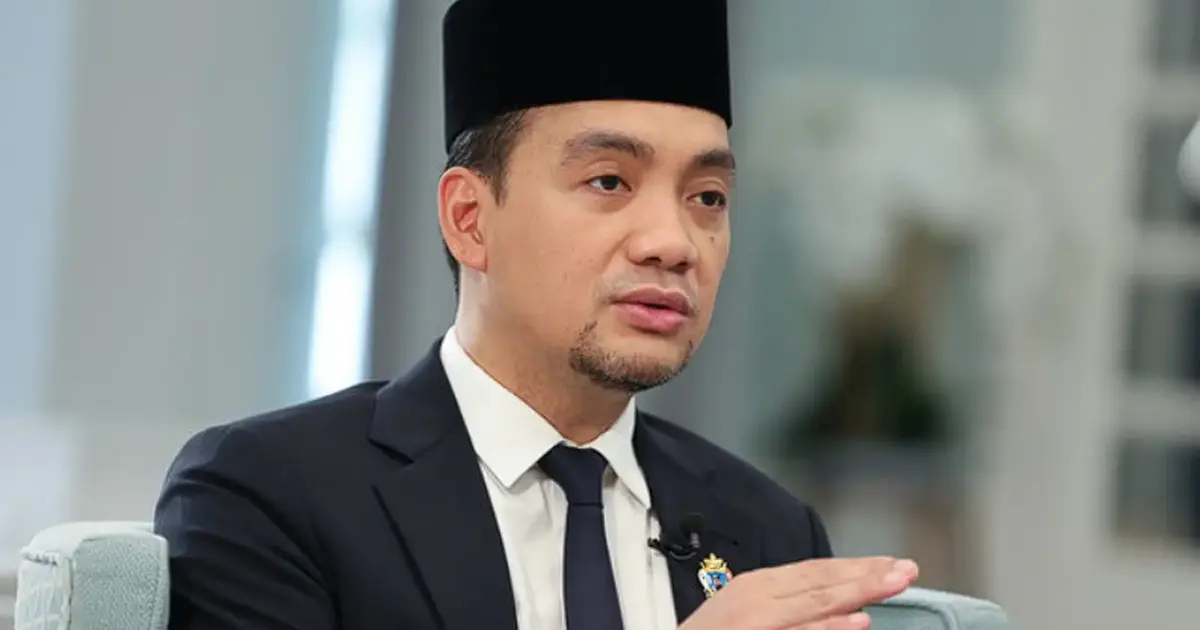
Caretaker Johor menteri besar Onn Hafiz has moved to clarify the Sultan's role in approving the state assembly's dissolution, distinguishing between formal constitutional procedure and actual political intervention. The official statement comes as observers scrutinize the Palace's involvement in the political developments surrounding the timing and mechanics of the legislative chamber's winding down.
Onn Hafiz's position frames the monarchy's endorsement as purely procedural rather than substantive—a necessary rubber stamp that reflects constitutional design rather than an exercise of political will. This interpretation reflects a broader principle in Malaysia's constitutional monarchy system, wherein the ruler provides formal validation to governmental actions within prescribed legal frameworks. The distinction carries significance because it addresses underlying concerns about the extent of Palace influence over executive decision-making at the state level.
In Malaysia's federal and state systems, the monarch or Sultan serves as titular head whose assent is required for specific governmental actions, including dissolution of the legislative assembly. This requirement exists across all state constitutions and is particularly pronounced in states like Johor, where the Sultan holds considerable ceremonial and constitutional prominence. The menteri besar's framing suggests that by characterizing this as mechanical constitutional compliance, the Palace is merely fulfilling its prescribed role without introducing independent political judgment.
The timing of this clarification reflects ongoing political sensitivities in Johor, where the state government has undergone significant transitions. Dissolving the state assembly typically precedes fresh elections and represents a significant political moment, potentially reshaping the legislative composition and balance of power. By emphasizing that the Sultan's approval is constitutionally mandated rather than discretionary, Onn Hafiz appears to be preempting criticism that the monarchy is actively shaping the political outcome.
Malaysian constitutional practice, however, reveals some nuance in this position. While monarchs generally grant assent as a formality when dissolution requests come through proper governmental channels, the constitution technically grants them discretionary power in specific circumstances. Rulers retain the authority to withhold consent under particular conditions, meaning the distinction between formal procedure and political discretion is not always as clear-cut as suggested. This constitutional gray area explains why observers might question the nature of Palace involvement.
For Johor specifically, the state's unique constitutional position adds another layer. As one of Malaysia's founding states with a ruling monarchy, Johor's Sultan commands particular respect in state governance traditions. The caretaker menteri besar's statement may be addressing sensitivities unique to Johor's political culture, where the Palace and state government maintain historically close relationships. Framing the dissolution approval as purely constitutional helps protect both institutions from appearing to act in concert for political purposes.
The broader context matters here as well. States across Malaysia have experienced various transitions in recent years, sometimes involving complex negotiations between the Palace, the executive, and political parties. Johor's approach of explicitly separating constitutional formality from political discretion may be establishing clearer boundaries for how such relationships should be understood publicly. This rhetoric serves to insulate the monarchy from accusations of partisanship while affirming the menteri besar's authority over executive decisions.
Onn Hafiz's statement also reflects a recognition that in Malaysia's evolving political landscape, transparency about institutional roles has become increasingly important. Citizens and observers increasingly question the extent of various authorities' influence, making it necessary for officials to explain and justify their actions with reference to constitutional principles. By grounding the Palace's role in law rather than politics, the menteri besar addresses these concerns while reinforcing respect for constitutional governance.
The assembly dissolution itself will carry practical consequences for Johor's political representation and legislative agenda. The process of dissolution, election, and formation of a new government involves numerous actors and decisions. By establishing that the Palace's contribution to this process is merely constitutionally required and not politically directed, the caretaker government attempts to focus attention on the electoral and legislative aspects rather than institutional relationships.
Moving forward, this clarification may influence how future dissolution requests and Palace involvement are understood in Johor and other Malaysian states. If the position that royal assent is purely procedural gains general acceptance, it could reshape public expectations about the monarchy's political role. Conversely, if observers continue to view such approvals as carrying political weight, the statement may do little to shift perceptions about Palace involvement in state politics.
The distinction Onn Hafiz draws between constitutional process and political interference ultimately rests on a particular interpretation of constitutional monarchy principles in Malaysia. While this interpretation has merit within formal legal frameworks, the relationship between the Palace and executive authority in practice often involves considerations beyond technical procedure. Understanding this dynamic requires looking at both what the constitution formally requires and what it permits in practice.

