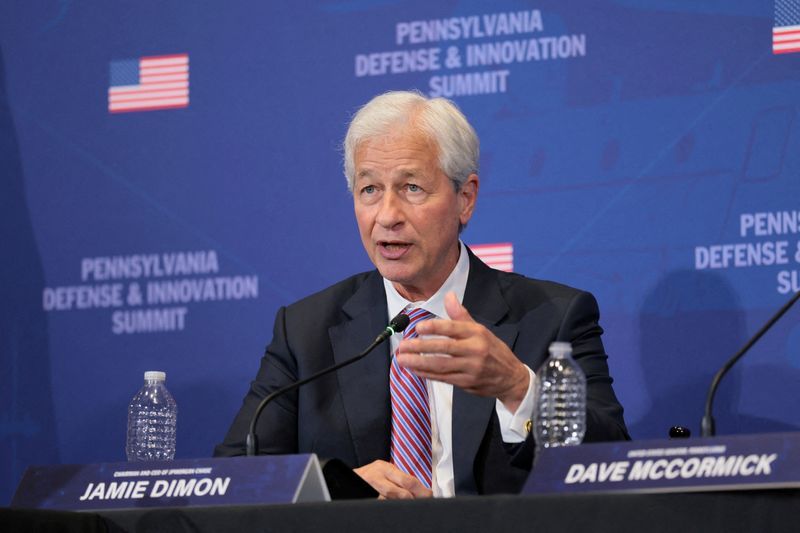
Jamie Dimon, chief executive of America's largest bank JPMorgan Chase, is marshalling corporate leaders across multiple sectors to confront the mounting risks posed by artificial intelligence adoption. The effort, which began in July and involves more than 40 companies spanning banking, energy, telecommunications, water utilities, airlines and rail transport, represents an attempt by the private sector to self-regulate before government mandates arrive. Dimon has personally contacted peers heading major financial institutions and technology firms, enlisting them in what amounts to a sector-wide risk management coalition focused on ensuring AI deployment does not compromise the infrastructure that underpins modern economic life.
The initiative operates through the Alliance for Critical Infrastructure, an organisation JPMorgan helped establish alongside partners including Mastercard and Berkshire Hathaway Energy. Originally conceived to coordinate cross-sector planning and information-sharing around physical, cyber and geopolitical threats, the ACI is now being repositioned and expanded to tackle artificial intelligence specifically. The expansion signals recognition among senior executives that AI poses sufficiently novel and consequential risks that existing governance frameworks may prove inadequate. The refocused alliance aims to achieve full operational status by the close of 2024.
What distinguishes this corporate initiative from typical industry lobbying is its framing as a collaborative information-sharing mechanism rather than a barrier to innovation. The alliance intends to develop shared understanding of how AI is deployed across critical sectors, identify emerging vulnerabilities, and work alongside government authorities rather than against regulatory efforts. Recent cyberattacks on water systems in Minnesota and elsewhere have lent urgency to this project, demonstrating that malicious actors are already probing infrastructure vulnerabilities with increasing sophistication. The combination of expanding AI capabilities and demonstrated cyber threats has created a convergence that corporate leaders believe demands immediate cross-sector coordination.
Dimon's leadership of this effort carries substantial weight given his outsized influence in financial and policy circles. As head of the largest U.S. bank, his public statements on economic conditions, regulatory matters and technological change attract intense scrutiny from policymakers, competitors and investors. His willingness to publicly articulate concerns about artificial intelligence distinguishes him from some technology enthusiasts in business leadership who emphasise AI's transformative upside. In July, Dimon drew controversy by comparing advanced AI capabilities to "giving ballistic missiles to individuals," a characterisation that underscored his view that access to powerful AI systems must be carefully controlled and restricted.
For Malaysian and Southeast Asian observers, this American corporate mobilisation carries implications that extend well beyond Wall Street. The region's financial infrastructure increasingly integrates with global systems; Malaysian banks and utilities operate within interconnected networks where breaches or disruptions in American systems can have rapid spillover effects. Moreover, the governance approaches developed in this alliance may establish templates that regulators across the Asia-Pacific region eventually adopt. Singapore, as a major financial hub, and Malaysia, as an emerging economy seeking to build digital infrastructure prudently, will likely monitor this initiative closely to understand how peer regulators and industry bodies abroad manage AI governance.
The timing of this alliance-building effort reflects broader anxieties within the American corporate establishment about AI governance. The Trump administration, which Dimon's group intends to engage with directly, has signalled openness to working with industry on critical infrastructure protection even as it pursues deregulation in other domains. By establishing clear channels of communication and collaborative frameworks before formal regulation arrives, the financial and infrastructure sectors are attempting to shape the regulatory landscape from within rather than reactive opposition. This approach differs sharply from earlier technology industry resistance to regulation, suggesting that executives overseeing critical infrastructure recognise the stakes differently from consumer technology companies.
The specific vulnerability landscape driving this initiative extends beyond simple cybersecurity. Artificial intelligence could be weaponised against infrastructure in ways that conventional cyber defences were not designed to address. Machine learning models can identify subtle patterns in system behaviour that might expose previously unknown attack vectors. AI-powered trading systems or autonomous processes running critical infrastructure could malfunction in ways that cascade across sectors faster than human operators can intervene. These concerns transcend hypothetical risk; they represent genuine operational challenges that no individual company can address alone.
Comparable government initiatives reinforce the necessity of this private-sector response. In July, the U.S. government launched the Gold Eagle initiative, bringing together AI developers, infrastructure operators and federal agencies to identify and remediate vulnerabilities discovered by advanced AI systems. The existence of parallel corporate and governmental efforts suggests both convergent recognition of AI risks and potential coordination challenges. Dimon's ACI expansion appears designed to ensure that private-sector expertise and real-time operational knowledge inform government policymaking rather than allowing government and industry to develop separate, potentially conflicting frameworks.
The practical mechanics of how this alliance will operate remain under development, with the alliance planning a series of August calls among prospective members to discuss collaboration modalities. The sheer diversity of industries involved—banking, energy, water, telecommunications—means finding common ground on technical standards, information-sharing protocols, and risk assessment methodologies will present substantial challenges. Water utility operators face different threat landscapes than financial services firms; energy infrastructure confronts distinct vulnerabilities than airlines. Building genuinely useful cross-sector frameworks requires translating between these different contexts, a task more complex than it initially appears.
The initiative also reflects awareness that AI risks cannot be managed through purely technological solutions. Policy choices about AI deployment, restrictions on access to advanced models, oversight of AI developers, and international coordination on standards all matter enormously. By engaging directly with government—and specifically with the incoming Trump administration—Dimon's coalition is attempting to influence policy formulation. This represents a form of regulatory capture risk; when industry shapes regulation, outcomes tend to favour incumbent players. Yet the alternative, allowing regulation to be written without industry input, could produce technically unfeasible requirements or unintended consequences.
For companies operating across borders, including Malaysian firms increasingly reliant on global infrastructure networks, the governance standards emerging from American private-sector and government coordination will establish de facto expectations. If JPMorgan, as America's largest bank, works with regulators to establish certain AI safeguards and information-sharing protocols, financial institutions worldwide will face pressure to adopt similar measures to maintain system interoperability. This demonstrates how American corporate governance choices have global reach, a reality that Asian policymakers must navigate as they develop their own AI regulatory frameworks. The challenge for Malaysia and the region lies in ensuring that domestic interests are protected while benefiting from governance approaches developed elsewhere.

