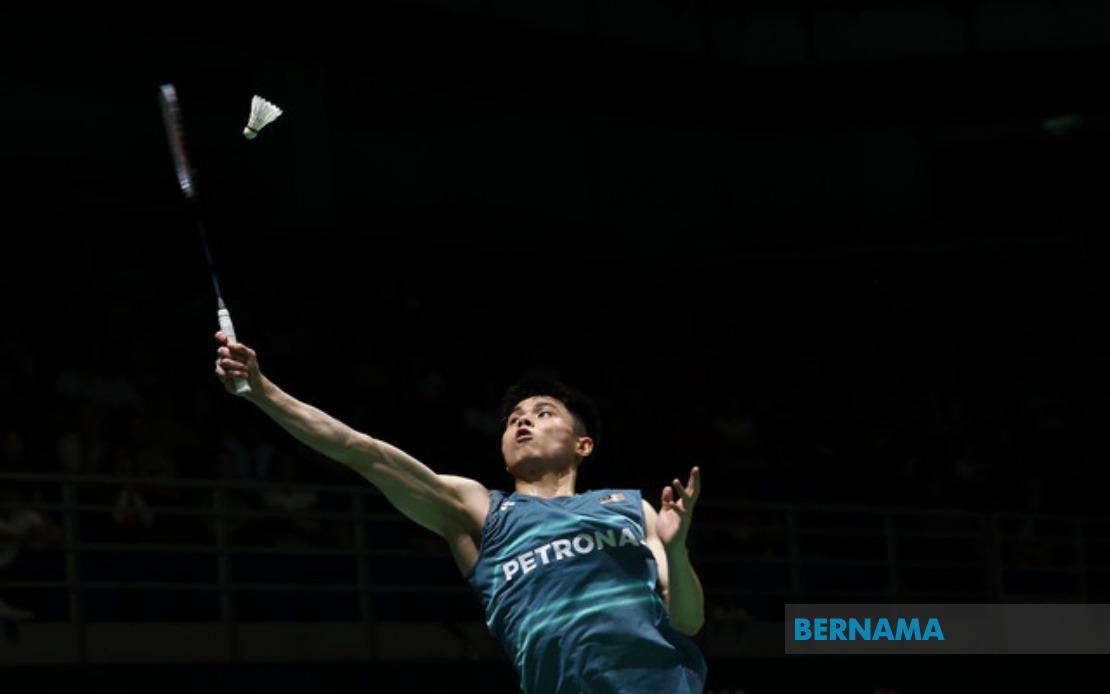
Malaysia's rising men's singles badminton prospect Justin Hoh is steeling himself for the unique demands of competing in India as he prepares for his debut appearance at the 2026 BWF World Championships in New Delhi from August 17 to 23. The 22-year-old Kuala Lumpur-born player is taking a pragmatic approach to the tournament, recognising that success at the prestigious event will require flexibility and meticulous preparation rather than relying solely on technical prowess.
At a training session at the Academy Badminton Malaysia here, Justin made clear that he intends to focus his energy on controllable factors rather than speculating about stadium conditions or external variables. His measured outlook suggests a maturing mindset in a young player who understands that international competition demands mental fortitude alongside physical skills. Rather than expressing anxiety about potential disadvantages, he has opted to view preparation as a shield against uncertainty, an approach that may serve him well when navigating the pressures of his first World Championships appearance.
Previous tournaments held in India have exposed logistical and environmental challenges that catch some players off guard. The January India Open drew widespread criticism when severe sanitation issues marred the competition, with reports of bird droppings discovered on practice courts and monkeys wandering freely through the Indira Gandhi Sports Complex. Such incidents underscore why Justin's emphasis on self-sufficiency, particularly regarding food supplies, reflects hard-won lessons from the Malaysian contingent's experiences competing on the Indian circuit. His acknowledgment that "competing in India can be quite challenging" stems from tangible problems rather than speculation.
Justin's previous experience in Indian venues has evidently shaped his expectations and strategy. He recognises that relying on local facilities or assuming tournament organisers will have resolved historical problems could lead to disappointment. By taking responsibility for his own provisions and maintaining realistic expectations about venue conditions, he is adopting a risk-mitigation approach that experienced international athletes understand. His hope that New Delhi's facilities will be improved does not blind him to the need for contingency planning, a balance that demonstrates maturity beyond his years.
While Justin expressed cautious optimism that the organisers will have made improvements ahead of the World Championships, he stopped short of depending on such enhancements. This calculated realism contrasts with the sometimes-optimistic assumptions that occasionally undermine preparation. His willingness to bring personal supplies and adapt to whatever situation unfolds reflects the practical wisdom required to compete successfully across Southeast Asia and the Indian subcontinent, where venue standards and support infrastructure can fluctuate significantly.
Regarding the competitive draw, Justin indicated he is not preoccupied with the identity or ranking of potential early opponents, even if he faces a higher-seeded player in the opening round. This psychological readiness to accept whatever scenario emerges suggests he has been counselled well by his coaching team and has spent time reflecting on what a maiden World Championships appearance genuinely demands. Rather than approaching draws with anxiety, he has internalised the reality that tournament badminton requires adaptability to circumstances beyond one's control.
Malaysia's men's singles players operate within an intense spotlight driven by public expectation and media scrutiny. Justin openly acknowledged that players in his position regularly face commentary, both constructive and critical, from observers who scrutinise their performances and trajectory. Rather than viewing this pressure as a burden, he has reframed it as motivation to demonstrate his capabilities. This shift in perspective—treating public expectations as fuel rather than weight—suggests a psychological approach that could prove advantageous when navigating the high-stakes environment of a World Championships.
For a first-time World Championships participant, the balance between aspiration and realism matters enormously. Justin articulated this clearly, explaining that while he harbours the natural athlete's hope of winning a medal, he simultaneously recognises this tournament as a learning experience. This duality protects him from the disappointment that can afflict players who arrive with rigid expectations, while preserving the competitive drive necessary to perform well. His framing suggests his coaching team has helped him understand that World Championships experience at age 22 is itself a substantial achievement for Malaysian badminton.
The Malaysian badminton contingent's repeated exposure to Indian venues has created institutional knowledge about managing the practical and environmental dimensions of competing there. By openly discussing these challenges rather than downplaying them, Justin contributes to a culture of transparency that benefits other young players preparing for similar tournaments. His willingness to be candid about needing to bring personal food supplies and to prepare mentally for potentially suboptimal conditions normalises the kind of detailed planning that separates successful international competitors from those who struggle with logistical surprises.
Justin's approach to his World Championships debut reflects a broader evolution in how Malaysian badminton talent conceptualises international competition. Rather than viewing participation as a privilege that should silence concerns about venue quality, he has adopted a framework in which proper preparation includes anticipating and planning for potential deficiencies. This pragmatism, combined with his stated determination to prove Malaysia's men's singles credentials, positions him as part of a generation willing to address uncomfortable truths about competing conditions while maintaining competitive ambition.
As the tournament approaches, Justin's combination of realism, adaptability, and measured ambition may prove his greatest assets. New Delhi in August presents environmental variables—heat, humidity, and logistical variables—that cannot be fully predicted. His decision to focus on what he can control, accept what he cannot, and prepare thoroughly for contingencies reflects coaching maturity. Whether he achieves a medal will ultimately depend on technical execution and mental resilience under pressure, but his philosophical approach to the challenge suggests he arrives in New Delhi prepared not merely to compete, but to navigate the comprehensive demands of international badminton at its highest level.

