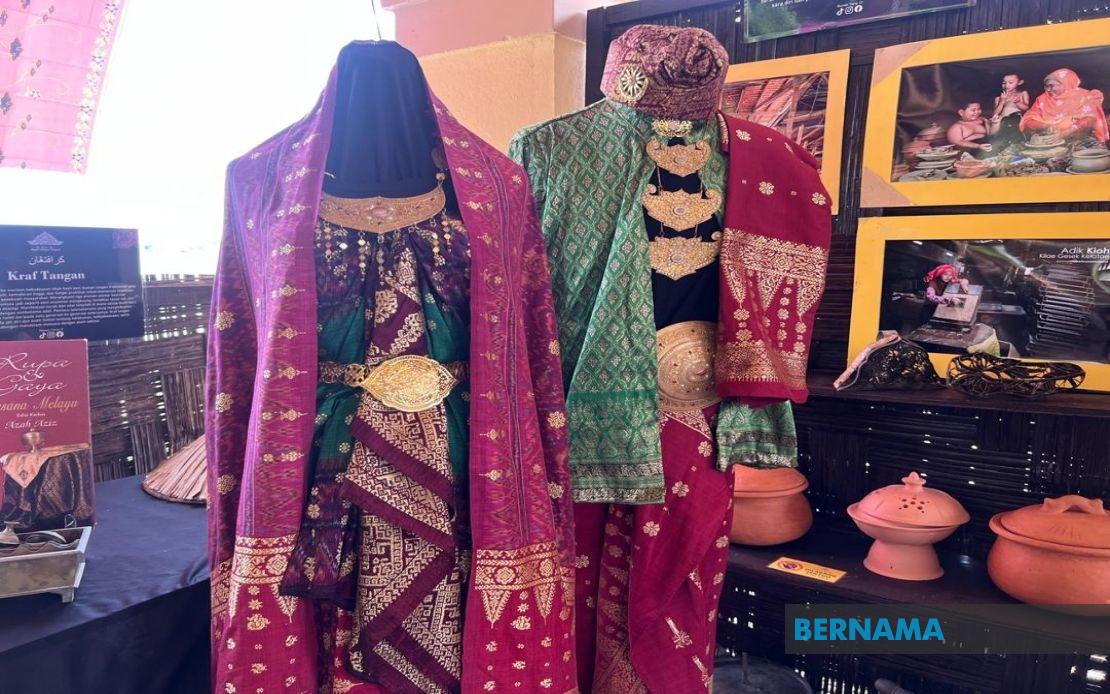
A uniquely Malaysian textile tradition that once graced royalty and symbolised the pinnacle of luxury craftsmanship is slipping toward oblivion as the number of skilled weavers shrinks dramatically. Kain Lima, an exquisitely woven cloth distinguished by its labour-intensive production methods and breathtaking visual complexity, represents far more than a decorative fabric—it embodies centuries of Malay artistic heritage and the accumulated knowledge of generations of craftspeople. Yet today, the survival of this endangered craft hangs in the balance as fewer Malaysians possess the expertise to create authentic pieces, threatening to sever a vital cultural thread that has defined national identity for centuries.
The distinction between Kain Lima and more commonly known textiles like songket lies in its sophisticated weaving methodology, which transforms coloured threads through a painstaking process of tying and dyeing before they ever reach the loom. According to Nik Mohd Murdani Nik Hassan, caretaker of Galeri Rumah Tiang 12, this technique produces visual effects impossible to achieve through conventional weaving alone. The tied threads create a characteristic colour-reflection phenomenon and intricate motifs that demonstrate a level of technical mastery entirely separate from the gold and silver thread embellishment found in songket. Each completed piece represents countless hours of meticulous labour, beginning long before the actual weaving stage, as artisans carefully position and arrange multiple coloured threads with surgical precision to ensure each motif aligns perfectly during the final weaving process.
The market value of authentic Kain Lima reflects the extraordinary skill and time investment required for its creation. Contemporary prices range from RM3,000 to over RM4,000 per piece, with values fluctuating according to factors including age, design complexity, overall condition, and the refinement visible in the weaving execution. These price points underscore the substantial economic value attached to genuine pieces, yet they also illustrate why production has become increasingly economically unviable for modern practitioners. The painstaking nature of the craft leaves little room for mechanisation or shortcuts, making each garment a labour of love rather than a commercially sustainable enterprise in today's mass-production economy.
Historically, Kain Lima occupied an exalted position within Malay society and court culture. Royalty favoured the textile for ceremonial occasions, formal sarongs, and prestigious shawls, cementing its association with power, wealth, and cultural refinement. This prestigious heritage endows the fabric with significance far beyond its aesthetic appeal—it represents tangible connection to Malaysia's pre-modern artistic achievements and the sophisticated aesthetic values of earlier generations. The transformation from commonplace royal wardrobe item to rare museum piece encapsulates the broader challenge facing traditional crafts throughout Southeast Asia, where modernisation and globalised commerce have marginalised locally specific, labour-intensive production methods.
Recognising the urgency of preservation, Galeri Rumah Tiang 12 has undertaken the responsibility of maintaining public awareness and appreciation for Kain Lima heritage. Since Nik Mohd Murdani's arrival in 2020, the gallery has compiled and displayed collections sourced from private collectors, functioning as both archive and educational institution. These exhibitions serve a dual purpose: they provide contemporary Malaysians an opportunity to physically encounter authentic examples of the textile tradition, bridging the knowledge gap created by the near-disappearance of active production, while simultaneously offering practical insight into the technical and aesthetic distinctions separating Kain Lima from related but fundamentally different textile traditions. For many visitors, such exhibitions represent a first—and potentially only—encounter with authentic pieces, underscoring how far the tradition has retreated from mainstream consciousness.
The broader implications of this cultural erosion extend beyond mere nostalgia or aesthetic loss. When a specific handicraft tradition diminishes to the point of near-extinction, entire bodies of technical knowledge and creative problem-solving capacity vanish irretrievably. The decision-making processes by which master weavers adjust their methods based on thread characteristics, environmental humidity, and seasonal variations cannot be easily documented or transmitted through written instruction. This experiential, embodied knowledge exists only in the hands and minds of practitioners, making its preservation dependent upon active transmission from experienced craftspeople to dedicated apprentices—a relationship increasingly rare in contemporary Malaysia.
Younger artisans like Nur Anira Akmal Che Abdul Aziz, 34, from Pasir Mas, represent crucial bridges between fading traditional knowledge and emerging creative expression. Her attendance at heritage textile exhibitions reveals a growing recognition among contemporary craftspeople that traditional techniques and design principles offer not constraints but rather foundational inspiration for innovation. By studying the forms, motifs, and construction methods embedded within Kain Lima and related textiles, contemporary makers can develop creatively distinctive work that maintains authentic connection to local identity while remaining culturally resonant for modern audiences. This approach—respectfully learning from heritage while creating contemporary variations—offers a potential pathway for keeping traditional knowledge alive and economically viable.
The Challenge facing cultural preservation institutions and government agencies involves finding sustainable mechanisms to support Kain Lima production and transmission. Current market-based approaches have proven inadequate, as the high price points required to compensate artisans fairly exclude most potential buyers. Meanwhile, the extended timeline required to train new weavers creates a chicken-and-egg problem: without sufficient practitioners, knowledge transmission becomes impossible, yet attracting new practitioners requires demonstrating viable economic opportunity. Educational initiatives, tourism integration, and perhaps targeted cultural patronage represent potential solutions, though each carries its own complexities and limitations.
The Kelantan Arts Festival and similar cultural events serve increasingly vital roles in maintaining public consciousness regarding endangered textile traditions. By creating spaces where contemporary craftspeople encounter heritage textiles directly, festivals facilitate the cross-pollination of ideas and renewed appreciation for intricate handwork in an era dominated by industrial production. Such gatherings also create opportunities for media attention and cultural documentation, helping ensure that knowledge about these traditions reaches broader audiences beyond the diminishing circles of specialists and collectors.
The trajectory of Kain Lima ultimately poses broader questions about Malaysia's relationship with its own cultural inheritance in an age of globalisation and rapid technological change. While preservation through museum collections and exhibition spaces provides crucial safeguarding functions, true survival of a living tradition requires ongoing creative practice and economic viability. The coming years will prove decisive in determining whether Kain Lima remains a living craft or becomes merely a historical curiosity, preserved in archives and private collections but severed from the living communities and skilled hands that originally brought it into existence. The knowledge and commitment of individuals like Nik Mohd Murdani and contemporary craftspeople like Nur Anira Akmal Che Abdul Aziz suggests that recovery remains possible, but only if Malaysian society, institutions, and markets adapt to support the transmission and continued evolution of these irreplaceable traditions.

