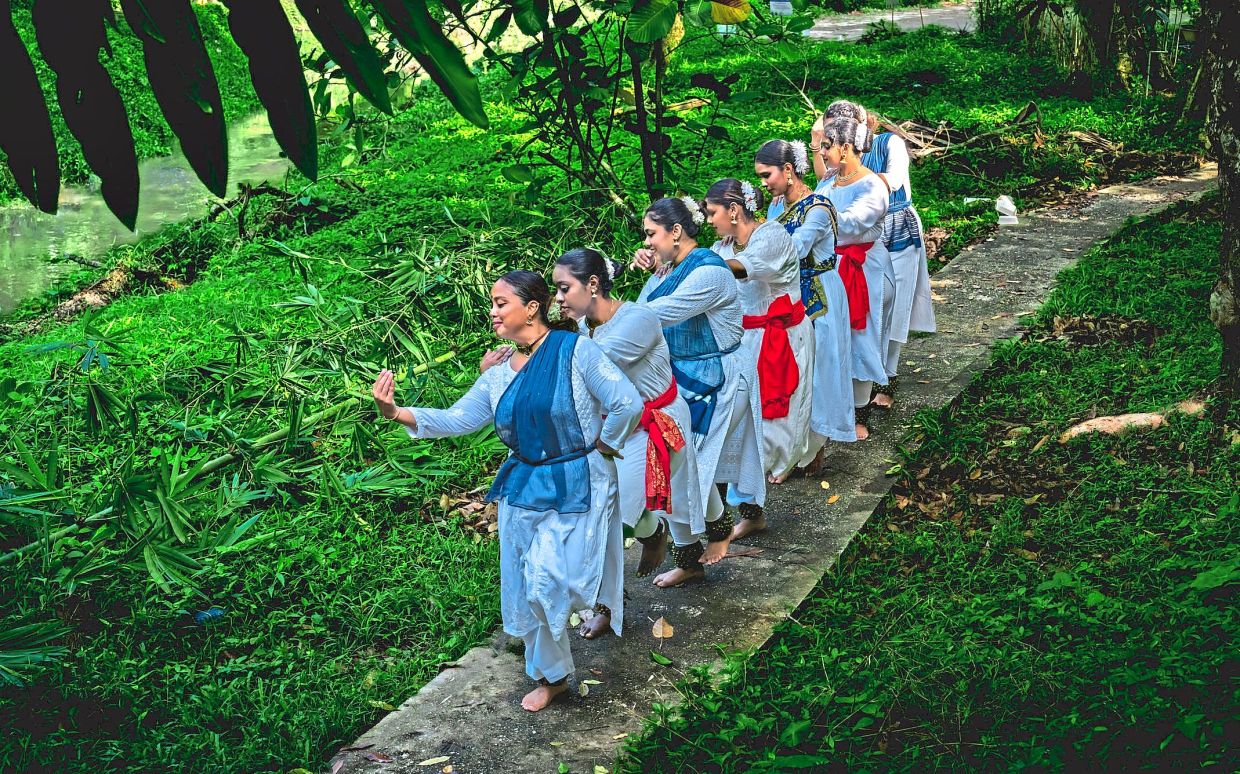
Kalpana Dance Theatre in Kuala Lumpur has navigated three turbulent decades in Malaysia's unpredictable arts landscape, much like the rivers that now inspire its latest milestone production. The company, led by founder-director Shangita Namasivayam, marks its 30th anniversary this year with a bharatanatyam concert that reimagines classical Indian dance as a vehicle for contemporary environmental consciousness—a creative pivot that demonstrates how performing arts institutions can remain relevant while honouring tradition.
Artistic longevity in Malaysia requires relentless reinvention, a principle that has guided Namasivayam's career as dancer, choreographer, teacher and producer. Rather than retreating into purely nostalgic celebrations of heritage, she has chosen to anchor this milestone moment in urgent present-day concerns. The upcoming production, scheduled for August 8 at the Shantanand Auditorium at the Temple of Fine Arts in Kuala Lumpur, spotlights two of India's most culturally resonant waterways: the Ganga in the north, venerated as the subcontinent's holiest river, and the Kaveri in the south, revered as the "Ganga of the South" and essential to irrigation, agriculture and regional identity across Tamil Nadu and Karnataka.
These rivers carry more than water; they embody centuries of spiritual meaning and practical livelihood. The Ganga represents redemption and the washing away of transgression in Hindu theology, while the Kaveri symbolises fertility and abundance for the agricultural communities that depend upon its flow. Namasivayam articulates this duality with poetic clarity: one river becomes the "shore of compassion," the other the "mother of prosperity." Together, she suggests, they teach a profound lesson—that rivers transcend their material existence as bodies of water, instead reflecting something deeper within human consciousness and moral responsibility.
Yet the artistic vision extends beyond metaphor into material reality. Namasivayam has deliberately structured the production to educate her dancers about the ecological crisis facing these watercourses. Rivers across Asia face unprecedented stress from pollution, extraction and climate disruption, threats that resonate acutely in Malaysia where the Klang River and other urban waterways bear visible scars from decades of industrial use and inadequate environmental management. By engaging her ensemble in hands-on environmental work, Namasivayam seeks to embed ecological consciousness into the lived experience of performers rather than leaving it as abstract thematic content.
To actualise this pedagogical ambition, Kalpana Dance Theatre has partnered with The Alliance of River Three, a Malaysian volunteer-driven environmental organisation founded in 2018 by Kennedy Michael. ART! focuses on rehabilitating the Klang River through community-built River Three Parks, regular clean-ups and ecosystem restoration efforts, having earned recognition as a 2020 winner of The Star Golden Hearts Awards. Since January, the theatre's dancers have participated in restoration work at Taman Melawati River Three SDG Park and the Mid Valley River Three SDG Park, projects targeted for completion by 2030 aligned with the United Nations Sustainable Development Goals.
Namasivayam observes that this ground-level engagement proves transformative for young performers accustomed to urban comfort. Soiling their hands in river restoration work exposes them to the tangible texture of environmental responsibility, moving beyond classroom discussion into embodied knowledge. This alignment of artistic practice with environmental activism positions the theatre as a cultural institution with genuine community investment, addressing not merely aesthetic questions but systemic ecological challenges that shape the liveability of Malaysian cities.
The production itself brings together 54 dancers ranging from six to 62 years old, including performers with disabilities, united in a 90-minute thematic presentation that refuses hierarchical distinction between soloists and ensemble members. This structural choice mirrors the egalitarian ethos increasingly present in contemporary dance, rejecting the star system in favour of collective contribution. The narrative, scripted in Tamil with English narration by Dr Va Ve Subramanian, weaves mythological reference with philosophical inquiry, crafted through months of collaboration between Namasivayam and her longtime artistic partners from Chennai: choreographer PT Narendran and musician OS Arun. These collaborators bring technical mastery and cultural authenticity to the production, though logistical constraints mean the 30-piece music ensemble cannot fully travel to Malaysia.
This limitation has generated unexpected opportunity. Rather than importing an entire Indian company, the production instead facilitates exchange between Malaysian dancers and visiting master artistes, enabling local performers to develop technical refinement and philosophical depth alongside internationally recognised artists. Such cross-cultural pedagogical moments prove invaluable in contexts where access to authentic classical training often remains limited. Young Malaysian dancers gain exposure to multiple interpretative traditions within bharatanatyam, a form that continues evolving despite its ancient foundations, discovering how classical structures can accommodate contemporary concerns and diverse bodies.
Namasivayam emphasises that performing arts institutions cannot sustain themselves through classroom instruction alone. Staged presentation creates a qualitatively different engagement, one that demands technical precision, emotional vulnerability and the particular alchemical pressure that live audiences exert. For students, especially those from middle-class or working-class backgrounds where arts careers remain economically precarious, performance experience becomes essential heritage—knowledge that an art form exists not merely as pedagogical subject but as a living practice capable of reaching audiences and generating meaning.
Funding constraints perpetually plague Malaysian arts organisations, yet Namasivayam's commitment to providing performance opportunities for her students persists despite these institutional vulnerabilities. This persistence reflects a conviction that classical Indian dance carries contemporary relevance and that younger generations need tangible experience of that living tradition. By interweaving artistic excellence, environmental activism and pedagogical commitment, Kalpana Dance Theatre's 30th anniversary production offers a model for how heritage arts might address present imperatives without sacrificing technical or aesthetic standards.
The August 8 presentation represents more than institutional milestone. It embodies a wider argument about cultural continuity in post-colonial Southeast Asia—that classical forms inherited from India remain generative when adapted to local contexts and contemporary challenges. For Malaysian audiences increasingly conscious of environmental fragility, the production invites reflection on how water, that seemingly abundant resource, faces genuine scarcity and degradation. The sacred rivers of Hindu and Tamil imagination become metaphors for the Klang, the Rajang, the Langat and other Malaysian waterways that sustain millions yet receive inadequate protection and restoration. Through this lens, Kalpana Dance Theatre's anniversary becomes an occasion not merely for celebration but for collective reckoning with what we owe to the rivers that make our cities habitable.

