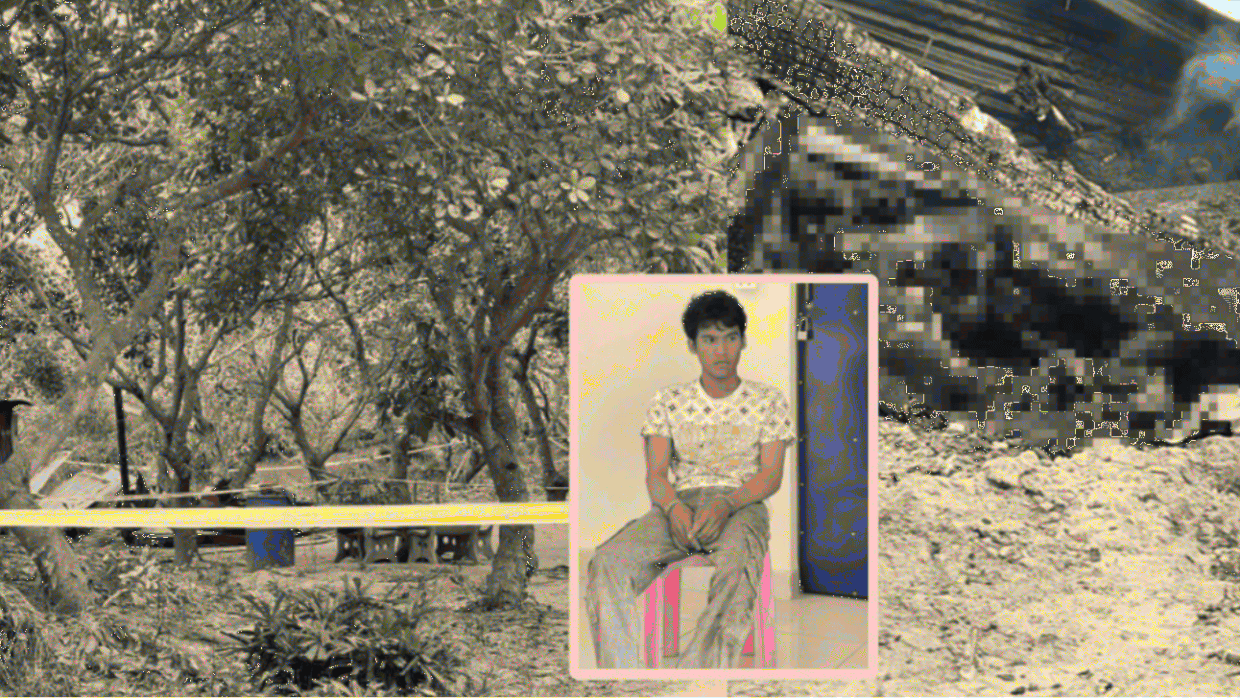
Cambodia's legal system has delivered its harshest punishment in a case involving the systematic murder of nine family members. The Kampong Cham Provincial Court handed down a life sentence on July 30 to Soben Minea, who was convicted of carrying out one of the country's most shocking acts of familial violence. The sentence represents the maximum penalty available under Cambodian law and underscores the gravity of the crimes committed in what authorities have described as a premeditated and particularly brutal attack.
The tragic events unfolded on November 23, 2025, in the Kien Khleang area within Tuol Sambuor village and commune, located in Stueng Trang district of Kampong Cham province. According to court findings, Minea, born September 1, 2005, executed his crimes in two distinct phases. First, he decapitated one family member in a deliberate act of violence. He then proceeded to set a residential house ablaze while eight additional relatives lay sleeping inside, resulting in their deaths from the ensuing fire. The combination of methods—direct violence followed by mass killing through arson—demonstrates a calculated approach to the murders rather than a spontaneous outburst.
The court verdict established that Minea acted with clear intent, finding him guilty on charges of both murder and premeditated murder. This distinction carries particular significance within Cambodia's legal framework, as premeditated murder classifications typically indicate a higher degree of culpability and planning. The dual conviction reflects judicial findings that Minea did not act in the heat of momentary passion but rather executed a deliberate plan to eliminate his family members. Beyond the criminal conviction, the court also ordered the defendant to compensate civil plaintiffs with US$20,000 in moral damages, though questions remain regarding whether Minea possesses the financial means to satisfy this obligation.
Investigative authorities uncovered the psychological motivation driving these heinous acts. During questioning, Minea confessed to harbouring deep-seated resentment towards his wife, stemming from chronic marital discord and repeated domestic disputes that had apparently festered over an extended period. This revelation illuminates a troubling pattern whereby accumulated domestic conflict escalated into mass violence affecting an entire extended family network. Among those killed were his mother-in-law, wife, brother-in-law, and several young relatives, indicating that Minea's rage extended beyond his immediate marital partner to encompass her broader family structure.
The case presents a sobering reminder of the dangers associated with unresolved domestic conflict in Southeast Asian communities, where family disputes often remain hidden within household walls until they culminate in tragedy. Unlike isolated incidents of interpersonal violence, this incident involved the systematic elimination of multiple generations and relationships, suggesting a comprehensive family breakdown rather than a single relationship gone wrong. The presence of young relatives among the victims adds another layer of tragedy, raising questions about whether intervention mechanisms existed to protect vulnerable family members from an increasingly unstable individual.
Cambodia's judicial response through maximum sentencing demonstrates the country's commitment to prosecuting severe domestic violence cases with appropriate severity. However, the case also highlights systemic challenges within family violence prevention and intervention frameworks across the region. Early warning systems, counselling services, and protective mechanisms designed to interrupt escalating domestic conflict patterns remain underdeveloped in many Southeast Asian jurisdictions. The fact that Minea's resentment accumulated sufficiently to motivate such comprehensive violence suggests that opportunities for de-escalation and intervention may have been missed at various junctures.
For Malaysian and broader Southeast Asian observers, this case serves as a cautionary example regarding the potential consequences of untreated domestic dysfunction and the critical importance of accessible mental health and family counselling services. Many regional countries face similar challenges in addressing domestic violence before it reaches catastrophic levels. The case underscores why governments must prioritize early intervention, community awareness, and victim support systems designed to interrupt cycles of family conflict before they transform into irreversible tragedy.
The life sentence imposed represents not merely punishment but also a declaration about societal values concerning family protection and the absolute prohibition against mass violence. Cambodia's legal system, like those throughout Southeast Asia, continues grappling with how to balance rehabilitation principles with public protection and deterrence in cases involving the most severe criminal acts. The maximum sentence available signals to both potential offenders and the broader public that family violence, regardless of accumulated grievances, cannot justify systematic elimination of family members.
As this case concludes through sentencing, it opens broader conversations within Cambodian society and across Southeast Asia about prevention mechanisms, victim identification, and the role of community networks in disrupting violence trajectories. Family members, neighbours, and community leaders often possess crucial information about deteriorating family situations but lack clear pathways for reporting concerns or accessing interventions. Enhanced training, public awareness campaigns, and accessible reporting mechanisms could theoretically prevent similar tragedies in future cases where warning signs emerge long before violence reaches such catastrophic proportions.

