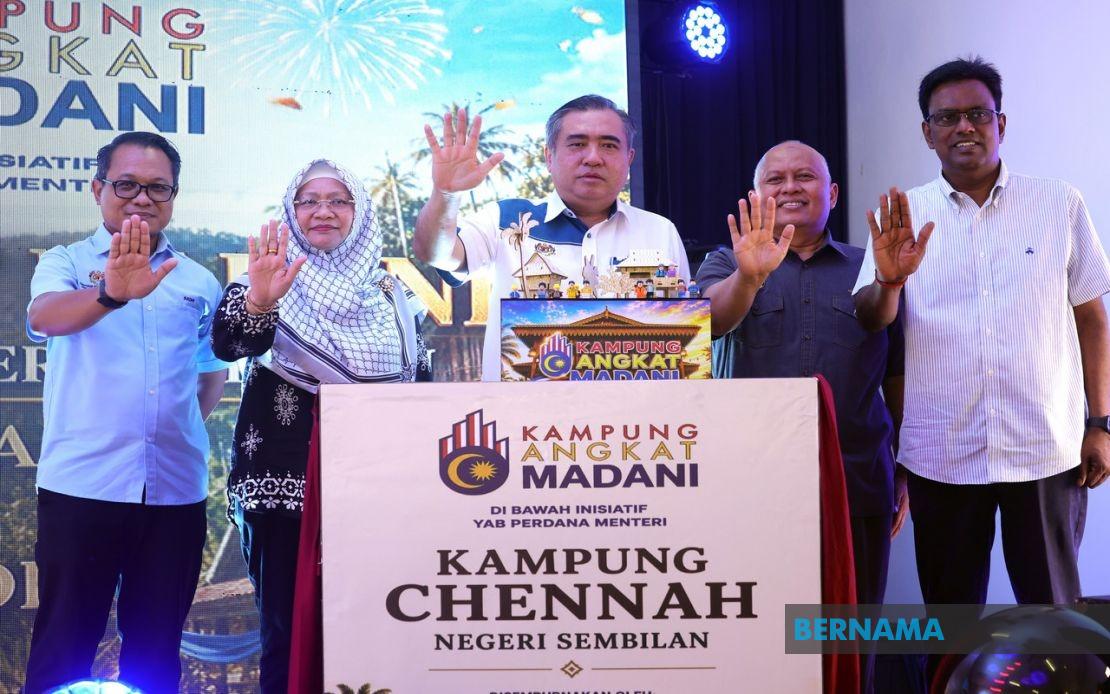
Transport Minister Anthony Loke Siew Fook has moved to clarify that the Kampung Angkat MADANI programme being rolled out across rural Malaysia operates entirely separately from the current state election cycle, representing instead a longstanding government commitment to village development that began two years ago. Speaking in Jelebu after launching a new phase of the initiative at Kampung Chennah, Loke emphasised that the timing and scope of the rural assistance scheme reflect deliberate planning rather than electoral considerations.
The distinction matters significantly given Malaysia's strict conventions governing government activity during election periods. Loke explained that implementation is proceeding in carefully choreographed phases, with priority given to communities situated beyond the reach of urban development and lacking adequate basic infrastructure. This phased approach allows the government to address systemic shortages in facilities and socio-economic services across dispersed settlements, particularly those in peripheral areas where private investment has historically been insufficient.
Central to Loke's position is the claim that programme activities are being compressed into the pre-nomination period, ensuring full compliance with electoral guidelines that prohibit official government functions within constituencies once the campaign period formally begins. The minister noted that although he continues discharging his ministerial duties throughout the election season, he will refrain from attending government-sponsored programmes in affected constituencies during the active campaign phase. This restraint reflects what he described as a new administrative culture instituted by the Prime Minister to maintain institutional neutrality.
The programme's credibility hinges partly on demonstrable continuity. Loke pointed to previous iterations executed last year, including work in an Orang Asli settlement at Lenggeng, arguing that the current phase represents logical progression of existing plans rather than sudden electoral positioning. By establishing backward continuity, the minister sought to undercut any suggestion that the current visibility represents opportunistic timing.
Kampung Chennah's selection as this year's focal point reflects genuine infrastructure deficits rather than political calculus, according to Loke. The remote Negeri Sembilan village has been identified through systematic needs assessment as requiring urgent intervention across multiple dimensions. The government has committed RM500,000 to five distinct projects expected to transform daily life for residents within two to three months. These include restoration of the library facility, renovation of the futsal court, and upgrading drainage infrastructure serving the mosque and surrounding areas.
For rural Malaysian communities, such centralised investment often proves transformative. These are not prestige projects but rather foundational improvements that address recurring problems limiting quality of life. The relatively modest budget allocation reflects an emerging government approach to distributed rural development whereby smaller sums, carefully targeted, can yield significant improvements when directed toward specific bottlenecks in basic service delivery.
Loke's framing of the Transport Ministry's role demonstrates broader conceptual shifts within government. He contended that ministerial responsibility extends considerably beyond the traditional portfolio of ports, airports, railways and urban public transport systems. Instead, he argued, contemporary governance demands that large departments recognise and act upon social obligations to engage meaningfully with communities, particularly those geographically and economically marginalised. This philosophy underpins allocation of ministerial time and resources toward rural community development initiatives operating alongside core regulatory and infrastructure functions.
The emphasis on close monitoring represents an implicit acknowledgment that rural development programmes frequently experience implementation delays, cost overruns, or quality compromises. By pledging direct ministerial oversight and timeline accountability, Loke signalled commitment to delivery disciplines that sometimes elude such initiatives. Whether actual supervision materialises as promised remains subject to verification, but the public commitment establishes measurable benchmarks against which the programme can be evaluated.
For Malaysian policymakers navigating electoral sensitivity, the Kampung Angkat MADANI initiative illustrates persistent tensions between development imperatives and governance conventions. Rural constituencies often require sustained investment yet simultaneously dominate electoral contests, creating structural incentives for programme concentration during campaign periods. Loke's explicit pre-nomination sequencing suggests conscious effort to separate electoral cycles from development delivery, though scepticism regarding such separation remains endemic in Malaysian political discourse.
The programme also reflects acknowledgment that rural development cannot be episodic or centralised. Villages require customised solutions reflecting local topography, demographic composition, and existing asset bases. The phased rollout strategy, while potentially slowing overall programme expansion, permits contextualised planning that centralised rapid deployment might sacrifice. This granular approach contrasts with historical patterns wherein rural initiatives were frequently parachuted into communities without sustained local consultation.
Looking forward, the success of Kampung Angkat MADANI will likely determine whether similar initiatives proliferate or whether political scepticism constrains their expansion. Malaysian voters in rural areas have grown accustomed to distinguishing genuine development from electoral theatre, and sustained programme quality becomes essential for institutional credibility. The minister's public accountability regarding timelines and deliverables at Kampung Chennah thus carries implications extending well beyond this single village.

