A devastating fire swept through Kampung Lok Buta in the early hours of Friday morning, leaving a community in ruins and claiming the lives of three children. The blaze, which erupted at 1.40 am, razed more than 200 residential structures and displaced over 200 families, making it one of Kota Kinabalu's most significant fire disasters in recent memory. The tragedy has prompted an immediate response from both municipal and federal authorities, who are coordinating relief efforts and pledging comprehensive assistance to the affected residents.
The three victims identified in the fire were Nana Abdullah, aged 4, her brother Mohd Asrul Abdullah, aged 6, and their cousin Nurfarahdilah Mohd Tajihah, aged 8. Their deaths represent a particularly painful dimension to this disaster, underscoring the vulnerability of young lives in informal settlements where fire safety infrastructure and emergency response capabilities are often limited. The loss of these three children has reverberated throughout the Kota Kinabalu community, raising urgent questions about fire prevention measures and the living conditions in densely populated residential areas like Kampung Lok Buta.
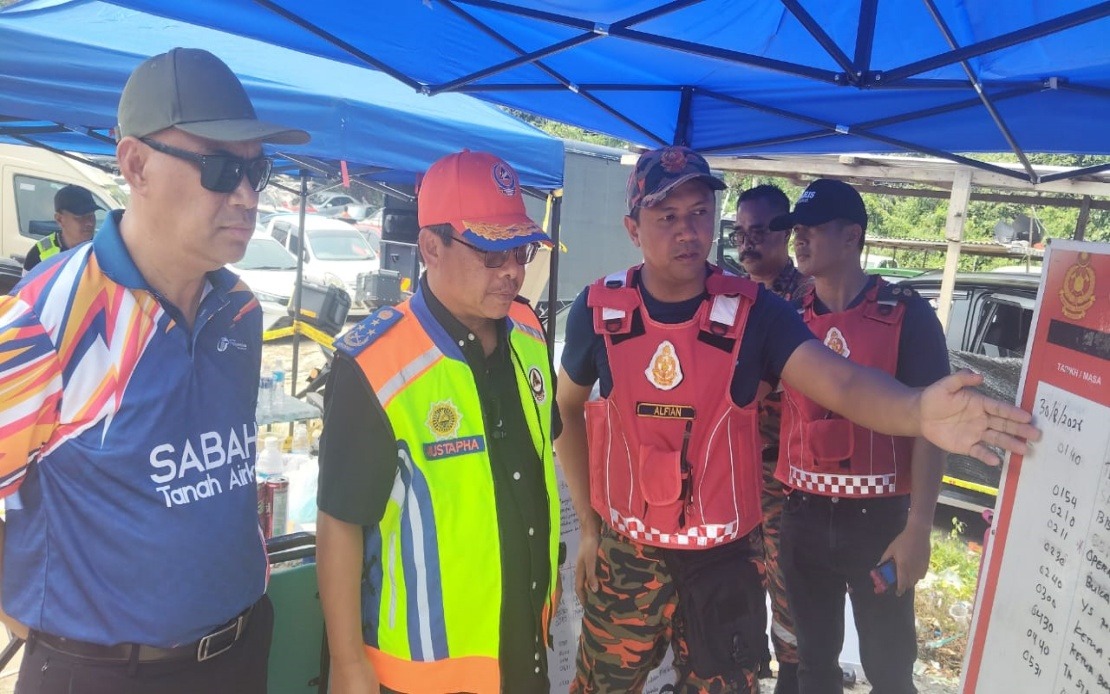
In response to the catastrophe, authorities have swiftly established two temporary relief centres at Dewan Kampung Likas and Dewan Damai to provide shelter and coordinate assistance for the displaced families. Datuk Mustapha Sakmud, the Minister in the Prime Minister's Department (Sabah and Sarawak), visited the disaster site on Friday to assess the situation firsthand. During his visit, Mustapha highlighted that the relief centres would serve as focal points for victim registration, information gathering, and the systematic distribution of relief donations from government agencies and charitable organisations.
The Kota Kinabalu City Hall (DBKK) has formally declared Kampung Lok Buta a disaster zone, a designation that facilitates access to emergency funding and expedites bureaucratic procedures for assistance disbursement. Datuk Seri Dr Sabin Samitah, the DBKK mayor and chairman of the District Disaster Management Committee, accompanied Mustapha during the site inspection and committed the municipal authority to coordinating with relevant agencies to support recovery efforts. The disaster zone status also enables the mobilisation of additional resources from state and federal emergency management bodies.
Among the key concerns raised by authorities is the impact on students affected by the fire. Mustapha emphasised the necessity of identifying and documenting school-age victims to prevent educational disruption, particularly for those enrolled in primary schools, secondary institutions, and technical and vocational training programmes. He pledged to liaise with the Ministry of Education to ensure that affected students receive appropriate support, whether through temporary accommodation at educational facilities, counselling services, or financial assistance to replace lost educational materials and resources.
Mustapha has committed to extending immediate financial relief to the families of the three deceased children, acknowledging the profound loss experienced by their relatives. This initial assistance represents the federal government's recognition of the extraordinary hardship faced by these bereaved families. Beyond immediate relief, the minister indicated that a comprehensive support framework would be developed in consultation with DBKK and other relevant agencies to address the diverse needs of all fire-affected residents, from housing reconstruction to livelihood support.
The minister also signalled that this disaster would be elevated to the highest levels of government decision-making through the Malaysia Agreement 1963 (MA63) Implementation Action Council. He indicated that Prime Minister Datuk Seri Anwar Ibrahim and Sabah Chief Minister Datuk Seri Hajiji Noor would be briefed on the situation, with the DBKK mayor providing detailed assessments of immediate and long-term recovery requirements. This high-level engagement reflects the significance of the disaster and the commitment to ensure coordinated, adequately resourced response across federal and state government structures.
The Kampung Lok Buta fire serves as a stark reminder of the vulnerabilities inherent in informal residential settlements across Southeast Asia, where rapid urbanisation, dense construction, and limited fire safety infrastructure create dangerous conditions. Many such communities lack adequate firefighting equipment, emergency access routes, and early warning systems that could mitigate the severity of incidents. The scale of this disaster—with over 200 homes destroyed and three lives lost—underscores the urgent need for enhanced fire prevention measures, improved building codes, and investments in emergency response capabilities within economically disadvantaged neighbourhoods.
For Malaysian policymakers and urban planners, the Kampung Lok Buta incident presents a critical case study in disaster risk management and the social dimensions of housing policy. The concentration of vulnerable populations in fire-prone settlements, combined with limited access to emergency services, creates disproportionate risks for low-income communities. Addressing these structural vulnerabilities requires sustained commitment beyond immediate relief provision, encompassing long-term urban development strategies that prioritise safety, resilience, and equitable access to secure housing alternatives.
The relief efforts currently underway demonstrate the capacity of Malaysian institutions to mobilise rapidly in response to catastrophic events. However, the true measure of the government's commitment will be evident in the months and years ahead, as authorities work to rebuild homes, restore livelihoods, and prevent similar tragedies. For the residents of Kampung Lok Buta, the immediate focus remains on securing shelter and accessing basic necessities through the relief centres, but the broader challenge of reconstructing their community and lives lies ahead.

