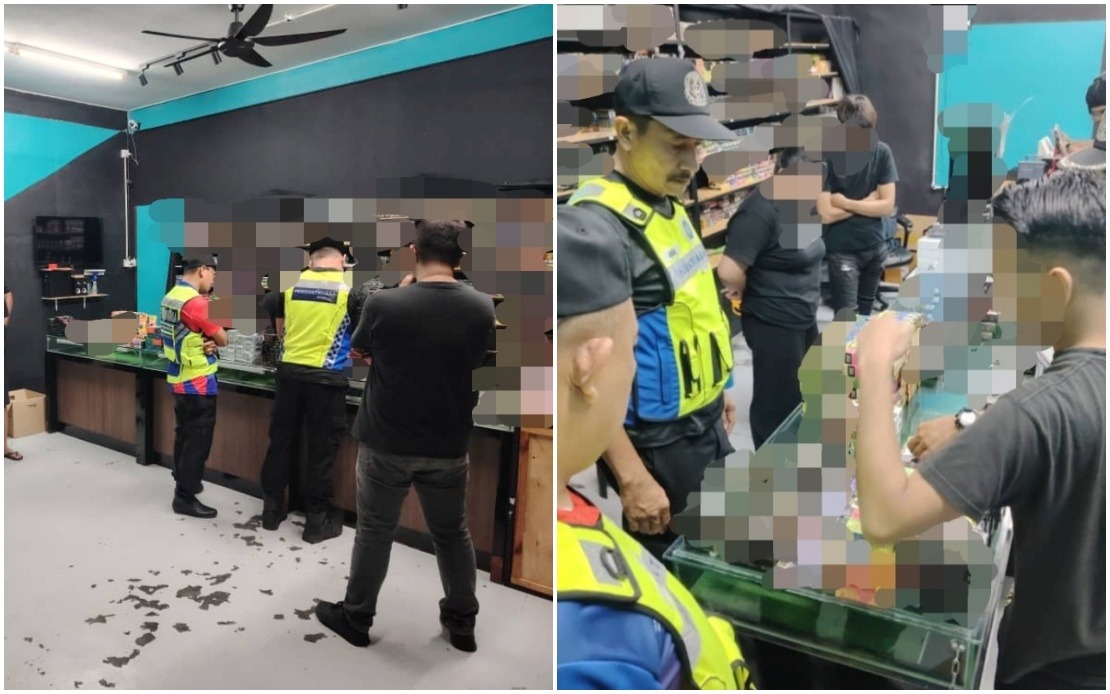
The Kangar Municipal Council (MPK) has intensified enforcement action against the vape trade in Perlis, confiscating a substantial cache of electronic cigarettes and related paraphernalia during a late-night operation in the state capital. The raid, conducted in collaboration with the Royal Malaysia Police, yielded 400 units of vape liquid and 70 devices with an estimated combined value of RM15,000 from a commercial premises located along Jalan Padang Behor. The operation, which ran from 10.30 pm until 1 am, represents the municipal authority's commitment to implementing stricter regulations ahead of a comprehensive state-level prohibition on vape retail operations scheduled to take effect from August 1, 2025.
MPK president Affendi Rajini Kanth underscored the legal framework underpinning the seizure, citing provisions within the council's Trade, Business, and Industry Licensing By-Laws as the statutory basis for the enforcement action. The operation aligns with the broader policy direction established by the Perlis state government, which has declared a blanket prohibition on the establishment and operation of any premises engaged in vape sales throughout the state. This coordinated approach between municipal and state authorities signals a hardening stance against the vaping industry, reflecting growing public health concerns about nicotine consumption among younger demographics and the normalisation of alternative smoking products.
The targeted premises had previously incurred multiple financial penalties and received formal cessation notices yet persisted in conducting vape retail operations, according to the MPK president's statement. This pattern of non-compliance despite administrative warnings prompted the municipal council to escalate its response through direct seizure of merchandise and enforcement of existing by-law provisions. The deliberate continuation of business activities following official directive represents a significant breach of municipal authority that warranted the decisive intervention.
Under the applicable regulatory framework, violations of the MPK by-laws carry substantial financial consequences designed to deter future infractions. Offenders face a primary fine ceiling of RM2,000, with an additional penalty of RM200 imposed for each successive day that the contravention persists following a legal conviction. This tiered penalty structure effectively creates escalating financial liability intended to incentivise rapid compliance and cessation of illicit operations. For premises operators who have already received multiple warnings and cessation orders, the cumulative financial exposure creates powerful motivation for immediate business closure.
Perlis's decision to implement a comprehensive vape sales ban reflects a nationwide conversation about regulating alternative nicotine delivery systems. While Malaysia has not enacted a federal prohibition, several state governments and local authorities have moved independently to restrict vape commerce within their jurisdictions, citing public health data and concerns about youth accessibility. The Perlis approach, combining municipal licensing controls with state-level policy directives, demonstrates how sub-national governments can create effective regulatory barriers even within Malaysia's federal structure.
The timing of this enforcement action, preceding the August 1, 2025 formal ban by several months, suggests the authorities are establishing momentum and demonstrating operational capability ahead of the regulatory transition. By securing high-profile seizures and publicising enforcement efforts, the MPK creates an environment of compliance pressure that may encourage other vape retailers to voluntarily exit the market before the deadline. This gradual tightening of enforcement, coupled with clear communication of penalties and deadlines, represents a methodical approach to regulatory transition.
The involvement of the Royal Malaysia Police in this municipal operation highlights the inter-agency coordination increasingly evident in local enforcement activities across Malaysia. Police collaboration enhances the operational scope and authority of municipal councils, enabling late-night operations that might exceed the practical capacity of city council staff alone. Such partnerships also provide legal weight to seizures and strengthen potential prosecutions by involving law enforcement bodies in the evidence gathering process.
For vape industry participants and retailers operating in Perlis, this seizure serves as a concrete demonstration of regulatory intent and enforcement capability. Unlike theoretical warnings or policy announcements, the actual confiscation of inventory represents tangible economic loss and illustrates the immediate consequences of non-compliance. Business operators in the state must now weigh the risks of continuing operations against the certainty of enforcement action and financial penalties.
The broader context for Perlis's vape enforcement reflects evolving public health policy across Southeast Asia. Several regional governments have increasingly questioned the safety profile of vaping products and their role in nicotine addiction initiation among young people. Even as some developed nations adopt harm-reduction frameworks that treat vaping as a smoking cessation tool, Malaysia and neighbouring countries have taken more restrictive approaches, viewing vape retail as a public health threat rather than a smoking alternative worthy of regulation and market access.
Beyond the immediate implications for Perlis vape retailers, this enforcement action may signal the beginning of broader municipal crackdowns across other Malaysian states and localities. As Kangar demonstrates successful enforcement capabilities, other local authorities facing similar vape retail challenges may adopt comparable strategies. The seizure, combined with publicised penalties and clear regulatory timelines, establishes a replicable enforcement model that other jurisdictions could potentially adopt or adapt to local circumstances.

