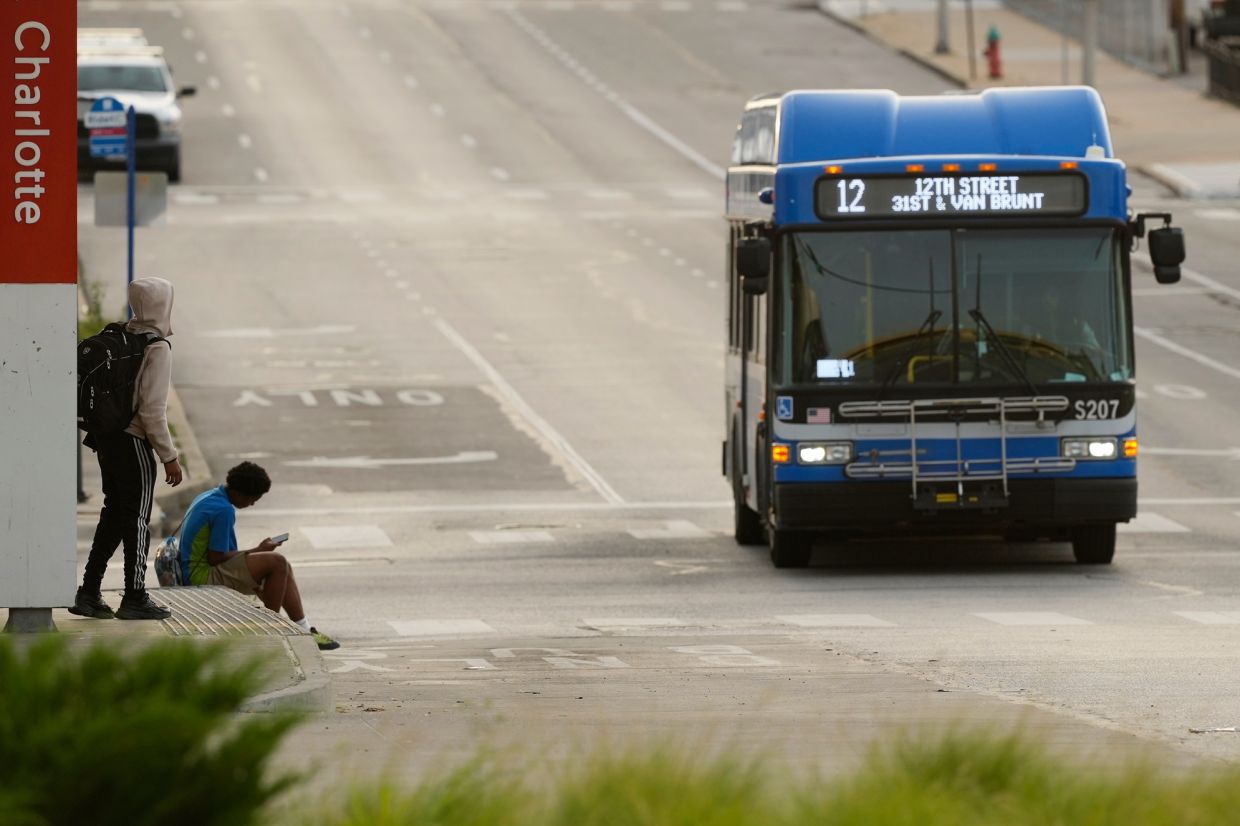
Kansas City, Missouri is preparing to take a significant step into the territory of artificial intelligence-powered law enforcement by equipping public transit buses with cameras capable of recognising the faces of banned riders, missing persons, and individuals flagged by law enforcement. This initiative represents a watershed moment in how American cities approach the balance between security and personal privacy, with observers across the spectrum treating Kansas City's rollout as a bellwether for whether other municipalities will follow suit.
The initiative stands at the intersection of two competing visions for public safety in an increasingly digital age. Proponents argue that facial recognition offers a genuine tool for locating missing persons and preventing incidents involving individuals barred from using transit. Critics contend that the deployment crosses a fundamental line by subjecting ordinary citizens to continuous biometric surveillance simply for boarding a bus. The American Civil Liberties Union's Jay Stanley characterised this moment as unprecedented, noting that live facial recognition on cameras pointed at public spaces represents a boundary that has remained uncrossed for the past quarter-century in the United States.
The technical partner in this venture is SafeSpace Global, a Knoxville, Tennessee-based company that has gradually expanded its facial recognition operations from nursing homes—where it initially flagged residents wandering away from facilities—into correctional institutions and schools. For SafeSpace Global, Kansas City's buses mark their entry into the transportation sector, making this deployment particularly significant for both the company and the city's transportation authority. The company's chief executive, Scott Boruff, emphasises that the system captures facial data momentarily and discards it if no match is found, while video footage is retained locally for up to five years only after buses return to depots.
The project encountered substantial setbacks that forced organisers to delay implementation. The state of Missouri declined to provide anticipated funding, citing concerns specifically about the facial recognition component. Additionally, technical challenges emerged around upgrading WiFi infrastructure to simultaneously support the cameras and a new fare collection system. These obstacles meant that the pilot programme, originally envisioned for nine buses in time for Kansas City's hosting of World Cup matches, has been postponed indefinitely. Tyler Means, the transportation authority's chief mobility and strategy officer, framed the technology as simply an evolution of existing security practices, suggesting that residents would eventually accept it as unremarkable once operational.
The deeper anxiety articulated by privacy advocates centres on the trajectory of surveillance systems once established. Stanley warned that while facial recognition might be restricted to narrow watch lists today, the scope of such programmes inevitably expands over time as technologies become normalised and applications broaden. This concern draws from historical precedent: Tampa, Florida's facial recognition initiative in the Ybor City neighbourhood in the years following 9/11 sparked immediate opposition and was swiftly abandoned, yet other cities have continued experimental deployments. Most troublingly, New Orleans police operated facial recognition surveillance systems clandestinely despite municipal ordinances prohibiting the technology, revealing how easily stated safeguards can be circumvented in practice.
Similar technologies have already proliferated across American cities in less visible forms. Licence-plate reading cameras mounted on public buses in multiple municipalities automatically ticket vehicles illegally parked in bus lanes or committing related infractions. While privacy advocates oppose these systems, the technology that directly captures and analyses human faces generates substantially greater alarm. The distinction reflects fundamental concerns about the scope of identification possible through facial data compared to vehicular registrations. Will Owen, communications director for the Surveillance Technology Oversight Project, characterised Kansas City residents as potential guinea pigs for unproven Silicon Valley technology with documented biases embedded in its algorithms.
Detroit's experience offers a cautionary tale about the politics surrounding facial recognition expansion. The city partnered with gas stations and liquor stores in 2016 to install high-definition cameras providing live feeds to police. Public backlash prompted then-police chief James Craig to institute new policies governing facial recognition use, though the programme itself continued. Craig remains an advocate for the technology, arguing that abandonment represents an overreaction to poor policy design rather than an indictment of the technology itself. His position reflects a persistent argument among law enforcement: that the problem lies not in the tools but in their governance and accountability frameworks.
Kansas City's transportation authority now envisions a substantially expanded pilot extending to potentially thirty buses rather than the originally planned nine once funding materialises. Boruff indicated that SafeSpace Global stands ready to begin installation, though the configuration process for Kansas City's specific requirements would require three to four months. The revised timeline has removed pressure associated with World Cup scheduling, instead creating space for deliberation that some city officials believe is necessary. Ryana Parks-Shaw, serving as mayor pro tem on the City Council, expressed relief at the delay, emphasising that any deployment of such surveillance capability requires careful implementation, transparent policies, and clearly defined boundaries.
In the interim period before facial recognition cameras become operational, Kansas City plans to secure transit infrastructure through expanded human presence rather than technological solutions. The transportation authority has arranged for up to forty additional police officers to patrol bus stops and transit centres during the World Cup period. This temporary reversion to conventional security methods—what Means described as "going old school"—provides a natural experiment in comparative efficacy. Whether human patrols prove sufficient or whether their limitations reinforce arguments for technological deployment remains to be determined through the coming months.
For Malaysia and broader Southeast Asia, Kansas City's experience carries important implications. As regional cities contemplate modernisation of public transit systems, the question of surveillance technology integration will inevitably arise. The American debate illuminates the tension between aspirations for smart cities incorporating cutting-edge technology and concerns about normalising comprehensive biometric monitoring of civilian populations. Malaysian policymakers weighing similar initiatives would be wise to observe not only the technical outcomes but the governance structures that Kansas City eventually implements, particularly regarding transparency, oversight mechanisms, and explicit limitations on scope expansion. The coming months will reveal whether facial recognition can be deployed with the guardrails that officials promise, or whether privacy advocates' concerns about inevitable expansion prove prophetic.

