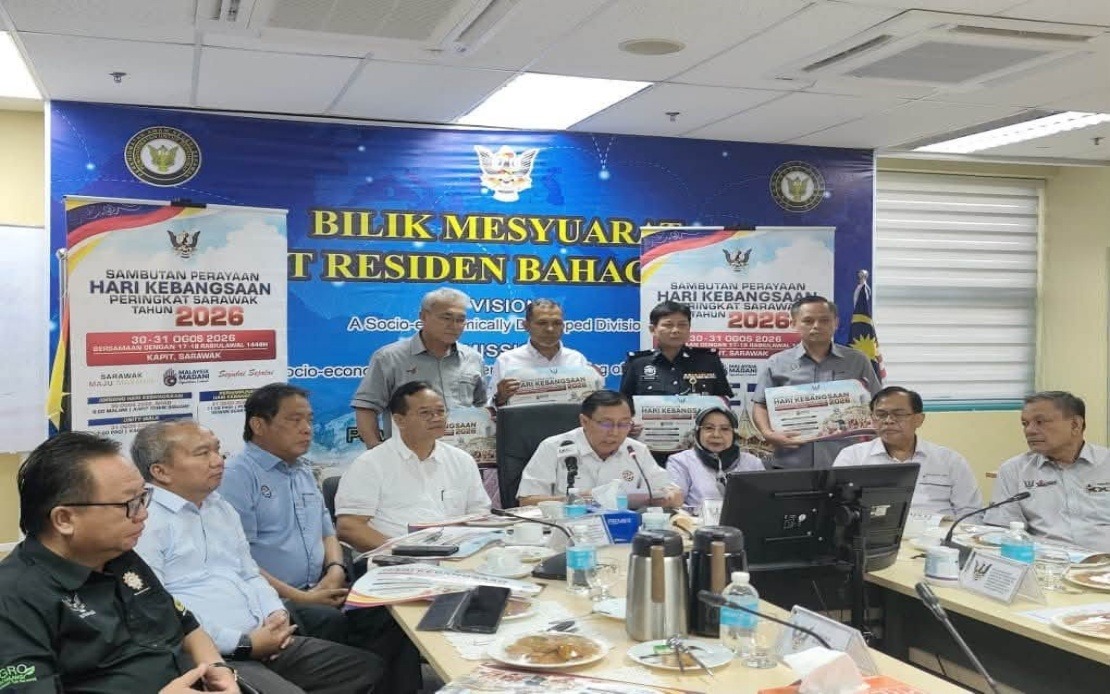
Kapit, a division in the heart of Sarawak's interior, has been chosen to host the state's official National Day celebration on August 30 and 31. The two-day event represents a significant occasion for the community and aims to cultivate a deeper sense of patriotism and national cohesion among the diverse populations across the region. By bringing the Sarawak-level commemoration to Kapit rather than the capital, state authorities are demonstrating a commitment to extending major national observances beyond urban centres, ensuring residents across the state capital can participate meaningfully in Malaysia's founding moment.
According to Datuk Seri Dr Stephen Rundi Utom, the Sarawak Food Industry, Commodity and Regional Development Minister and official coordinator of the celebration, the occasion will transcend a simple remembrance of August 31, 1957. Instead, it serves as a comprehensive platform for addressing contemporary themes of national identity, drawing connections between historical sacrifice and present-day challenges. The minister emphasised that the celebration will honour the contributions of earlier generations of leaders whilst simultaneously reinforcing the bonds of unity that hold together the diverse communities within Sarawak, a state known for its multicultural composition and complex political history.
The guest list underscores the formality and importance attached to the proceedings. Sarawak Governor Tun Dr Wan Junaidi Tuanku Jaafar and Sarawak Premier Tan Sri Abang Johari Tun Openg are both anticipated to grace the occasion, bringing the ceremonial weight of state leadership. Such attendance signals to residents that National Day observance remains a priority at the highest levels of provincial governance, even as federal-state dynamics in Malaysia continue to evolve. The presence of both the symbolic head of state and the chief executive demonstrates a unified leadership approach to national commemoration.
Three carefully structured events form the backbone of the two-day programme. The first component unfolds on the evening of August 30 at Kapit Town Square, where residents will gather for the National Day Eve celebration. This opening event sets a festive and contemplative tone before the more formally structured activities of August 31. The following morning begins at seven o'clock with the Unity Walk, an early-morning exercise designed to literally embody the concept of togetherness as participants move through Kapit's streets. By scheduling this walk at an early hour, organisers encourage widespread participation whilst avoiding the midday heat typical of interior Sarawak during this period of the year.
The centrepiece of the celebration takes place at eleven in the morning at the grounds of Dewan Suarah Kapit, where the formal National Day Gathering will convene. This venue, a civic assembly space, provides appropriate symbolism as a location where community voices gather. The schedule allows sufficient time for early attendees to participate in both the Unity Walk and the formal ceremony, creating a full and immersive day of national observance. The timing also permits participants from surrounding divisions to travel to Kapit, maximising attendance across the wider region.
Governor Wan Junaidi will participate in both the Unity Walk and the National Day Gathering, demonstrating hands-on engagement with the commemoration's physical and ceremonial dimensions. Premier Abang Johari's confirmed attendance at the National Day Gathering reflects his involvement in the state's highest-profile events, though his schedule does not extend to the morning walk. This differentiation in participation patterns reflects typical protocol arrangements and individual commitments, yet both leaders' presence at the main gathering ensures continuity of gubernatorial and executive representation throughout the proceedings.
Recognising that not all residents of Kapit Division and neighbouring areas can attend in person, organisers have embraced contemporary media platforms to extend participation. The celebration will be broadcast live on TVS, Sarawak's state television service, ensuring that viewing from home remains a viable option for elderly residents, individuals with mobility limitations, and those managing conflicting commitments. Additionally, the Sarawak Public Communications Unit (UKAS) will provide live coverage across official social media platforms, reaching younger demographics and those who consume news primarily through digital channels. This multimedia approach reflects a modern understanding that national commemoration need not be exclusively in-person to foster genuine connection and collective participation.
The location choice carries particular significance within Sarawak's geography and political context. Kapit, positioned in the state's interior along the Rajang River, represents communities that have historically felt peripheral to state-level activities concentrated in coastal urban areas. By rotating state-level celebrations to interior divisions, authorities acknowledge and validate the experiences and contributions of these communities. For Kapit residents, hosting such an event elevates their division's profile and provides opportunity for interaction with senior state officials and broader engagement with state-level governance structures.
National Day observance in Malaysia carries specific resonance in Sarawak, where historical entry into the federation on September 16, 1963, as part of Malaysia's formation alongside Sabah remains a defining political moment. Whilst August 31 celebrates Malayan independence, Sarawakians often emphasise their distinct journey to nationhood. By conducting substantial state-level celebrations on August 30-31, rather than deferring entirely to federal commemorations, Sarawak authorities reinforce the state's particular historical narrative and maintained autonomy within the Malaysian federation. The Kapit event thus becomes not merely a replication of national Day proceedings but an expression of Sarawak's specific identity within the larger national framework.
Miller Utom's public invitation to residents underscores that attendance represents not merely an optional civic activity but an encouraged expression of collective belonging. The explicit welcome extended to Kapit Division residents and those from surrounding areas signals that organisers anticipate enthusiasm and expect broad participation. This framing contrasts with a more perfunctory announcement, instead positioning the celebration as a community endeavour requiring active involvement from the populace. For residents of interior Sarawak, such inclusive language may prove particularly meaningful given historical patterns of public life concentration in larger urban centres.
The selection of multiple platforms for following proceedings democratises access in practical terms. Rural areas of Sarawak sometimes experience inconsistent mobile internet connectivity, making traditional television broadcast important for these communities. Simultaneously, digital streaming reaches urban professionals and younger residents who rarely access conventional television. By providing both options without privileging one over another, celebration organisers acknowledge the genuinely diverse circumstances of their audience and ensure that national commemoration remains inclusive rather than contingent on any single technology or medium.
As Malaysia approaches its annual National Day observance, events like Kapit's state-level celebration demonstrate how federal occasions acquire regional character and political significance. For Sarawak, such celebrations offer opportunity to situate national identity within the state's particular historical trajectory and to reaffirm the bonds connecting diverse communities across interior and coastal divisions. The participation of senior officials, the multimedia approach to engagement, and the deliberate choice of Kapit as venue collectively suggest that national commemoration remains an important arena through which state authorities communicate their understanding of collective identity and their commitment to inclusive governance across geographic and demographic boundaries.

