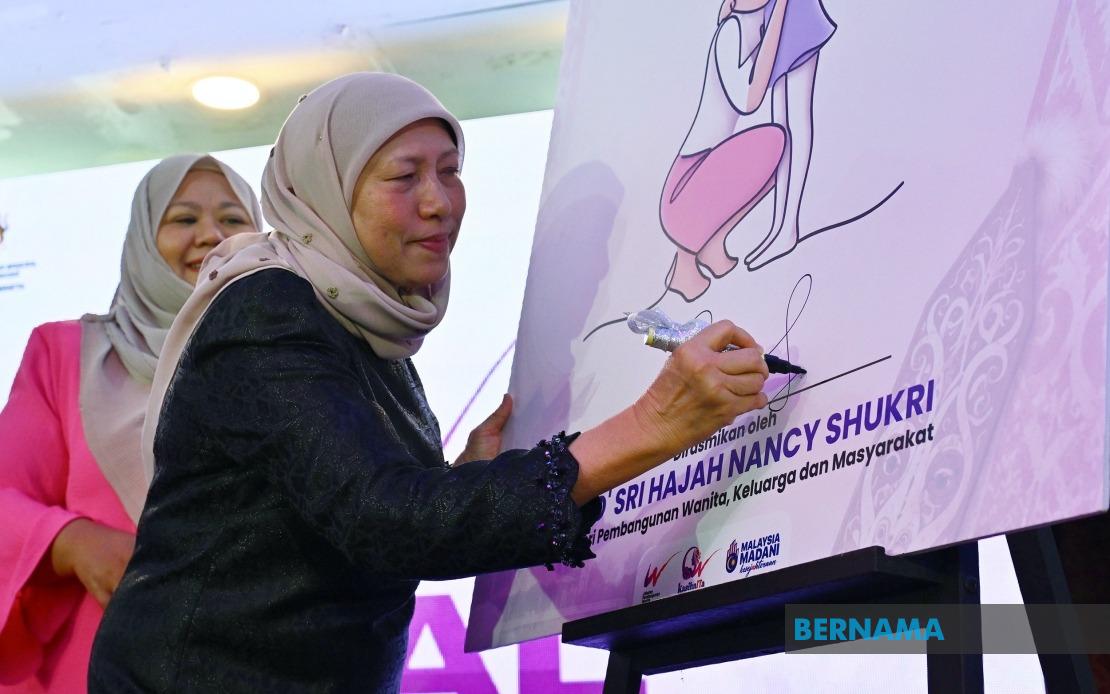
The Ministry of Women, Family and Community Development has intensified its commitment to supporting single mothers through the KasihnITa programme, a comprehensive initiative designed to address the multifaceted challenges faced by this vulnerable demographic. Following successful implementation in Selangor, the programme has now reached Sarawak as part of a carefully staged national rollout that reflects the government's intention to ensure equitable coverage across all states. Minister Datuk Seri Nancy Shukri officiated the Sarawak launch at the state-level KasihnITa 2026 gathering, underscoring the priority given to extending such support systems to single-parent households throughout the country.
At its core, KasihnITa operates as a coordinated inter-agency platform that mobilises resources from multiple government institutions to deliver holistic assistance to single mothers. The programme draws on the expertise of the Credit Counselling and Debt Management Agency (AKPK), Bank Negara Malaysia, the Legal Aid Department, and the Syariah Judiciary Department, creating a unified approach to addressing financial vulnerability, legal entitlements, and welfare concerns. By consolidating these services under one platform, the initiative eliminates the fragmentation that often characterises government assistance, allowing single mothers to access diverse forms of support without navigating multiple bureaucratic channels independently.
Financial literacy forms a cornerstone of the programme's philosophy. Participants receive targeted training in household budgeting, savings strategies, and financial planning tailored to the constraints facing single-income families. This educational component recognises that sustainable poverty alleviation extends beyond temporary cash assistance to encompassing the knowledge and skills necessary for long-term economic stability. For many single mothers juggling employment, childcare, and household management, acquiring practical financial management tools represents a significant empowerment mechanism that can reshape family trajectories over time.
The legal dimension of KasihnITa addresses one of the most pressing concerns affecting single mothers: child maintenance compliance. Many women face prolonged difficulties in securing regular maintenance payments from absent fathers, despite court orders mandating such support. The programme provides access to specialised legal guidance on enforcement mechanisms, helping single mothers understand their rights and the procedural steps available when former spouses default on obligations. This legal empowerment is particularly crucial in Malaysia's context, where maintenance disputes frequently entangle civil and religious law, requiring navigating dual legal frameworks.
Minister Shukri emphasised the programme's commitment to inclusivity within the national development agenda, articulating a vision wherein no woman remains excluded from prosperity-enhancing opportunities. This framing positions support for single mothers not merely as welfare provision but as an integral component of broad-based economic development that recognises women's economic participation and family stability as prerequisites for societal resilience. The integration of single mothers into the formal development narrative reflects evolving policy recognition that demographic diversity requires differentiated but equally substantive approaches to inclusion.
A distinctive feature of KasihnITa involves its mechanism for gathering direct feedback from beneficiaries to inform future policy formulation. By establishing channels for single mothers to communicate their lived experiences and priorities to policymakers, the ministry aims to ground future interventions in empirical understanding of actual needs rather than administrative assumptions. This participatory approach to policy design acknowledges that those experiencing poverty and vulnerability often possess crucial insights into effective solutions that technocratic planning processes may overlook. The 130 participants at the Sarawak gathering represented a cross-section of single mothers whose collective input will theoretically influence forthcoming policy refinements.
For Southeast Asia's broader context, Malaysia's expansion of the KasihnITa programme mirrors regional recognition that single-mother households constitute a structurally disadvantaged demographic requiring targeted policy attention. Across Southeast Asia, changing family structures, economic pressures, and inadequate male compliance with maintenance obligations have increased the prevalence of female-headed households. Malaysia's model of coordinated inter-agency support offers a potentially replicable framework for neighbouring countries grappling with similar challenges, demonstrating that comprehensive support systems need not require substantial additional expenditure but rather more effective mobilisation of existing government resources.
The psychological and social dimensions of single-mother support receive explicit acknowledgement in the minister's remarks concerning peer support and shared experience. By convening single mothers in structured settings, KasihnITa facilitates horizontal solidarity and collective problem-solving that complement formal institutional assistance. These gathering spaces provide opportunities for mothers to exchange practical strategies, emotional support, and information about navigating complex systems, creating informal knowledge networks that amplify the programme's formal assistance mechanisms. The emphasis on reducing isolation reflects contemporary understanding that material poverty often intersects with social marginalisation, and comprehensive support must address both dimensions.
The expansion to Sarawak particularly signifies the programme's commitment to reaching single mothers in less densely populated regions where access to government services and financial institutions may be geographically or informationally constrained. Rural and semi-urban areas of East Malaysia often experience greater distance from financial counselling resources, legal advice, and specialized welfare services. By deliberately extending KasihnITa beyond peninsular Malaysia, the ministry signals recognition that single-mother vulnerability transcends geographic boundaries and that equitable support requires proactive outreach beyond urbanised centres.
Looking forward, the staged rollout approach allows for iterative refinement of programme delivery based on experiences accumulated at each location. Early experiences in Selangor likely informed adjustments to the Sarawak implementation, and subsequent expansions will benefit from cumulative learning. This gradual approach, while slower than immediate nationwide implementation, potentially generates more sustainable and contextually appropriate service delivery by allowing time for local stakeholder engagement and operational problem-solving. The ministry's commitment to avoiding exclusion of any woman from development benefits must now translate into ensuring that future programme expansions reach all remaining states with equal rigour and resourcing, particularly those with substantial single-mother populations facing acute economic vulnerability.

