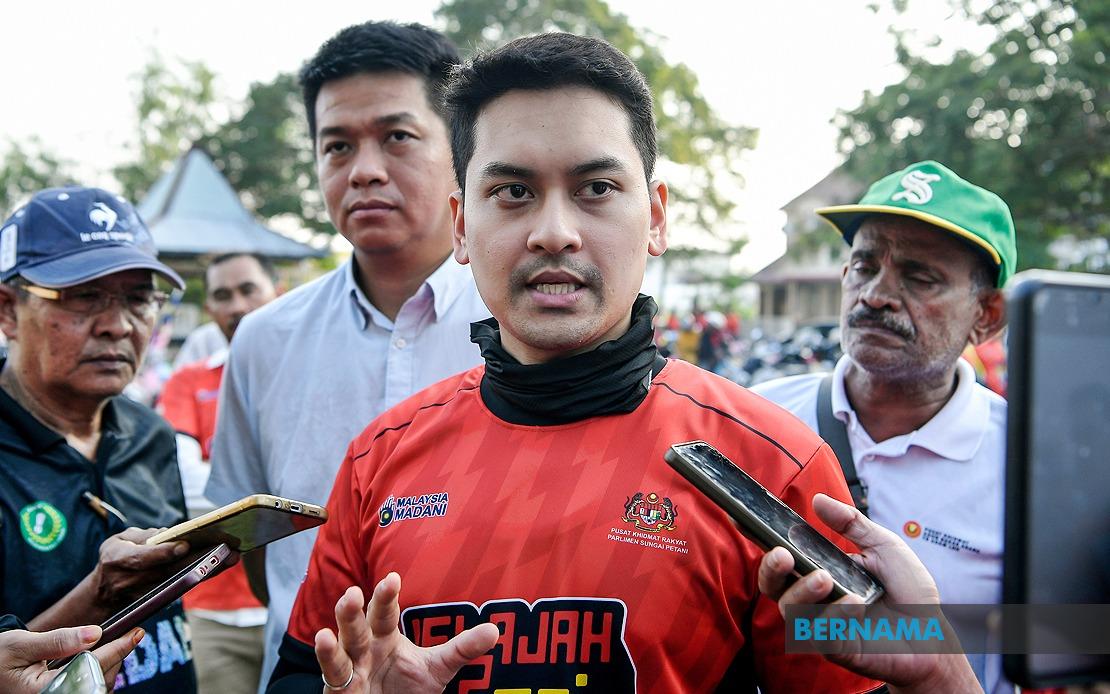
The Ministry of Youth and Sports (KBS) has commenced a nationwide consultation initiative designed to incorporate youth perspectives into Malaysia's forthcoming Budget 2027. The MADANI Youth Budget Tour, which kicked off in the northern region encompassing Kedah, Penang, and Perlis, will traverse across six distinct zones throughout the country over the coming month, culminating just before Budget 2027 is presented to Parliament in October. This structured engagement represents an attempt by the government to systematize how young voices influence budgetary allocation decisions, moving beyond traditional consultation methods to reach voters who will shape Malaysia's electoral landscape over the next decade.
Youth and Sports Minister Dr Mohammed Taufiq Johari articulated the government's rationale during remarks made at Universiti Teknologi MARA (UiTM) Penang, where Prime Minister Datuk Seri Anwar Ibrahim officiated the Sahabat MADANI Merdeka Eve culminating event alongside Penang Chief Minister Chow Kon Yeow. The Minister emphasized that segmenting the tour into six geographic zones ensures comprehensive coverage of Malaysia's diverse regions and demographic clusters, preventing the urban-centric bias that often characterizes national consultation processes. By systematically moving through different states over successive weeks, the KBS aims to capture region-specific priorities that might otherwise be obscured in centralized feedback mechanisms, acknowledging that youth concerns in Johor likely diverge materially from those in Sabah or Sarawak.
The deliberate framing of these engagement sessions as platforms for direct dialogue rather than information dissemination reflects an implicit acknowledgment that contemporary Malaysian youth expect participatory rather than merely consultative governance. Dr Mohammed Taufiq stressed that young people today demonstrate willingness to vocalize opinions and challenge conventional narratives during town hall forums, suggesting that government receptiveness to such articulation has become a prerequisite for maintaining youth engagement with democratic institutions. This observation carries particular significance in a Southeast Asian context where youth political participation has become increasingly volatile, with disengagement or protest voting emerging as responses to perceived governmental indifference to generational concerns.
The timing of the tour—positioned squarely within the budget cycle—demonstrates an attempt to integrate youth input into concrete fiscal allocation decisions rather than relegating such consultation to peripheral policy discussions. By gathering aspirations throughout August and early September, the government creates opportunity to synthesize feedback into specific budget line items, whether directed toward educational infrastructure, employment initiatives, digital economy development, or youth mental health services. This proximity to actual budgetary decisions potentially elevates the practical significance of youth participation beyond symbolic engagement, though ultimate implementation will depend on whether ministry officials demonstrably incorporate youth recommendations into final budget proposals.
Dr Mohammed Taufiq's emphasis on youth serving as "bridges of unity across race and religion" situates the consultation tour within the broader MADANI framework's communal cohesion objectives. This framing suggests the government perceives youth engagement not merely as technique for improving policy design but as mechanism for reinforcing social stability and reducing divisive narratives that might otherwise proliferate through alternative media channels. The minister's assertion that youth bear responsibility for perpetuating independence-era unity principles while insulating society from "elements that caused division" implicitly tasks young Malaysians with custodial roles in maintaining national harmony, a framing that carries both empowering and constraining dimensions.
The parallel launch of the Sahabat MADANI initiative, which has mobilized 11,060 volunteers nationwide, represents complementary infrastructure supporting the broader participatory governance agenda. This volunteer network, tasked with promoting mutual respect and community service across ethnic and religious lines, essentially creates grassroots multiplication effect for government messaging and policy dissemination. By embedding 11,060 MADANI champions throughout communities, the government constructs channels for two-way communication that extend beyond formal town hall sessions, potentially capturing feedback through informal community engagement and subsequently feeding neighborhood-level concerns upward through the KBS consultation apparatus.
For Malaysian stakeholders monitoring youth political engagement, the budget tour's scope and methodology offer instructive indicators of how the government intends positioning itself as responsive to generational priorities. The six-zone structure suggests recognition that national averages obscure substantial regional variation in youth preferences—whether concerning livelihood opportunities, educational pathways, or public service accessibility. Youth in Klang Valley face substantially different employment landscapes and cost-of-living pressures than counterparts in Kuching or Ipoh, necessitating differentiated policy responses that centralized consultation frameworks frequently fail to capture.
The emphasis on "town hall sessions where youth speak up" acknowledges shifting expectations around democratic participation, particularly among voters aged eighteen to forty who increasingly demand substantive engagement rather than symbolic consultation. In comparative Southeast Asian context, this represents reasonably forward positioning, though critics might note that consultation divorced from demonstrable policy outcomes risks amplifying youth cynicism regarding institutional responsiveness. Should KBS fail to articulate how specific budget allocations directly reflect youth feedback gathered during the tour, subsequent iterations of similar consultation exercises may encounter diminished participation or increased skepticism about governmental sincerity.
Budget 2027's timing occurs within Malaysia's electoral cycle, creating inherent political dimensions to the consultation process. Youth voters, disproportionately concentrated in urban constituencies, have demonstrated susceptibility to alternative political messaging and protest voting patterns. By conducting visible, structured engagement with young Malaysians months before budget tabling, the government signals attentiveness to generational concerns while creating opportunity for positive narrative framing regarding youth-responsive governance. This strategic positioning becomes particularly significant given Malaysia's demographic structure, where roughly forty percent of registered voters fall within twenty-five to forty-five age brackets increasingly decisive in closely-contested constituencies.
The MADANI Youth Budget Tour ultimately reflects broader institutional evolution within Malaysian governance toward more formalized mechanisms for capturing and processing citizen input, particularly from constituencies—young voters—whose political behavior remains insufficiently predictable from traditional patterns. Whether this consultation apparatus generates substantive policy shifts or functions primarily as stakeholder engagement theater remains trajectory-dependent, contingent upon observable connections between feedback gathered during August-September tour and allocations appearing in October budget documents. The coming months will therefore serve as crucial test of whether Malaysia's participatory governance infrastructure produces meaningfully different outcomes compared to conventional top-down budgetary planning processes.

